An acclaimed composer says he felt the weight of Welsh history on his shoulders when bringing a Carmarthenshire writer to the operatic stage.
Gareth Glyn’s latest work, Fflamau Penyberth (The Flames of Penyberth) commemorates the 90th anniversary of the 1936 arson attack at RAF Penrhos near Pwllheli and will be staged at Theatr Brycheiniog in Brecon on November 28.
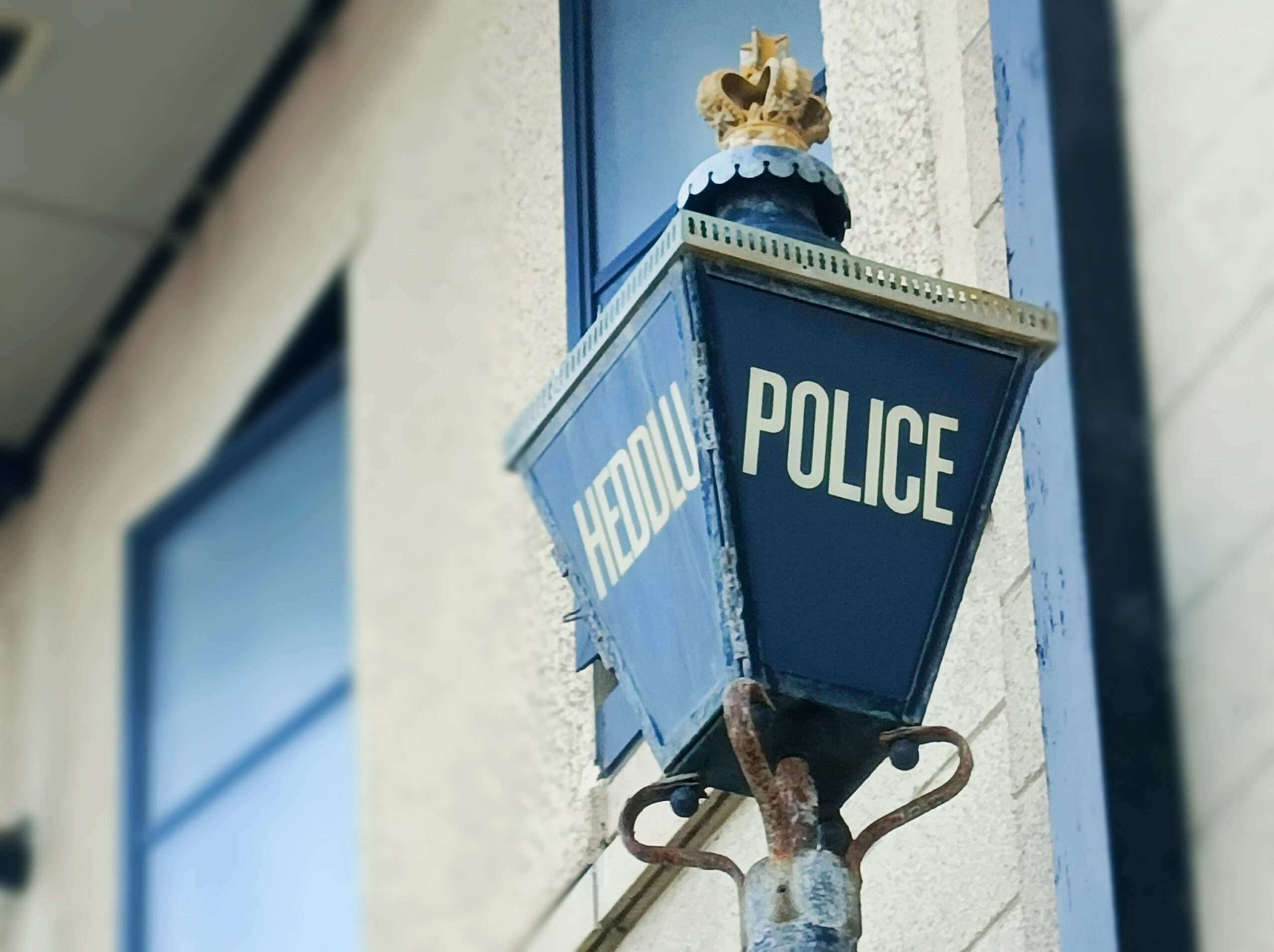
The protest was carried out by three eminent, “God-fearing” Welsh nationalists who set fire to buildings at the base before handing themselves over to the police.
The opera, commissioned by OPRA Cymru, explores the actions of the trio – Saunders Lewis, Lewis Valentine and Carmarthenshire-born writer DJ Williams – who also had strong links with Pembrokeshire and taught at the grammar school in Fishguard.
The trio of eminent, “God-fearing” Welsh nationalists set fire to buildings at the RAF base in protest against the destruction of Penyberth, a historic farmhouse with deep links to Welsh culture and pilgrimage, to make way for an RAF training camp and aerodrome – and then handed themselves over to the police.
The opera will be premiered at Neuadd Dwyfor, Pwllheli on Thursday, November 19, and later visit Rhosllannerchrugog, Bangor, Swansea, Barry, Brecon and Aberystwyth before returning to Pwllheli for the final performance of the tour.
The libretto was written by OPRA Cymru founder, Patrick Young, from Llan Ffestiniog, in conjunction with author and historian Arwel Vittle, from Caernarfon.
Powerful arias and rich harmonies feature prominently in the score by Gareth, who was born in Machynlleth but has lived in Anglesey for almost 50 years and is regarded as one of Wales’ foremost choral composers.
Over the years he has composed hundreds of works including a large number of solo songs, a symphony, concertos, overtures and other orchestral pieces.
Gareth, who was born in Machynlleth, raised in Mold and now lives on Anglesey said: “Fflamau Penyberth commemorates a hugely significant event in Welsh history and I felt a great responsibility to get it right and I hope my score does justice to this seminal moment.”
Fflamau Penyberth tells the story in three acts beginning with the opening scene showing one of the men in a prison cell and the story is then told in a series of flashbacks.
“The score includes pieces for the three main characters and they sing together unaccompanied at one stage which I believe is a very powerful song,” he said.
“I’m pleased that the singers chosen to take part are suitable for the parts they portray. Saunders Lewis had a high-pitched voice so he lends himself to the tenor range while the other two are portrayed by baritones.
“Similarly the singers are approximately from the same areas of Wales as the three men so they sing in the same local accent and I think that is very important.”
Fflamau Penyberth features prominent singers in the leading roles supported by a cast of six others and a chorus.
Tenor Robyn Lyn Evans was raised in Pont-Rhyd-y-Groes, Ceredigion, and started singing in local Eisteddfodau. He has since sung with Welsh National Opera and others and frequently appears on the concert platform.
Aberdare-born baritone Emyr Wyn Jones has worked with Scottish Opera and appeared with Sir Bryn Terfel in a celebration of his career, Bywyd Trwy Gân (Life Through Song), for S4C.
Baritone Robin Gruffudd Hughes has sung with leading companies including the Royal Opera. He was born in Pen Llyn and was twice a finalist for the W Towyn Roberts Scholarship at the National Eisteddfod.
Following the arson attack on September 8, 1936, the three men were found guilty at the Old Bailey in London and jailed for nine months in Wormwood Scrubs.
When they were released they returned to Caernarfon and were greeted as heroes by a crowd of 15,000 people.
Penyberth was a farmhouse which had been the home to generations of patrons of poets, and also a way-station for pilgrims to Bardsey Island, but destroyed in 1936 in order to build a training camp and aerodrome for the RAF.
In early 1936, the Air Ministry announced its plans to establish RAF Penrhos, an airfield which would function as an air observer, gunnery and bombing school.
The proposals led to widespread protests in Wales but the government settled on Llŷn after locations in Northumberland and Dorset were met with protests.
Saunders Lewis claimed the government was intent on turning one of the “essential homes of Welsh culture, idiom, and literature” into a place for promoting what Lewis viewed as a barbaric method of warfare.
His comments led to Lewis, nationalist politician and renowned author who was raised in Wallasey, the Baptist minister Lewis Valentine, who was born in Llanddulas near Colwyn Bay, and the author D J Williams from Carmarthenshire carrying out the arson attack.
Fflamau Penyberth is Gareth’s fourth opera and the third he has composed for OPRA Cymru.
His opera inspired by scenes from Caradog Prichard’s powerful novel, Un Nos Ola Leuad, was made into a film called Tanau’r Lloer which premiered at the Edinburgh International Film Festival last year and was shown on Channel 4 and S4C in March this year.
Gareth celebrated his 75th birthday in July with the release of a new album, Yr Oriau Oll a Welsom (All the Hours we Saw), on Tŷ Cerdd Records
It brings together five vocal and instrumental works including two of which set music to poems written by his father, prominent Welsh journalist, poet and novelist T Glynne Davies, the centenary of whose birth is also marked in 2026.
He said: “Over a period of close to 60 years I’ve set a great deal of my father’s poetry to music – not because he was my father, but rather because I’ve always been affected and inspired by his poems.”
Fflamau Penyberth will be performed at Neuadd Dwyfor, Pwllheli, on November 19; Theatr y Stiwt, Rhosllannerchrugog, on November 20; Pontio, Bangor on November 24; Taliesin Arts Centre, Swansea on November 26, Memo Arts Centre, Barry on November 27; Theatr Brycheiniog in Brecon on November 28; Theatr y Werin, Aberystwyth on December 3 and Neuadd Dwyfor, Pwllheli on December 5.
More details about the tour online at www.opra.cymru and tickets can be obtained from the various theatre box offices.


Pictures by Steve Rawlins