Photos: Welsh Blood Service
Landmarks across Wales will light up red on 26 September 2026 to celebrate Welsh Blood Service’s donors, volunteers, staff and partners who have come together with one shared purpose for eight decades: to save and improve lives.
From Castell Coch in the south to Llandudno Pier in the north, buildings will glow red to celebrate the lifesaving contributions made by donors, honour the commitment of staff, and highlight the never-ending need for blood in Wales.
The origins of the modern blood service can be traced back to the Second World War, when the threat of mass military and civilian casualties highlighted the need for a coordinated national blood donation system. Following the end of the war, the National Blood Transfusion Service of England and Wales was formally established on 26 September 1946, bringing blood donation and transfusion services to the wider public.
When the newly devolved Welsh Government was established in 1999, the Welsh Blood Service was created, eventually becoming an all-Wales service in 2016.
‘Deeply proud’
Alan Prosser, Director of the Welsh Blood Service, said: “We should feel deeply proud of where we started. In a time of fear, loss and uncertainty, blood donation became an act of service and hope.”
Today, the Welsh Blood Service is far more than a blood collection service. Its work now spans whole blood, platelets, stem cells, transplantation support, specialist laboratory services, plasma-derived medicines, research, innovation and more.
“Our 80th birthday belongs to every donor and supporter who has ever given their time and commitment to help someone they may never meet,” Alan added.
One woman. More than 400 lives
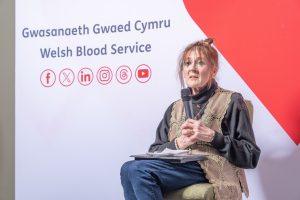
The anniversary celebrations are an opportunity to highlight the lifelong commitment of donors.
Sandra Allen, 78, from Llay in Wrexham, made her first blood donation at the age of 18 in 1966. Since then, she has gone on to make 144 donations, making her one of the longest-serving blood donors in Wales.
“In those days, they used to visit big factories with lots of workers. We lay down on surplus US Army beds,” she remembered.
The Welsh Blood Service must collect 350 units of blood every day to meet hospital demand. A single blood donation has the power to save three lives and can be used for emergency and trauma care, treatment of cancer and blood disorders, and mothers and babies during childbirth.
Sandra added: “I am just so proud that my donation is a lifeline to those who need it most.”
Sandra now has her sights firmly set on reaching her 150th donation. With no upper age limit for blood donors, she can continue donating for many years to come, provided she remains fit and healthy.
A lifetime of giving

While whole blood donors usually wait 12 or 16 weeks between donations, 70-year-old Howard Provis MBE from Barry has been donating platelets every month for more than 50 years and has made more than 1,100 donations.
Howard’s extraordinary commitment was recognised in the New Year Honours List in 2024, when he received an MBE for services to blood donation and the community.
After reaching 1,000 donations, Howard said: “With a background in first aid and first responding, I have seen people in many situations that have required blood.
“Tomorrow, it could be me that needs a blood or platelet donation, or my wife, family or a friend. The thought that my donation today could potentially save someone’s life tomorrow has inspired me to keep supporting the Welsh Blood Service.”
Reflecting the communities we serve
Alan Prosser says the Service must continue to “build a donor and volunteer base that reflects the communities we serve”.
Earlier this month, it launched the ‘In Our Blood’ initiative to raise awareness of the importance of diversity in donation and healthcare, and encourage more people from Black, Asian, mixed and minority ethnic backgrounds to become donors.
According to the World Health Organization, 7.74 million people around the world live with sickle cell disease, a blood disorder more common among people of African and Caribbean heritage. Regular blood transfusions are required to manage the condition, and a stem cell transplant is the only treatment option capable of fully curing a patient.
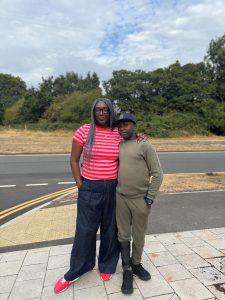
Bryan Babalola, 12, from Newport, has lived with sickle cell disease since birth. His crises, the term used to describe periods of serious health complications, became so severe that he suffered a stroke in 2019.
In 2025, he became one of the first patients in Wales living with sickle cell disease to receive a stem cell transplant to fully cure his condition. His stem cell donor was his mother, Adesewa, known as Ade.
The transplant was a success and Bryan is recovering well. While it remains early days, his progress so far is encouraging and there is optimism he will go on to make a full recovery.
Speaking shortly before the transplant took place, Ade said: “Bryan needs six-weekly blood transfusions and sometimes needs as many as eight units of blood at a time.
“Without the generosity of people who have donated, I don’t know where we would be today.”
While Bryan was fortunate to be matched with a family member, just one in four patients who require a stem cell transplant find a match in their own family. Seven in 10 patients from Black, Asian, mixed and minority ethnic backgrounds cannot find a suitable match.
The only way to improve those odds is to recruit more people to join Welsh Blood Service’s stem cell registry.
Looking to the future
From wartime beginnings to becoming an all-Wales Service, the Welsh Blood Service’s story has always been one of adapting to meet the needs of patients. As it enters its ninth decade, that same spirit is driving new developments in plasma medicines through the UK Plasma for Medicines Programme, technology, donor engagement and partnership working.
“This is an ambitious organisation, committed to innovation and doing more for patients. That includes making the very best use of every donation, strengthening the resilience of essential medicines, and exploring new ways to get vital products and samples to the right place at the right time,” Alan said.
“Eighty years from our beginnings, our purpose remains beautifully simple: helping good people to do great things. That is our history. That is our legacy. And that is the future we will continue to build together.”
To learn more about the Welsh Blood Service and its 80-year history, click here.