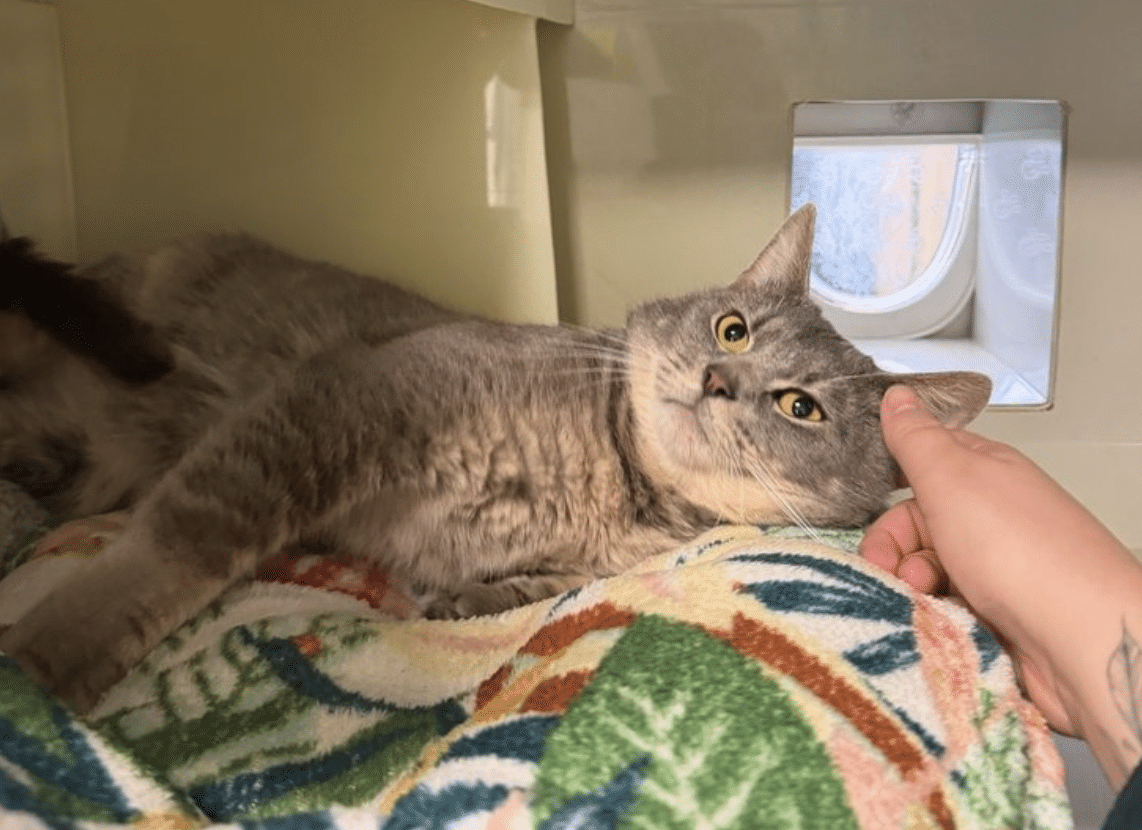
The RSPCA is urging people in South Wales to consider adopting a rescue cat, amid an all-time high in numbers of moggies in the charity’s care.
The animal welfare charity has warned of a “cat crisis” and has teamed up with official vet partner inspiring vet care during a month they have dubbed Adoptober, a special drive to find loving new homes for pets in its care.
RSPCA staff are facing mounting pressure to care for an ever-growing number of felines – and to find enough space for animals in need.
At RSPCA Newport Animal Centre at Hartridge Farm Road, staff have already taken in 75 cats this year – almost on a par with last year’s figure, with more than two months still to go.
The charity currently has hundreds of cats and kittens in its national centres alone – with thousands more in branches and private boarding establishments as staff struggle to find space to care for the increasing numbers.
With cats arriving faster than they can be rehomed, the RSPCA is urgently appealing for adopters and fosterers to give cats of all ages the chance of a loving home.
Samantha Richmond, Cattery Supervisor, said: “We’ve seen a huge influx of cats and kittens at Newport. Sadly it just isn’t slowing down – and it’s having a massive impact not just on us in South Wales but across the country and in England too.
“So far this year we’re taking in an average of seven to eight cats each month, and we’re running out of space. It is usually one in one out too, with other cats in need going to our dedicated fosterers and emergency boarding.
“Cat breeding season has been in full swing, we’ve seen a big increase in large-scale cat rescues and adoptions typically slow down over summer months – which has left us in a difficult situation as we head into autumn and winter and prepare for an influx of animals rescued from neglect. There are simply more cats and kittens coming into our care than we have the space for.
“We’re desperate for adopters and fosterers to come forward to help free up space in our centres – this means we can help more cats rescued from cruelty and neglect, but also a cattery is not the ideal environment for cats and kittens and they can find it stressful, so getting them into a loving home as soon as we can is so much better for their overall welfare.”
inspiring vet care is the RSPCA’s official vet partner for rehoming and Adoptober. They are working with the RSPCA to help improve animal welfare and pet rehoming across England and Wales. Their support is helping more animals find loving homes more quickly and creating space in centres so RSPCA officers can continue their vital rescue work.
Richard Hooker, Country Medical Director for inspiring vet care, said: “The number of
unwanted and stray cats has reached unprecedented levels, making it even more important to ensure cats are neutered to prevent unwanted litters of kittens putting even more
pressure on charities.
“One misconception many people have is that they need to wait until their kitten is six
months old before they are neutered. However, many cats begin going outside before that
point and become pregnant or father litters. Neutering can actually be done earlier than
many people might assume, based on weight rather than age, and we recommend neutering
before any kitten begins exploring the outside world.”
inspiring vet care will be supporting the RSPCA by driving awareness of the campaign and sharing stories of animals who need homes in their 750+ practices across England and Wales, in the hope of finding more rescued animals homes. inspiring vet care is also funding veterinary care and support delivered by RSPCA frontline officers for owners in need, to help pets stay in loving safe homes.
Some of the cats for homes at Newport include:
Sebastian was a shy boy when he first came into RSPCA care and would often hide away – but with time, patience and gentle affection, he’s started to show his sweet side.
He loves a good scratch and roll around, and can often be heard purring away in his pod.
He’s looking for a quiet, adult-only home where he can settle in at his own pace – but he’s ready to find a new family who will give him all the love, attention and reassurance he deserves.
😺 Alice
Alice came into RSPCA care after her owner sadly passed away, and it’s taken her a little while to settle into cattery life and build her confidence – but once she gets to know you, her affectionate side shines through.
She loves a fuss and attention from people she trusts, and can often be found seeking companionship from her favourite carers. Could you be Alice’s new forever family?
😺 Minx
Little Minx came from a multi-cat household, and as she’s settled in she’s realised she enjoys her new-found independence.
She loves to play and spends her time exploring and pouncing on her array of toys – and while she likes attention and gentle guss, she’s an independent girl who is unlikely to be a “lap cat”.
Could Minx be the kitty for you?
To enquire and apply to rehome Sebastian, Alice or Minx, please fill out an online application form.
Samantha added: “Sometimes, people choose not to adopt for all sorts of reasons – including old ‘myths’ that are not evidence based – for example, we find that it can take black cats three times longer (29 days) to find homes than tabby cats (nine days), because of people’s superstitions.
“But there’s a cat for everyone able to offer the right home: cute kittens, marvellous moggies, fireside felines and outdoor adventurers, we’ve got every kind of cat waiting for another chance at happiness.
“We always encourage prospective pet owners to look beyond appearance, breed and colour and instead look for a personality that matches you and your lifestyle. However, we also have purebred and pedigree cats coming into our care – so even those who have a particular breed or type in mind may find their perfect partner, without fueling problematic commercial breeding.”
The pressure on RSPCA centres and branches is being heightened by an increase in large-scale cat rescues. In 2025, the charity responded to a huge 1,780 incidents involving 10 or more cats at a single address – almost five every day, and a nearly 65% increase on the year before. These incidents involved more than 36,000 cats in total.
Cases of large numbers of animals being kept at one address can be linked to mental health struggles, the cost of living crisis, or breeders operating with poor practices. And RSPCA experts say that initially well-meaning individuals often see situations spiral out of control – particularly in situations where cats are unneutered.
Samantha added: “Hoarding incidents are just one of the ways in which these situations occur – some multi-animal incidents involve breeders or people can become overwhelmed unintentionally by not neutering early enough. In many cases the best route is to offer advice and support such as neutering and rehoming some of the animals, so they are at more manageable levels.
“We are encouraging people to contact an animal charity if they are at a stage where they, or someone they know, is struggling with the numbers of animals they have in their household. The sooner actions are taken the better for animals and people.
“We’re also urging people to make sure their cats are neutered. Cats can breed from as young as 16 weeks, so unneutered kittens can quickly see cat populations spiral.”
The rise in multi-animal cases alongside rising cruelty and neglect led to a six-year high of animals in RSPCA care last year, and plunged the animal welfare charity into a capacity crisis.
It means that there are more than 7,000 animals in RSPCA care** at any one time. RSPCA branches and centres find homes for almost 70 animals a day, but rescued animals have been coming in at a quicker rate than they are adopted.
There are also now more than 1,000 animals in private boarding catteries, kennels and stable yards – waiting to be placed into branch and centre care from where they can be rehomed.
Jo Rowland, Chief Executive for the RSPCA, said: “We currently have more animals in our care than space in our centres and branches – and it’s a heart-breaking situation that other animal charities and rescue centres are also facing – that’s why we are asking people with space in their home for a pet to consider adopting. Not only does it free up vital space so we can rescue more animals in need, but it’s so much better for the animals to be out of kennels and in a loving home.
“We really need help from animal lovers. If you are considering adding a pet to your home, please consider rescuing – and if you can’t adopt, could you consider fostering? We are working to increase our number of foster carers, as well as modernising our rehoming process, to try and get animals into loving homes sooner.
“We need extra special homes for some of our animals and we’re so grateful to anyone who can support our Adoptober campaign – be it through adopting or fostering, or sharing profiles of animals who need new homes.”


