[tta_listen_btn] While much of the world welcomed the start of 2026 on 1 January, in Wales there is still one more chance to ring in the year. Hen Galan, known as the Welsh Old New Year, is celebrated according to the old Julian calendar. Across the country, communities large and small are marking this unique date with music, dance, ancient customs and lively public gatherings.
Cwm Gwaun: The Heart of Hen Galan
In the narrow wooded valley of Cwm Gwaun in north Pembrokeshire, Hen Galan remains a deeply lived tradition. On 13 January, residents and visitors awake early to take part in a day that feels closer to a winter festival than a late New Year celebration.
At the centre of the tradition is the custom of Calennig. Children travel from house to house singing Welsh New Year verses and offering warm greetings in return for small gifts of treats or money, often referred to collectively as calennig. This practice reflects centuries of community spirit and the hope for good fortune in the year ahead.
As the day continues, neighbours gather to share meals, drinks and conversation. Many people end up at the Dyffryn Arms, known affectionately as Bessies, to continue the celebrations well into the evening. Historically, Hen Galan was once considered more important than Christmas in this valley, and roast dinners and friendly company were central to the occasion.
Pontardawe: A Celebration of Song and Dance
The town of Pontardawe has built its own celebration around this cultural moment. On Friday 16 January 2026 the Pontardawe Arts Centre will hold a special Hen Galan evening. The programme brings a modern interpretation to old customs and features singing, dancing and live performances that evoke the warm and playful spirit of the Welsh Old New Year.
The event provides people across South Wales with an opportunity to experience Hen Galan in a theatre setting. Through music, storytelling and dance, the occasion blends heritage with contemporary performance in a way that appeals both to those who grew up with these traditions and to those discovering them for the first time.
Abercych: Dancing Through the Old New Year
In Abercych the Hen Galan season continues into the evening of 17 January 2026 with Twmpath Annwn, a welcoming dance and social gathering. A twmpath is a traditional Welsh community dance, and on this night guests of all ages gather for music, dancing, light food and drinks. Locals and visitors alike take to the floor and enjoy the chance to celebrate through movement, conversation and shared laughter.
Aberystwyth: The Mari Lwyd Returns
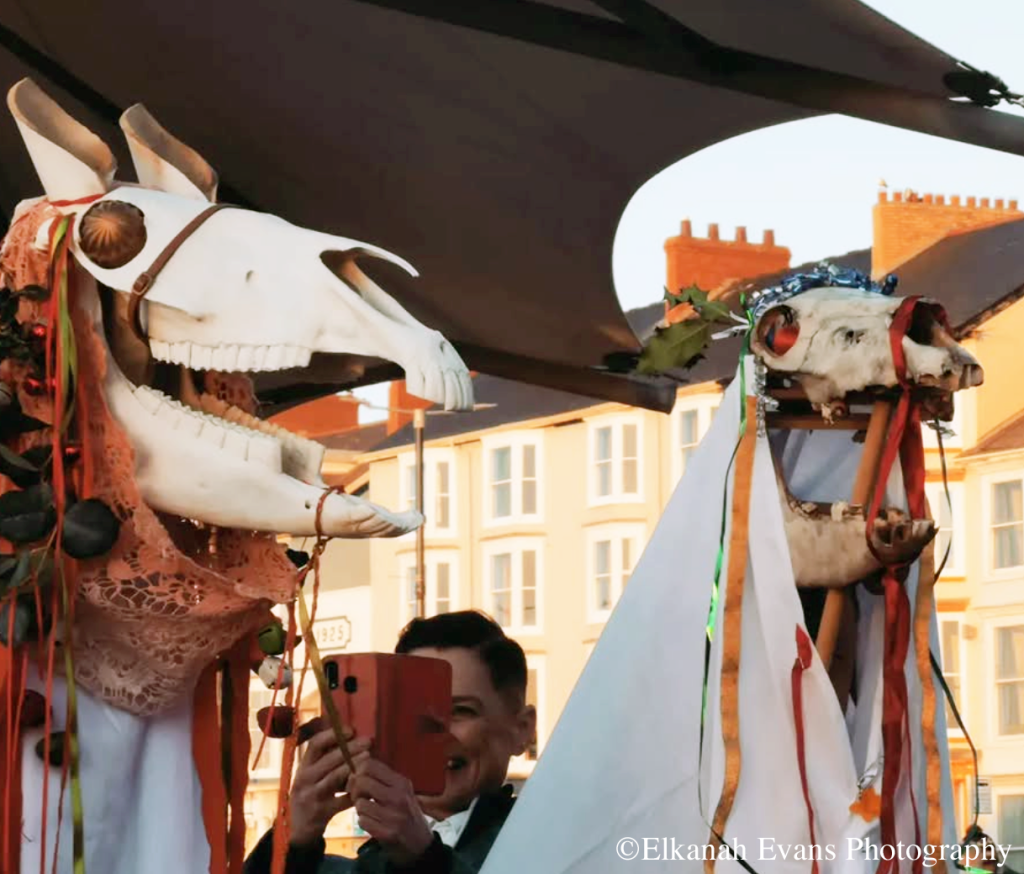
Further north in Aberystwyth, the tradition of the Mari Lwyd returns to the streets to mark Yr Hen Galan. In this striking custom a decorated horses skull, accompanied by singers and performers, is carried through the town. The Mari Lwyd is believed to bring good fortune for the coming year, and the event draws both community participants and intrigued spectators. The blend of costume, music and folklore creates a memorable and culturally rich celebration.
The Mari Lwyd and its Place in Hen Galan
Among the customs linked to Hen Galan, few are as striking or memorable as the Mari Lwyd. This tradition involves a decorated horses skull that is carried through streets and villages, often placed on a pole and covered with ribbons and cloth. The figure is accompanied by singers, musicians and attendants who travel from door to door offering riddles, verse and good wishes for the New Year.
The origins of the Mari Lwyd reach far back into Welsh folklore. Some believe it has connections to ancient midwinter rituals while others interpret it as a playful and poetic form of community celebration. Whatever its beginnings, the Mari Lwyd has become an enduring symbol of Welsh seasonal tradition.
When the Mari Lwyd arrives at a home or public house there is often a friendly exchange of verses between those inside and the visitors outside. These verses can take the form of light hearted teasing or humorous challenges.
Mari Lwyd Song
Wel dyma ni’n dwad,
Gyfeillion diniwad,
I ofyn am gennad i ganu.
Os na chawn ni gennad,
Rhowch wybod ar ganiad,
Pa fodd mae’r madawiad nos heno.
In English that roughly means
Here we come
Dear innocent friends
To ask permission to sing
If we do not have permission
Let us know in song
How we should leave tonight
(before we sing some more)
Once the verbal contest ends the Mari Lwyd and its party are welcomed inside to enjoy food, drink and the company of the household. The event creates a shared moment that brings together folklore, music and social connection in a way that feels deeply rooted in Welsh identity.
The sight of the Mari Lwyd moving through a town or village remains both unusual and enchanting. Children view it with curiosity and some with caution, while adults appreciate the layers of tradition and performance that make it unique. Musicians accompany the procession, voices join in the singing of familiar verses and communities come together to observe a custom that has survived centuries of change.
In the context of Hen Galan the Mari Lwyd is a reminder that the Old New Year is not just a date on a calendar. It is a celebration of community and continuity, a living piece of folklore and a testament to the cultural imagination of Wales.
Although Cwm Gwaun is the best known home of Hen Galan, smaller echoes of the celebration appear across Wales every January. Villages, schools and cultural groups mark the day with Calennig singing, informal gatherings, folk music sessions and community meetings. Pubs and village halls often become centres of activity at this time of year, providing a warm setting in which friends and neighbours spend time together.
Whether you are listening to children sing Calennig in Pembrokeshire, dancing at a twmpath in the west or watching the Mari Lwyd procession near the coast, Hen Galan is a reminder that traditions can survive and thrive even as the modern calendar moves on.
Blwyddyn Newydd Dda, a Happy New Year, once again.
Pic . Mari Lwyd on the Aberystwyth Promenade – Elkanah Evans, Jan 13th 2022