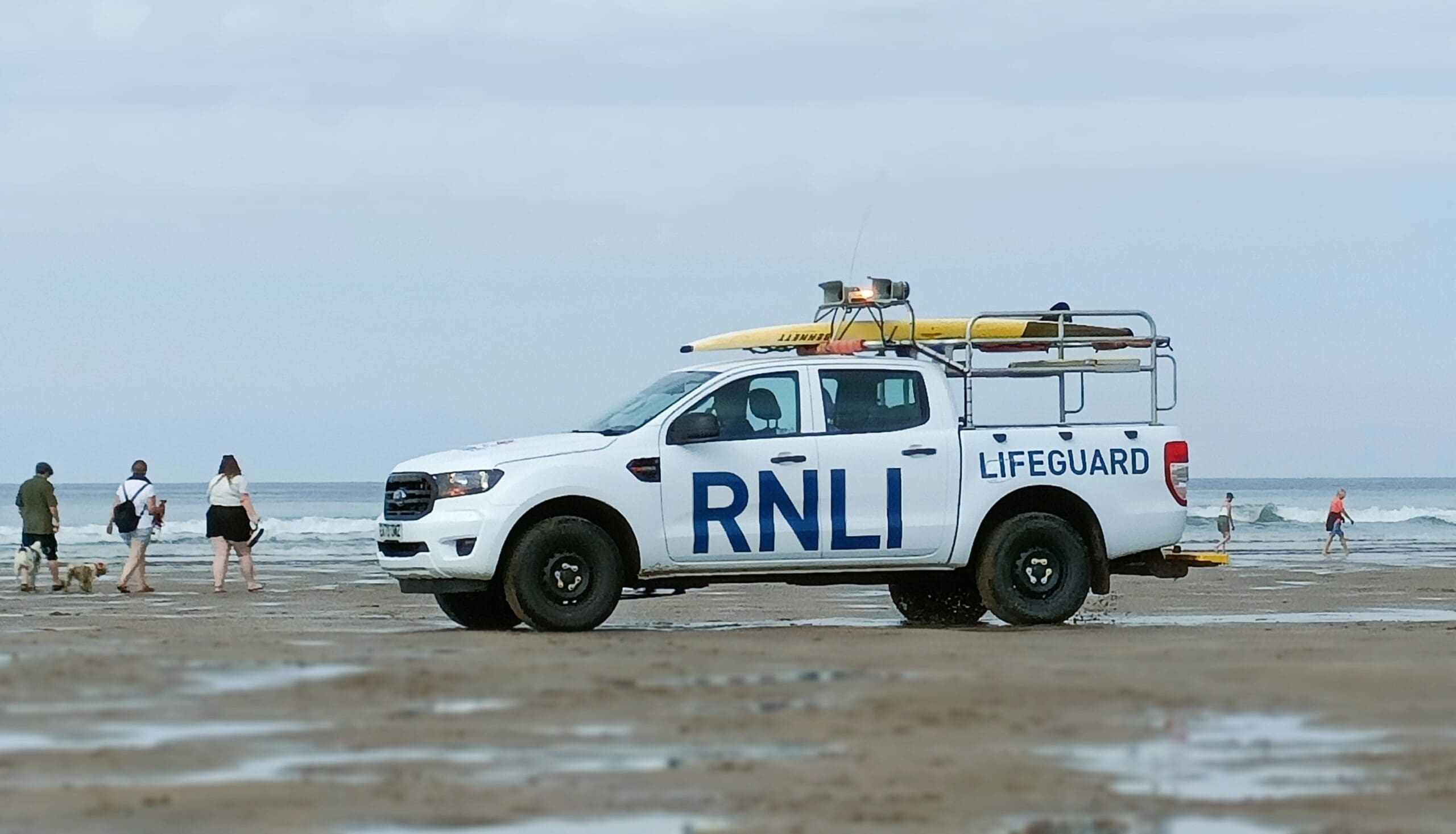
The Royal National Lifeboat Institution (RNLI) is offering safety advice to beachgoers, as the majority of its lifeguard patrols come to an end across Wales.
This Sunday (6 September 2026) marks the end of the peak season for RNLI lifeguards in Wales. The charity is offering lifesaving safety advice to people visiting the coast during the autumn and winter months.
Whilst the majority of RNLI lifeguarded beaches across Wales will have finished patrols by 6pm this Sunday, there are a handful of beaches that still have cover. In Swansea County, Langland and Caswell Bay will be patrolled every day (10am-6pm) up to and including Sunday 13 September. In Bridgend, Rest Bay will be patrolled on weekends only until 13 September and Trecco Bay will remain open on weekends only up until 27 September. In Pembrokeshire, Whitesands Beach will continue to be patrolled on weekends only up until October half-term.
Chris Cousens, RNLI Water Safety Lead for Wales, said:
‘As the season finishes for RNLI lifeguards in Wales, we’re asking people to continue to take care and know how to stay safe at the coast.
‘Whenever you visit the beach, but especially if you visit a beach and enter the water with no lifeguard cover, it’s important you’re thinking about your safety. We always recommend going into the water with someone else, having someone else with you means they can help you or get help in the event of an emergency.
‘Take note of the safety signage at the entrance to the beach, which will warn of the local risks and hazards. If possible, speak to someone who knows the area who might be able to provide advice and explain any dangers.
‘Always check the weather conditions and tide times and consider your capabilities. If in doubt – it is better to stay out of the water.
‘Carry a means of contact such as a mobile phone, if you get into trouble or see anyone else in difficulty, call 999 or 112 and ask for the Coastguard.
‘We’re aware that cold water dipping into the autumn and winter is becoming increasingly popular. We advise not doing this alone – it’s safer and more fun to go with someone or a group.
‘If you get into trouble in the water, Float to Live. Tilt your head back with your ears submerged, try to relax and control your breathing. Use your hands to help you stay afloat, don’t worry if your legs sink – as we all float differently. Once you’ve gained control of your breathing, call for help or swim to safety if you can.’
The autumn and winter months tend to bring harsher conditions that can pose greater risk to those visiting the beach. Bigger waves and stronger winds increase the likelihood and strength of rip currents.
Should you find yourself stuck in a rip current:
· Don’t try to swim against it or you’ll get exhausted
· If you can stand, wade don’t swim
· If you can, swim parallel to the shore until free of the rip and then head for shore
· Always raise your hand and shout for help.