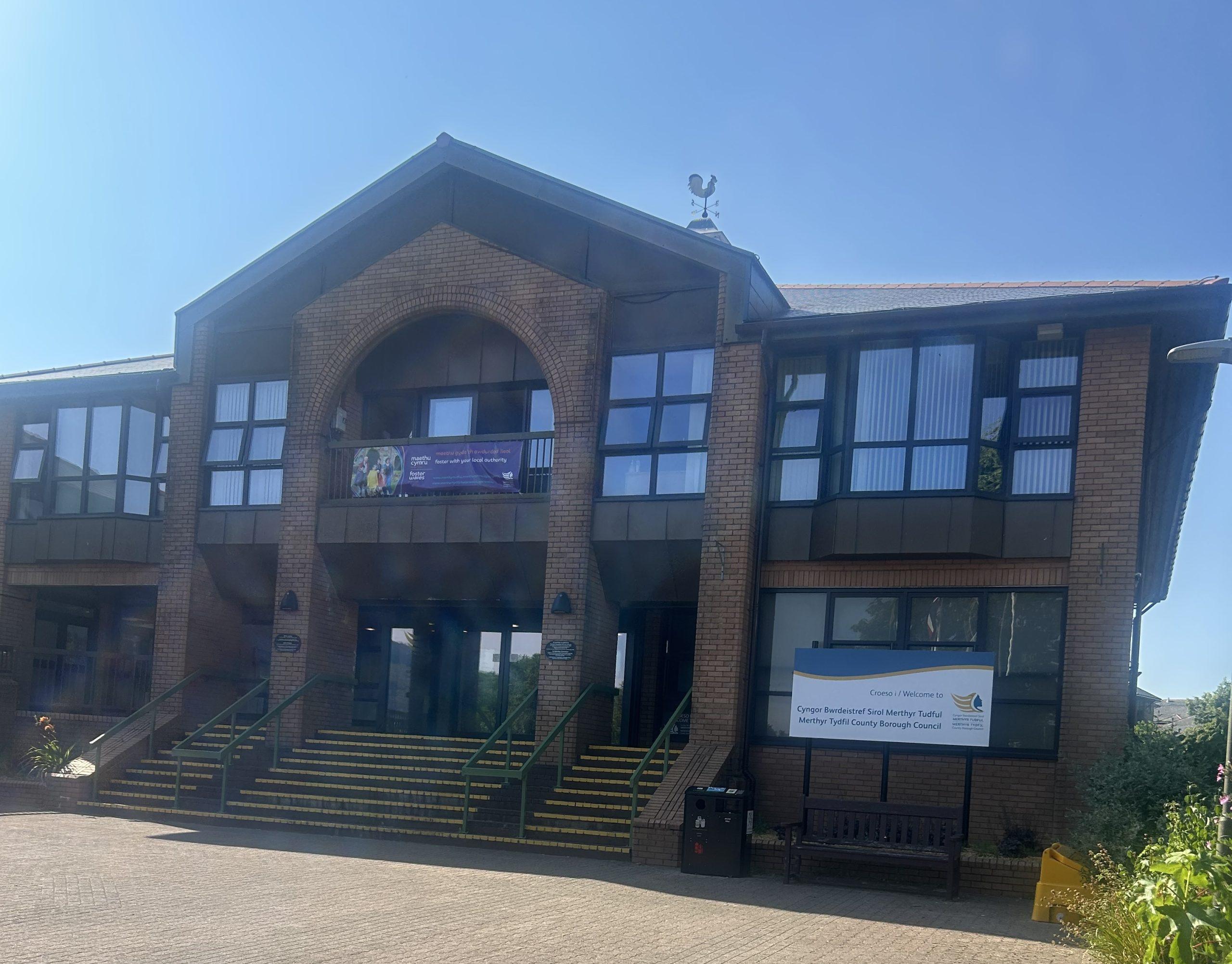
Schools in one Welsh county are making “increasingly difficult” decisions as falling pupil numbers impacts their budgets.
A report on school finances set to go to Merthyr Council Aspirational scrutiny committee on Monday, September 14, said delaying equipment and resource purchases, not covering some staff absences, and increasing class sizes are some of the choices schools are having to make to reduce their spending.
The report said while these measures contribute to short-term financial stability and may result in year-end balances performing more favourably than budget forecasts suggest schools report they are increasingly having a detrimental impact on educational provision and are not considered sustainable over the longer term.
The committee report also said the financial position of schools in Merthyr Tydfil is being “significantly influenced” by sustained reductions in pupil numbers especially at primary level.
Actual pupil numbers in the primary sector reduced from 5,129 in 2024-25 to 4,908 in 2025-26 and numbers are projected to reduce further to 4,745 by 2026-27 and 4,383 by 2028-29.
This is a projected reduction of approximately 15% over the five-year period from 2024-25 to 2028-29.
Currently 21 of the 24 schools in Merthyr (87.5%) project a deficit position at some point in the medium term with 17 schools projected to be in deficit by 2028-29.
The report said this position reflects the combined impact of falling pupil rolls, the 6.06% embedded reduction in formula funding, and ongoing expenditure pressures, particularly in relation to staffing costs.
Not all these schools need a planned licensed deficit but the projections show that a substantial number will need to reduce expenditure, including staffing costs in many cases, to maintain a balanced budget position.
More than 70% of delegated school funding is pupil-led so declining pupil numbers place additional pressure on school budgets and the affordability of
staffing structures, the report said.
Funding allocations reduce immediately as pupil numbers fall but schools are often unable to realise equivalent reductions in expenditure in the short term, creating increasing affordability pressures, it added.
While projected funding allocations within schools’ medium-term financial plans reflect anticipated reductions in pupil numbers projected spend does not necessarily reflect corresponding changes to staffing structures beyond 2026-27 unless a school is operating under a planned licensed deficit or has otherwise identified specific workforce changes.
As a result schools may have opportunities to address financial pressures over the medium term where future staffing reductions or organisational changes are achievable, enabling spend to be more closely aligned with declining pupil-led funding, the report said.
A similar trajectory in school balances to the one in Merthyr Tydfil is expected across Wales with an increasing number of schools facing budget deficit pressures in the current financial period and beyond.
In response to the ongoing financial pressures and projected reductions in balances schools have continued to review staffing structures and
spending commitments as part of their 2026-27 budgets and medium-term
financial planning.
Staffing remains the largest area of spend within school budgets and schools continue to use workforce turnover, vacancy management, and restructuring
measures to support the delivery of balanced budgets and medium-term financial plans.
During 2026-27 to date schools in Merthyr Tydfil have recorded 68 staff leavers and 27 starters resulting in a net reduction of 41 posts across schools.
This is made up of around 25 teaching posts, five learning support posts, 10 ancillary posts, and one other support post.
Analysis shows 14 left through voluntary redundancy or severance arrangements, 31 through voluntary resignations, 20 through the expiry of fixed-term contracts, five through retirement, and two through ill-health severance.
While a proportion of vacancies have been filled data suggests the majority of departures have not been directly replaced with many coming from budget efficiency measures and workforce restructuring carried out by schools including the non-replacement of posts following voluntary resignations and the non-renewal of fixed-term contracts.
This reflects the actions being taken by schools to reduce spend and align
staffing structures with available funding.
While one school stated a compulsory redundancy process no compulsory redundancies were ultimately needed as the savings needed were met through voluntary resignations and other severance arrangements.
Schools are also said to be making “increasingly difficult” decisions to reduce planned spending during the year, including delaying equipment and resource purchases, purchasing lower cost resources, restricting recruitment and managing vacancies, not covering some staff absences, reducing external professional learning opportunities, reviewing discretionary expenditure, scaling back targeted interventions where possible, and increasing class sizes and adjusting staffing deployment.
The report said given the high proportion of delegated school funding that is driven by pupil numbers the accuracy of pupil number forecasting is becoming increasingly important in supporting sustainable school budgets.
Where actual pupil numbers are lower than estimated schools may face both retrospective funding adjustments and lower future funding allocations based on reduced pupil numbers.
The report said: “Current school funding arrangements seek to balance accuracy and stability by providing funding based on estimated pupil numbers with retrospective adjustments applied where actual numbers differ from those used for funding purposes.
“Whilst this approach helps ensure that schools receive funding reflective of actual pupil numbers over time it also increases the importance of realistic forecasting assumptions that support effective medium-term financial
planning.”
As part of the council’s budget setting process for 2026-27 the schools’ formula funding, which grew in line with usual practice to include pay awards, other inflation increases and pupil number changes, had no further cuts applied for 2026-27.
This followed a better-than-expected local government settlement but the reductions applied in 2023-24 and 2024-25 remained embedded within school budgets resulting in 2026-27 funding levels remaining 6.06% below those that would otherwise have been available.
Following these continued budget pressures two additional schools have needed a planned licensed deficit (PLD) for 2026-27, bringing the total number of schools operating under a PLD to six, with four continuing from 2025/-26.
Both schools have submitted plans to recover their deficits over the period of their medium-term financial plans as part of their PLD application.
Given the position of ongoing budget reductions and financial pressures being faced by schools the aggregate schools balance as at March 31, 2027, based on budgets set by schools, is projected to be a deficit of £1.23m.
This represents a £1.74mn reduction in balances year on year from the £511,000 surplus currently being reported for 2025-26.
The report said this is being affected by the ongoing demographic decline being experienced across the primary sector with schools needing to ensure that pupil number assumptions remain realistic and that medium-term financial plans appropriately reflect the budget implications of changing enrolment levels.
