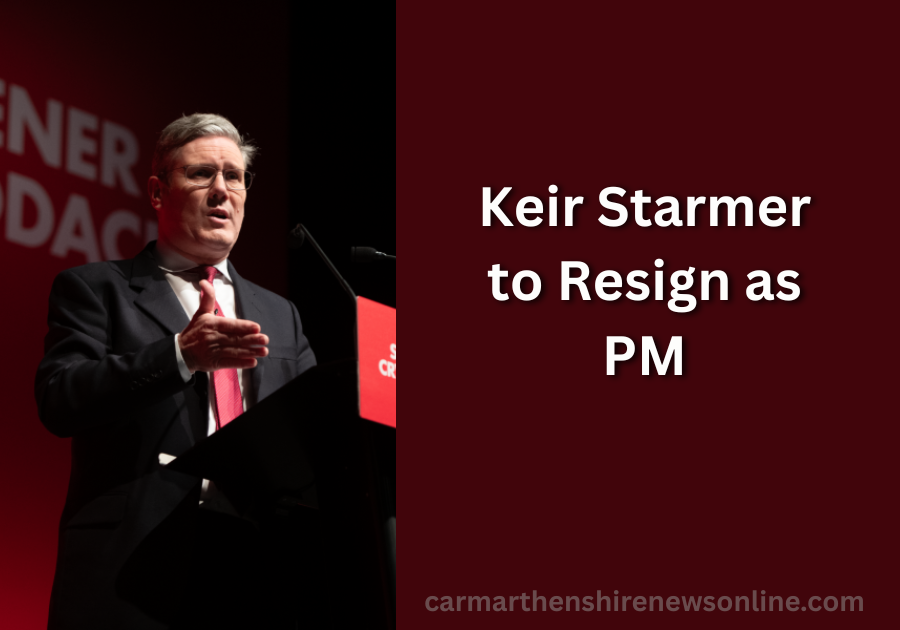
Sir Keir Starmer announced his resignation as Prime Minister and Labour Party leader in a brief statement outside 10 Downing Street on the morning of Monday, 22 June 2026. His voice broke with emotion at the close of the statement, which he delivered in front of government staff, supporters and journalists gathered on the street.
Starmer said he had informed King Charles III of his decision earlier that morning. He confirmed he would remain in post as caretaker Prime Minister until a successor was chosen through an internal Labour leadership contest, with nominations opening on 9 July and closing when Parliament rises for the summer recess on 16 July. In the event of a contest, a new leader will be in place before Parliament returns in September. If no challenger emerges, Burnham could be in office as early as 18 or 19 July.
“The question my party is asking now is whether I am best placed to lead us into the next general election. I have heard the answer of my parliamentary party to that question, and I accept that answer with good grace.”
Starmer defended his record in office, citing increased government spending on defence and healthcare, a decrease in undocumented migration, and what he described as a Britain that was far stronger and fairer than the one he inherited. He said he would give his successor full and unequivocal support.
Why He Went: A Collapse That Built Over Months
Starmer had repeatedly vowed to fight on, even as his position deteriorated through the spring of 2026. Labour’s losses in the May local elections, in which the party lost more than 1,000 council seats in results widely interpreted as a public verdict on his government’s performance, triggered an open mutiny. Labour MPs wrote to Starmer in growing numbers asking him to stand aside. His post-election speech in May, intended to steady the ship, was described by Labour parliamentarians to the BBC as failing to cut the mustard.
The timetable of his departure accelerated sharply in the final days. Defence Secretary John Healey, regarded as a Starmer loyalist, resigned over the Prime Minister’s military spending plans. Armed forces minister Al Cairns followed. And then came the moment that made Starmer’s position arithmetically unsustainable: Andy Burnham resigned as Mayor of Greater Manchester, stood in a by-election in Makerfield on 18 June, won decisively, was sworn in as a Member of Parliament, and immediately made clear he would seek the leadership. Burnham had defeated Reform UK in a seat the party had recently swept at local level, giving him a political narrative that Labour’s nervous MPs found irresistible.
Former Health Secretary Wes Streeting, long regarded as Burnham’s most likely rival, confirmed on Monday morning that he would not stand and would back Burnham instead.
“I am convinced that there is a place for those ideas under his leadership, that he is committed to building an inclusive party, and that he can win the fight of our lives against the forces of nationalism.”
Burnham: The King of the North Heads South
Andy Burnham arrived in London by train from Manchester on Monday afternoon and was sworn in as a Member of Parliament, the constitutional requirement for any Prime Minister sitting in the House of Commons. The Eurasia Group political risk firm predicted he would take office on 18 or 19 July if no contest materialises.
Burnham, who ran unsuccessfully for the Labour leadership in 2010 and 2015, described the transition in measured terms.
“Starmer’s decision marks the beginning of a transition and it is important that this process is conducted in an orderly and responsible way. The country expects stability, seriousness and a continued focus on the issues that matter most, and that is what it will get.”
Burnham will inherit many of the same pressures that brought Starmer down: rising global energy prices, Reform UK’s continued ascent in polling, strained diplomatic channels following the change of administration in Washington, and a Labour Party that has spent the past several months consuming itself rather than governing.
The Democratic Question: Who Voted for This?
The resignation has immediately triggered a constitutional debate that is likely to persist throughout the summer. Reform UK moved swiftly to demand an immediate general election, arguing that the British public did not elect Burnham as Prime Minister and that handing Downing Street to an unelected successor less than two years after a general election repeats a pattern that has now defined British politics for a decade.
The argument has a surface logic that is difficult to dismiss: Britain is on the cusp of its seventh Prime Minister in ten years, only one of whom, Rishi Sunak, left office because voters rather than his own party removed him. The question of whether a general election mandate attaches to a party or to the individual who led it into that election is not a new one in the British constitutional tradition, but it is a question that the current sequence of events makes increasingly difficult to ignore.
Conservative leader Kemi Badenoch put the point bluntly.
“The country is not being governed and Labour say there will not be a Prime Minister until September. Keir Starmer is off on a farewell tour and Andy Burnham wants a summer holiday. Neither is thinking about our national security.”
Badenoch questioned why the country must wait weeks for a new Prime Minister given that Wes Streeting had ruled out standing, and called on the next leader to take up the job without delay.
The View From Wales
In Wales, Starmer’s resignation arrived against the backdrop of Labour’s already devastating losses in the May Senedd elections, in which the party was reduced to nine seats and fell to third place in Cardiff Bay. The resignation of a Prime Minister elected on a mandate that Welsh Labour MPs had enthusiastically championed, less than two years into that mandate, is the latest chapter in a story of collapse that Welsh Labour is still trying to make sense of.
Welsh Labour interim leader Ken Skates defended Starmer’s record, pointing to the devolution settlement and infrastructure commitments secured under his leadership.
“Under his leadership we have seen an increase to the minimum wage, a boost to the state pension and stronger employment rights. We also received a record devolution settlement and generational plans for fourteen billion pounds for rail in Wales.”
The response from opposition parties in Wales focused on what comes next. Plaid Cymru Westminster Group Leader Liz Saville Roberts described the resignation as a moment for Westminster to change direction.
“Keir Starmer’s resignation today must mark a turning point for Westminster, a moment to finally shift away from arrogant centralised control towards genuine devolution.”
Welsh Liberal Democrat spokesperson David Chadwick offered a more sceptical assessment of what a change of Labour leader alone would deliver for Wales.
“Changing the person at the top will not change much unless Labour finally confronts the structural problems that continue to hold Wales back.”
The structural problems Chadwick referenced, NHS waiting lists consistently the longest in the United Kingdom, education outcomes that have declined over multiple testing cycles, child poverty rates higher than in Scotland or Northern Ireland, are not problems that originated in Downing Street. They are the accumulated result of 27 years of Welsh Labour governance in Cardiff Bay, a fact that the arrival of a new Prime Minister in London will do nothing to change.
What Happens Now
Starmer remains Prime Minister in a caretaker capacity. The Labour National Executive Committee will formalise the leadership timetable this week. Nominations open on 9 July. If Burnham is unopposed, as now appears likely following Streeting’s withdrawal, he could be in Downing Street within weeks. If a contest develops, Parliament’s summer recess provides the timeline within which it must be concluded, with a new leader required before the House returns in September.
Britain will, by September at the latest, have its seventh Prime Minister in ten years. The electorate has not been consulted. The next general election is not expected for another three years.
This article was published on the morning of 22 June 2026 and will be updated as events develop. Carmarthenshire News Online is an independent publication not affiliated with any political party.
Carmarthenshire News Online, Independent News for Sir Gaerfyrddin | carmarthenshirenewsonline.com