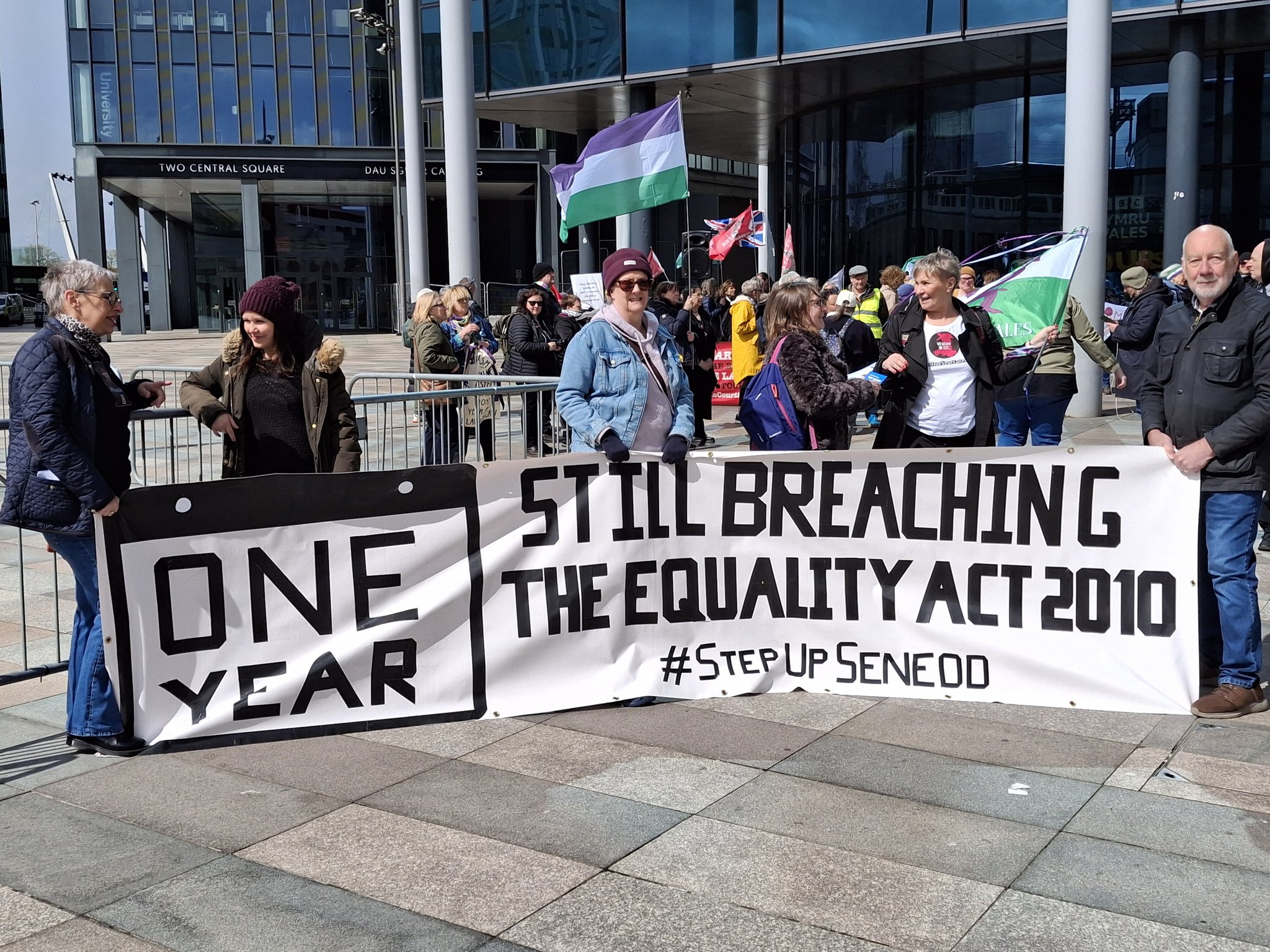
One Year Later Demonstration – pic by Tessa Finch
The gathering reflected a wider national debate around gender identity and women’s rights, with both sides assembling to express deeply held and often opposing views.
Women’s rights campaigners raised concerns about gender identity policies, particularly in relation to single sex spaces and legal protections. Nearby, trans rights activists staged a counter protest, aiming to challenge those views while advocating for inclusion and equality.

Although the protest did not escalate into physical violence, tensions were evident across the event.

Counter protesters used loudspeakers, music and chanting in an effort to disrupt speeches. Some attendees reported difficulty hearing speakers, with several moving closer to microphones in an attempt to stay engaged.
Despite these disruptions, interactions between the two groups remained largely verbal, and no significant physical confrontations were reported.
Police Presence and Public Order
South Wales Police maintained a visible and substantial presence throughout the day, deploying officers to manage the situation and keep opposing groups safely separated.
Police have not indicated that any laws were broken during the demonstration, and there have been no widely reported arrests.
Some participants expressed frustration at the continued use of amplified sound by counter protesters. While such methods are not inherently unlawful, critics argued they made it difficult for speakers to communicate effectively with those in attendance. Despite this, the One Year Later demonstrators persevered through and were able to hear all the speakers at the event.
A Reflection of a Wider UK Debate
The events in Cardiff reflect an ongoing and often polarised debate across the United Kingdom regarding gender identity, freedom of expression and the balance of rights between different groups.
Disagreements have intensified in recent years over proposed reforms to gender recognition laws, as well as the inclusion of transgender individuals in single sex spaces such as changing facilities and refuges.
Women’s rights campaigners involved in demonstrations like this often frame their concerns around safeguarding sex based protections. Meanwhile, trans rights advocates emphasise the importance of inclusion, dignity and protection from discrimination.
The demonstration also highlights the challenges faced by police in balancing the right to peaceful assembly with the need to maintain public order.
Authorities must consider proportionality when deciding whether to intervene in situations involving disruptive but lawful forms of protest, such as amplified sound or organised counter demonstrations.
Public protests and counter protests have become a recurring feature of this debate, raising broader questions about how competing rights are managed in shared public spaces.
A Debate That Continues
As discussions continue across political, legal and social spheres, the April 11 demonstration in Cardiff underscores the strength of feeling on all sides.
It also illustrates the complexity of maintaining open public discourse in an environment where views are increasingly divided, and where the balance between free expression and mutual respect remains under constant scrutiny.
Discover more from Carmarthenshire News Online
Subscribe to get the latest posts sent to your email.