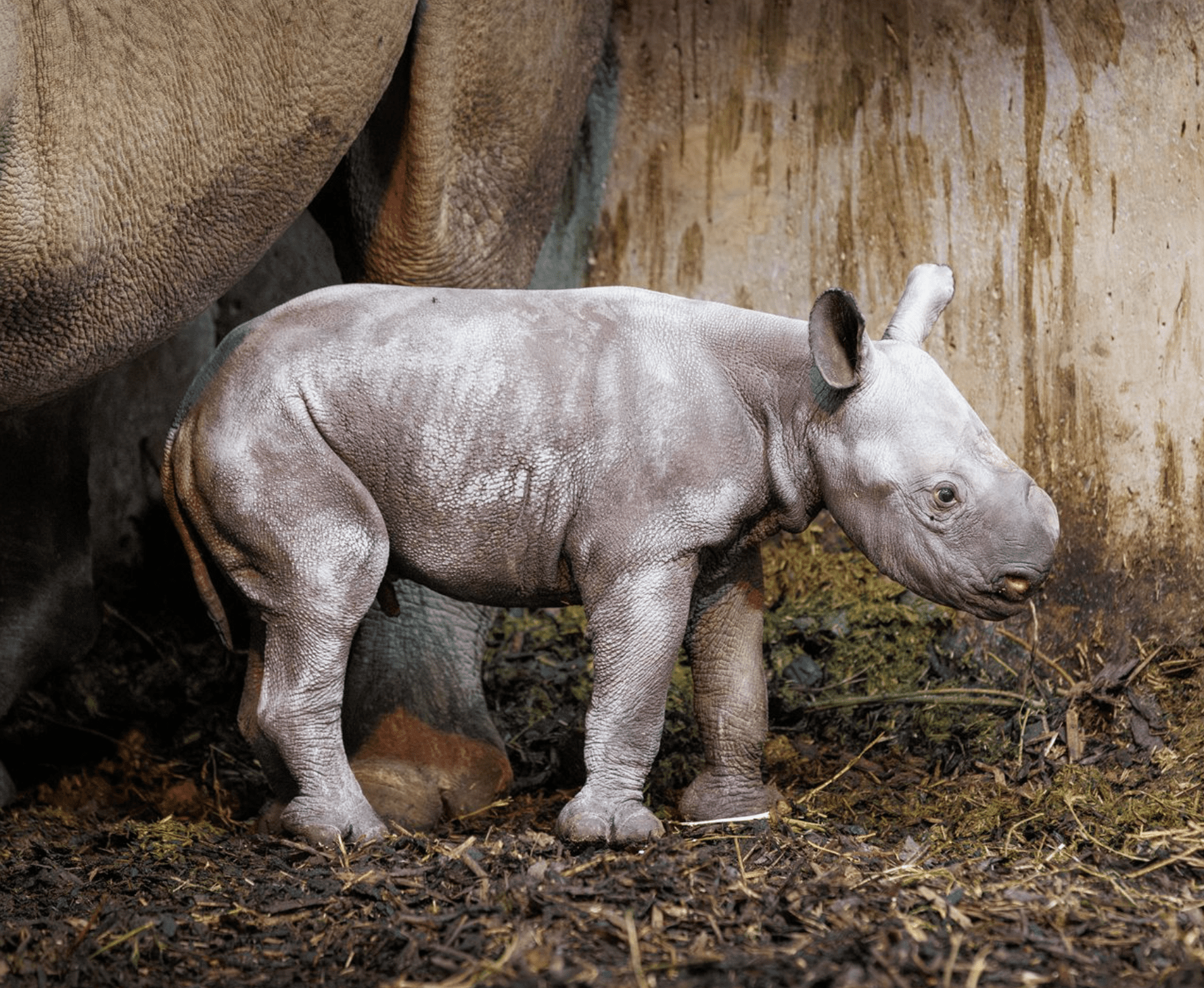
The birth, which took place on Thursday 27 November, marks the zoo’s second rhino calf and only the second ever born in Wales through the European Endangered Species Programme (EEP), coordinated by the European Association of Zoos and Aquaria (EAZA).
After a 15 month pregnancy, twelve year old Dakima delivered her calf at 6:34am. Within hours, the newborn was standing, following his mother, and suckling.


The significance of the birth is notable. Only an estimated thirty nine eastern black rhinos have been born in the United Kingdom over the past twenty five years. With roughly one thousand four hundred and seventy one individuals left in the wild and around one hundred and nine in European zoos, every successful birth contributes meaningfully to the species’ long term survival.
Breeding Programme Success
Dakima arrived at Folly Farm in 2017 and was paired with fourteen year old Nkosi under the guidance of the European breeding programme. The pair previously produced a male calf, Glyndwr, in early 2020, the first eastern black rhino ever born in Wales. Glyndwr has since moved to another collection to support further conservation breeding efforts.
As eastern black rhinos are typically solitary, the zoo manages them in separate paddocks, reintroducing individuals only when carefully planned. After behavioural monitoring suggested Dakima had conceived in August 2024, specialists at Chester Zoo confirmed the pregnancy through stool sample analysis, placing the due date in mid November 2025.
Conservation Officer Jack Gradidge described the birth as a meaningful milestone:
“It is always heart warming to welcome new arrivals as part of the European Breeding Programme, but it is even more special with a species whose wild counterparts are under threat. Dakima was an excellent mother to her first calf, and it is reassuring to see those instincts remain strong.”
He added that the dedicated zoo team had worked hard to create the conditions necessary for successful breeding.
“This calf not only boosts the numbers of a critically endangered species, but is also just the second rhino ever to be born in Wales.”
The birth occurred just before keepers arrived to begin their morning routine. After spotting the calf on security footage, staff carried out quiet checks before leaving mother and baby time to bond. The team continues to monitor both closely.
A Growing Role in Conservation
Folly Farm participates in collaborative conservation efforts across Europe and supports several external projects, including a partnership with Helping Rhinos, a United Kingdom based organisation assisting rhino orphanages in South Africa.
Helping Rhinos Chief Executive Simon Jones welcomed the news:
“We are delighted to hear of this beautiful eastern black rhino calf at Folly Farm. We value their support for Helping Rhinos initiatives, including the care of young calves orphaned by poaching.”
Male rhinos do not play a role in raising calves, so Nkosi will remain separate for the foreseeable future. In the wild, rhino calves typically stay with their mothers for up to four years. Depending on the new calf’s development and future conservation needs, he may eventually be transferred to another zoo or potentially be part of reintroduction efforts.
Visitors should not expect to see the calf immediately, as keepers will give the pair time and space, but updates will be available on the zoo’s social media channels.
A Decade of Rhino Conservation at Folly Farm
Folly Farm’s Kifaru Reserve, a five hundred thousand pound purpose built habitat, opened ten years ago and has played a key role in the zoo’s conservation mission. The exhibit highlights the importance of modern zoos in supporting endangered species and showcases Folly Farm’s commitment to conservation both locally and internationally.
For more information, visit Folly Farm’s official website.
Discover more from Carmarthenshire News Online
Subscribe to get the latest posts sent to your email.