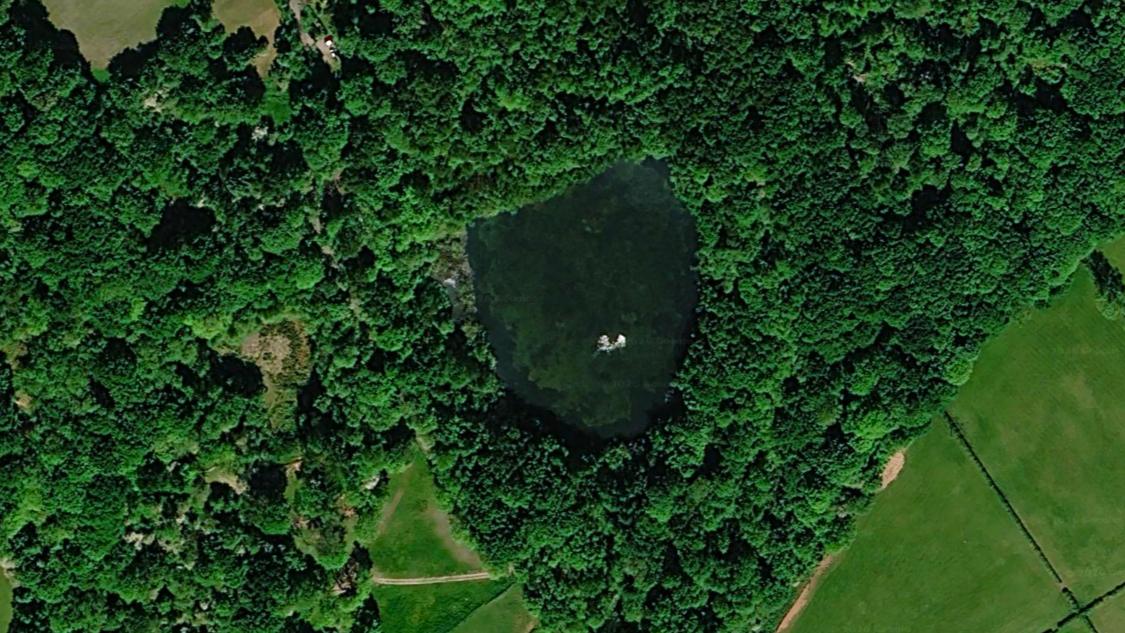
A toxic waste dump in Wrexham is a ‘shame on Britain’ according to the team behind the BBC documentary Buried.
Hollywood actor Michael Sheen and environmental journalists Dan Ashby and Lucy Taylor singled out Llwyneinion Acid Tar Lagoon in Wrexham as an ‘outrageous’ example of industrial pollution as they faced MPs on the UK Government’s Welsh Affairs Select Committee to explore the findings of the documentary and next steps.
Ashby told the committee the lagoon is a black mark on the UK’s record of land remediation and the legal standard that the ‘polluter pays’.
“That lagoon is a shame on Britain,” he said. “It is a scandal, really…that that has stood there for 20 years is outrageous.”
He said that there were believed to be between 10,000 and 45,000 contaminated land sites across Wales of which just 80 had formally been classified as contaminated.
“In other countries, if the land’s contaminated, if it’s a risk, the government moves in and pays for it,” he said. “In terms of ‘polluter pays’, to be honest, Britain has a woeful record on that when you compare it to other countries.
“We’re not taking up many of these cases. We need to look at why polluter pays isn’t working – why are we polluter profits, not polluter pays?”
Not all of the suspected contaminated sites have documentation to identify which business is responsible for disposing of waste however.
Coupled with the fact many of the businesses originally responsible for polluting the land have been restructured making it difficult to hold them responsible, plus the scrapping of the national remediation fund in 2014, local councils have been left to foot a bill that they cannot afford.
“The testing that’s been done up until we did the documentary has been done by councils,” said Sheen ” It’s difficult to see how that testing could be trusted by the communities as being appropriate and extensive enough and rigorous enough.
“If the result of that testing went one way, it could lead to the potential bankrupting of those councils. So people are being asked to trust testing that has an understandable, quite strong agenda behind it.”
The most recent estimated clean-up cost of Llwyneinion alone was around £40 million.
“When Wrexham Council assessed that lagoon, the advice was that the first choice was to clean it up,” said Ashby.
“The second option was – if you haven’t got the money – put a fence around it and just monitor it.”
Taylor explained that the more the research uncovered, the more concerned they felt people should be.
“I remember the three of us having a conversation when we first started the podcast which came before the documentary, saying we have to be absolutely sure everything we say is watertight because it’s going to scare people and you don’t want to scare people if it’s actually not a risk to them.
“As we’ve gone further through this journey, we’ve shifted on that and felt that actually what we’re finding out is quite scary.
“I think the public emphasis is towards thinking ‘well, it can’t be that bad because they wouldn’t allow that to happen’ when actually, some of what’s happening is quite worrying.”
Despite the public concern about the issue, Sheen said the team had not been contacted by any local authority or Welsh Government representative since the broadcast last month.
Sheen said: “I got in touch with the First Minister before the documentary went out and I invited him and whoever he would like to bring forward to watch the documentary before it went out publicly,” he said. “I feel like this is not about trying to point blame at anyone and I thought it was a very good opportunity for a new First Minister incoming to be able to get on board with this, to look for solutions.
“Unfortunately, that offer was not taken up.”
Ashby said since the broadcast there had bee n a lack of engagement from the authorities.
“I think this issue has been met with either indifference,” he said. “I guess they don’t know what to do or they don’t want to engage pretty much across the political spectrum.
“What’s kind of surprising is that, chemical contamination and toxins in our communities is, I don’t think, a politically divisive issue.”
The trio also told MPs that the responsibility for cleaning up the problem had to be taken off local authorities like Wrexham because the huge cost of clean-up meant residents could not trust councils to be objective when monitoring dump sites.
“My expectation is that the people who are responsible for this originally should pay for it, not the taxpayer,” said Sheen.
“The burden has to be taken off the councils. At the moment it feels like there’s a sort of standoff.
“You’ve got councils who are terrified of making a judgment one way, regardless of what the data or evidence or information might be. In fact they are probably very nervous about really looking into it too far because if they were to find out they were financially responsible for this, that’s the end of that council.
“We have to take it off the councils, I think the testing has to be done completely independently and I think there has to be a fund that is beyond the council at a national level.”
That would require significant investment in Natural Resources Wales – which Ashby said was already struggling to cope.
“I think Wrexham Council would acknowledge that and would acknowledge their frustration that they haven’t got the money to clean it up and probably NRW as well,” he said.
“I don’t think the NRW has the capacity to do this and I don’t think the Welsh Government has the budget or certainly the will to do this.
“NRW is really stretched… so no, we are not meeting this challenge with enough resources.”