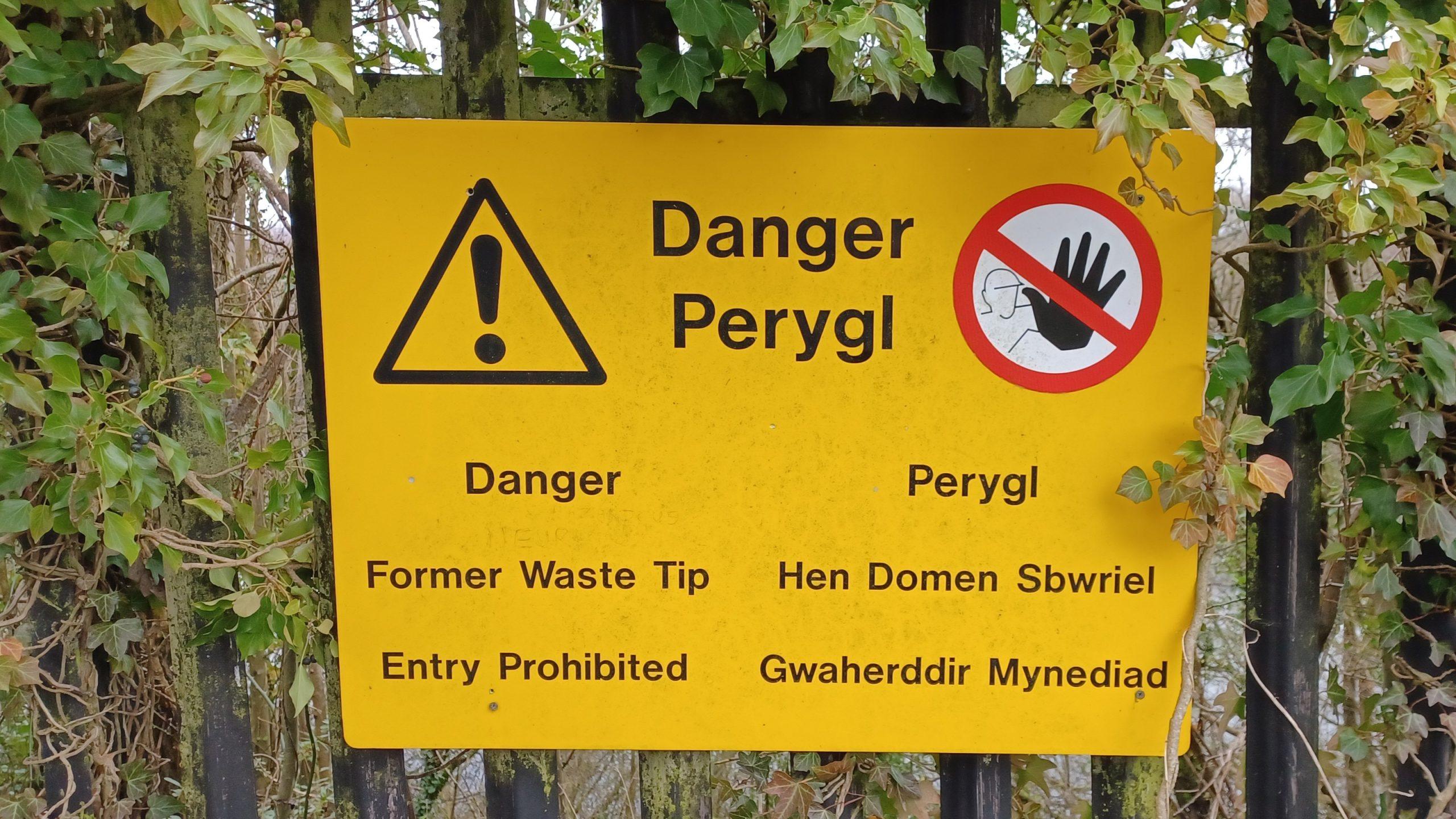
A POISON pool of toxic waste dumped in Wrexham by Monsanto over decades should be cleaned up by the firm’s new owners and the UK Government, say environmental campaigners.
Wales Environment Link (WEL) – a network of environmental, countryside and heritage non-governmental organisations – says the cost of cleaning up sites like Llwyneinion Acid Tar Lagoon in Ruabon is likely to bankrupt councils like Wrexham.
It believes the UK Government should fund the clean-up of toxic cancer-causing chemicals while taking legal action to recover the cost from the firm responsible for Monsanto’s historic conduct – Eastman Chemical Company.
The plight of the community living around Llwyneinion lagoon has once more been brought into the public eye by a new BBC documentary by Hollywood actor and proud Welshman Michael Sheen.
Buried investigates the historic dumping of carcinogenic polychlorinated biphenyls (PCBs) at 12 sites in Wales and two in Cheshire by Monsanto up until PCBs were banned in the 1980s.
PCBs are known as ‘forever chemicals’ because they do not flush out of your system. Once they are in an environment, animal tissue or human, they stay there. Every time you are exposed to them they build up in your system and the more they do, the more harmful they become.
In the documentary people living around the Llwyneinion site reported higher instances of rare cancers than elsewhere but Wrexham County Borough Council said the site was not deemed dangerous enough to require clean-up.
The most recent estimated clean-up cost for the site is around £45 million.
Karen Whitfield, Director at Wales Environment Link (WEL), said: “PCBs were dumped before devolution and so the UK Government should take responsibility for the impact on Welsh communities.
“The Welsh Government and public bodies need UK Government support and resources to urgently fund the remediation of contaminated waste sites.
“A dedicated body, akin to the Coal Authority, should be set up with the right expertise to deal with contaminated land remediation in Wales and England.”
Her appeal was backed by Dr Dave Megson, a forensic scientist from Manchester Metropolitan University.
“I’ve been screaming about this for a decade or more,” he said. “We have tried to engage with Government, but it falls on deaf ears. It’s time we wake up to this crisis and start prosecuting polluters for the damage they cause.”
WEL wants those responsible for PCB contamination – where liability can be established – to be held accountable for the costs of investigating and remediating polluted sites instead of taxpayers.
In light of the documentary it is also calling on the UK Government to fund the Welsh Government for the clean-up of historic contamination.
“Much of Wales’ PCB pollution occurred before devolution, when responsibility for environmental regulation rested with the UK Government,” said Ms Whitfield.
“The UK Government must therefore provide the funding and dedicated resource Wales needs to identify, investigate and remediate contaminated sites, rather than leaving the Welsh Government to meet the costs of a pollution legacy it inherited.”
The two-part documentary series Buried – which investigates toxic waste dumping by chemical companies in Wales and its impact on communities – is available on the BBC iPlayer from Monday, August 17 – on the same day episode one will be broadcast on BBC One Wales and BBC Two across the UK.