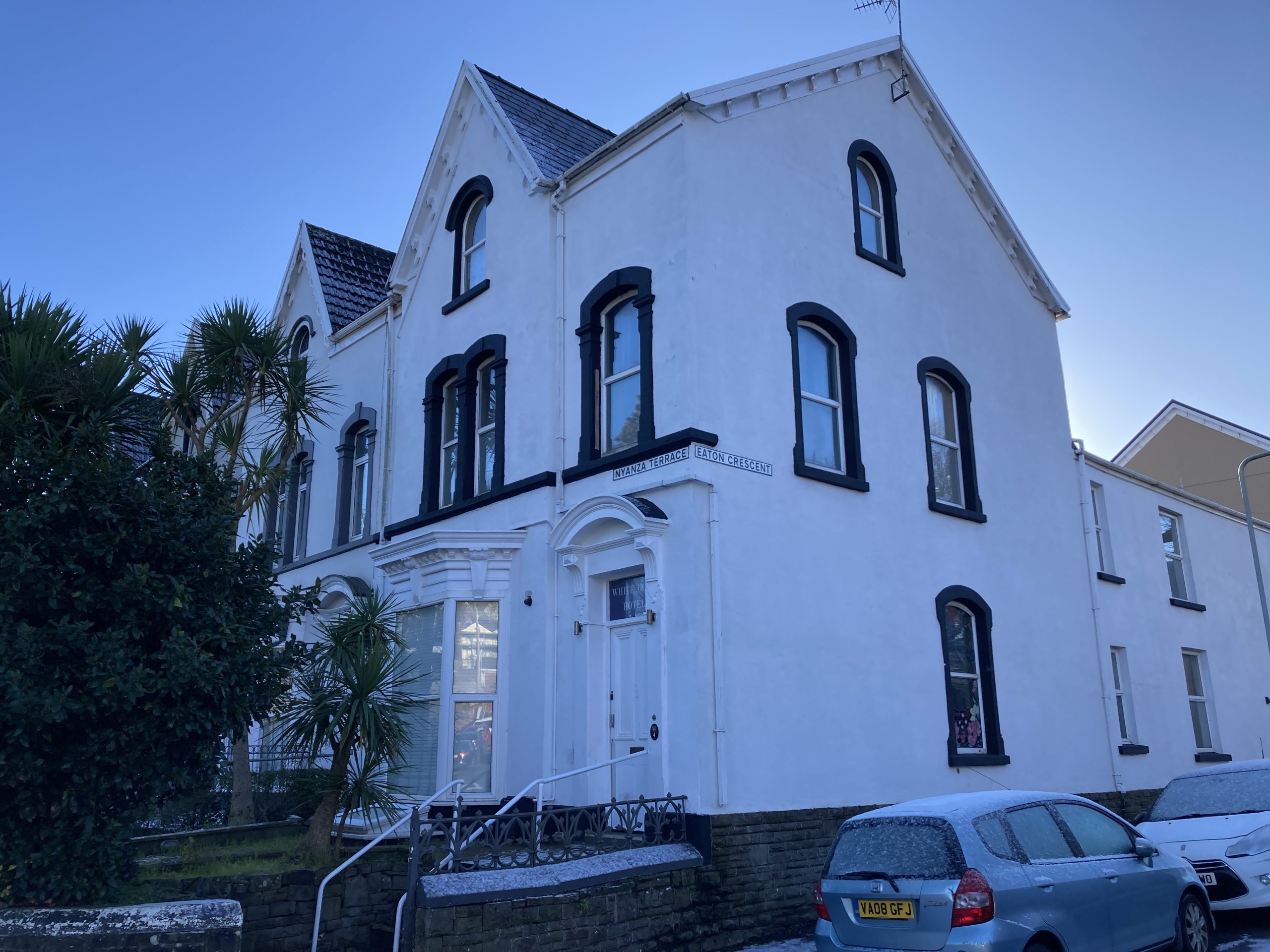
The inspector, Anthony Thickett, was worried about the living conditions for future occupiers of the former White House Hotel, Uplands.
He said the proposed kitchen, while twice as big as the minimum recommended size for a shared house for six to 10 people, would be “a very cramped space for 12 to cook, eat and wash up”.


He didn’t consider the proposed 22 square metre living room large enough, and noted there wouldn’t be any outside space for occupiers.
His decision report also said the proposed basement bedroom had poor light and no outlook and offered “a dreadfully poor standard of accommodation”.
It added that the window of another bedroom looked onto a lean-to and that the room’s occupant would have no internal access to the kitchen or living room. It said another bedroom would have no external window. And the occupiers of two other bedrooms, said the decision report, would be able to look into the other bedroom at close quarters.
A planning agent on behalf of the developer, Lee Roblin, had offered to make amendments, such as using the basement bedroom as an extra living room, but Mr Thickett said “the appeal process is not to be used to make significant changes to a proposed development”.
Mr Roblin’s initial change of use application to Swansea Council to convert the former hotel into a house of multiple occupation (HMO) said significant investment was needed in the building.
The former hotel did have planning consent – and still does – to be turned into five flats but a planning statement on behalf of Mr Roblin said redeveloping it in this way was not considered viable by the previous owner, and the property was sold at auction for £430,000.
The planning statement said the building was “in a prime location to attract students, young professionals or people wishing to work in the city centre or growing university campuses” and would help support local businesses as a HMO.
The council turned down the 12-bed HMO application on three grounds, and Mr Roblin appealed. An appeal statement on his behalf said the building’s only viable use was as a HMO given the amount of work needed.
The appeal statement said as a HMO the former hotel would likely generate £500 per month per room, giving an annual rental yield of around circa £57,600 assuming a 20% vacancy rate. The approved five flats would cost a similar amount to refurbish, it said, and generate a monthly income of some £800 per month which would give a yearly yield of around £38,400 – again assuming a 20% vacancy rate.
The appeal statement also argued the proposed kitchen and living room were “more than sufficient” in terms of space to meet the needs of future occupiers.
Mr Thickett’s decision to dismiss the appeal considered a planning policy about HMO concentration in Uplands – an area popular with students – but said he wasn’t confident in either the council’s or appellant’s calculations and whether the proposal conflicted with it. “However, my findings regarding unsatisfactory living conditions provides compelling grounds to dismiss this appeal,” it said.
Discover more from Carmarthenshire News Online
Subscribe to get the latest posts sent to your email.