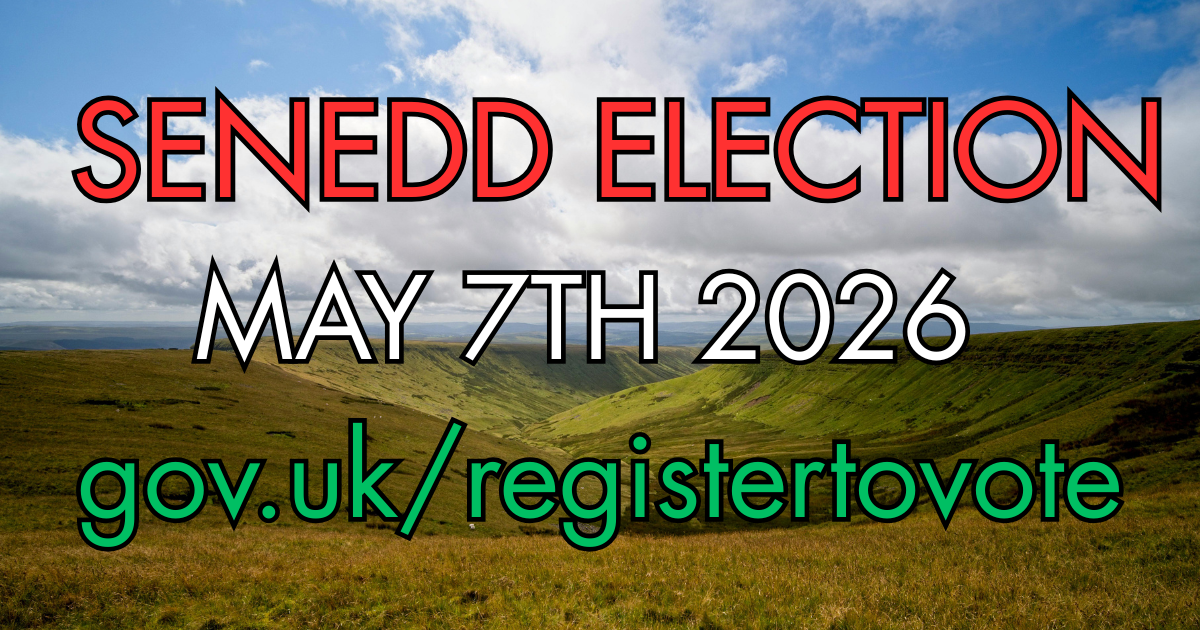
[tta_listen_btn] Wales is heading into one of the most consequential elections since devolution began in 1999.
The 2026 Senedd election marks a historic turning point, introducing a fully proportional voting system for the first time. The change means that, across the country, every vote now carries equal weight, ending the era of so called safe seats and fundamentally reshaping how governments in Wales are formed.
With the Senedd expanding from 60 to 96 Members, and constituencies reduced from 40 to 16 larger areas, the political landscape is being redrawn. Elections will now take place every four years, with voters choosing parties rather than individual candidates.
The stakes are high. The Welsh Government controls billions in public spending, shaping the NHS, education system, transport, economic policy and environmental decisions that affect communities in every corner of the country.
What This Means for Carmarthenshire
Within this national shift, Sir Gaerfyrddin Carmarthenshire becomes one of the most important battlegrounds in Wales.
The new constituency, covering both Llanelli and Carmarthen, will elect six Members of the Senedd, making it one of the largest and most politically significant seats under the new system.
For local voters, this means
. Greater representation in the Senedd
. A more proportional reflection of how Carmarthenshire votes
. A real chance for multiple parties to win seats in the same area
In practical terms, Carmarthenshire will no longer be defined by single party dominance. Instead, its political voice will be shared and contested across a broader spectrum.
Why This Election Matters
This election will directly influence decisions that shape daily life across Carmarthenshire, including
Healthcare, waiting times, GP access and the future of Glangwili Hospital
Education, school standards, funding and Welsh medium provision
Jobs and the economy, local employment, wages and business support
Infrastructure, roads, transport and rural connectivity
Climate policy, river pollution, farming and coastal protection
With around one pound in every five of public spending in Wales controlled by the Senedd, voters are deciding how significant resources are allocated locally.
Young Voters Have a Bigger Say
For the second Senedd election in a row, 16 and 17 year olds can vote, but this time under a system where their vote is more powerful than ever.
Issues such as housing affordability, climate change, education and job prospects are central to the campaign and are expected to drive turnout among younger voters.
How Voting Works
The new system is designed to be simple:
. You cast one vote for a political party
. Seats are allocated proportionally based on total vote share
. Each party’s candidates are elected from a ranked list
Key Dates
20 April 2026, deadline to register gov.uk/registertovote
21 April at 5pm, postal vote deadline
28 April at 5pm, proxy vote deadline
7 May from 7am to 10pm, polling day
No photo ID is required.
The Key Issues Locally
Across Carmarthenshire, six major issues are dominating the campaign, and each is rooted in real, ongoing challenges reported locally.
NHS
Pressure on local healthcare is visible in day to day service strain. Carmarthenshire News Online has reported that Glangwili Hospital is operating under sustained pressure, with services described as at bursting point due to demand exceeding capacity. Ambulance delays and extended handover times have become a major concern, directly impacting emergency response across the region. The concentration of services at Glangwili has intensified pressure, making healthcare one of the defining issues of this election locally.
Education
Education concerns are increasingly focused on Additional Learning Needs provision. Local reporting has highlighted serious concerns around provision at specialist settings such as Ysgol Heol Goffa, where campaigners have raised issues about staffing and medical support for vulnerable pupils. These challenges reflect wider pressure on ALN services across Carmarthenshire and are a growing point of concern for families.
Employment
Economic insecurity remains a major issue, particularly in Llanelli. The closure of the Stradey Park Hotel, covered by Carmarthenshire News Online, has resulted in job losses and uncertainty for staff, while also removing a long standing local employer. This reflects wider concerns around job stability in key sectors such as hospitality and services.
Crime
Crime continues to feature in local concerns, particularly around rural crime, anti social behaviour and drug related activity. While policing is not fully devolved, these issues intersect with devolved areas such as community safety and prevention, making them part of the wider political debate.
Economy
Town centres in Carmarthenshire are facing visible strain. Shop closures, reduced footfall and rising operating costs are affecting both Llanelli and Carmarthen. The loss of businesses and uncertainty around commercial spaces highlight the challenges facing the local economy and the need for regeneration.
Climate
Environmental concerns are increasingly local in nature. River pollution affecting waterways such as the Towy and Gwendraeth, alongside debates around offshore wind development in the Celtic Sea, are bringing climate policy directly into local discussion. Farming transitions and land use changes are also key concerns across rural Carmarthenshire.
The Political Context
Wales is heading into this election with a political landscape that has shifted dramatically in less than two years.
For the first time since devolution began in 1999, Welsh Labour is no longer the dominant force in polling. Instead, the race has become a two party contest between Plaid Cymru and Reform UK, with Labour trailing behind.
Recent polling suggests Plaid Cymru has established a clear lead, with support consistently in the low to mid 30s. Reform UK has surged into second place, polling in the high 20s, while Labour has fallen into the teens. This represents a dramatic reversal of Welsh political norms.
This shift reflects deeper trends. Plaid Cymru’s rise is being driven by disillusionment with Labour’s long period in government, combined with growing national momentum and a perception that the party is now a credible option to lead Wales.
Reform UK’s growth has been strongest in post industrial areas, including Llanelli, where anti establishment sentiment has translated into real electoral support. However, questions remain around candidate depth, organisation and consistency.
The result is a fragmented and competitive electoral environment where multiple parties are expected to win representation under the new proportional system.
Candidates in Carmarthenshire
Under the new system, voters choose parties, but the individuals on party lists still play a key role in shaping representation.
Plaid Cymru’s Candidates


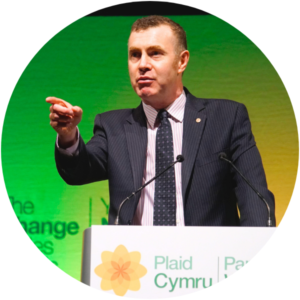
Cefin Campbell MS (left)
A sitting Senedd Member with a strong local presence, particularly on Welsh language and rural issues. Widely expected to retain a seat.
Nerys Evans (centre)
Former Assembly Member with experience in education and public policy, bringing credibility and experience to the list.
Adam Price (right)
Former Plaid Cymru leader returning to frontline politics. A well known national figure with a strong focus on economic reform, though still a polarising presence.
Welsh Labour’s Candidates

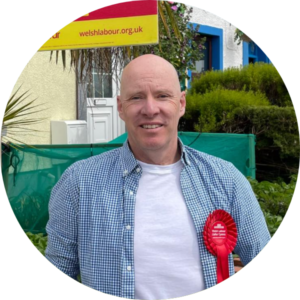

Calum Higgins (left)
Lead candidate focusing on defending Labour’s public service record and maintaining support across Carmarthenshire.
Dawn Evans (no image)
Community focused candidate campaigning on health, housing and local services.
Martyn Palfreman (centre)
Focused on economic regeneration, particularly in Llanelli and surrounding communities.
Additional candidates such as David Darkin (right) and Lewis Davies (no image) reflect Labour’s attempt to rebuild trust.
Reform UK Candidates
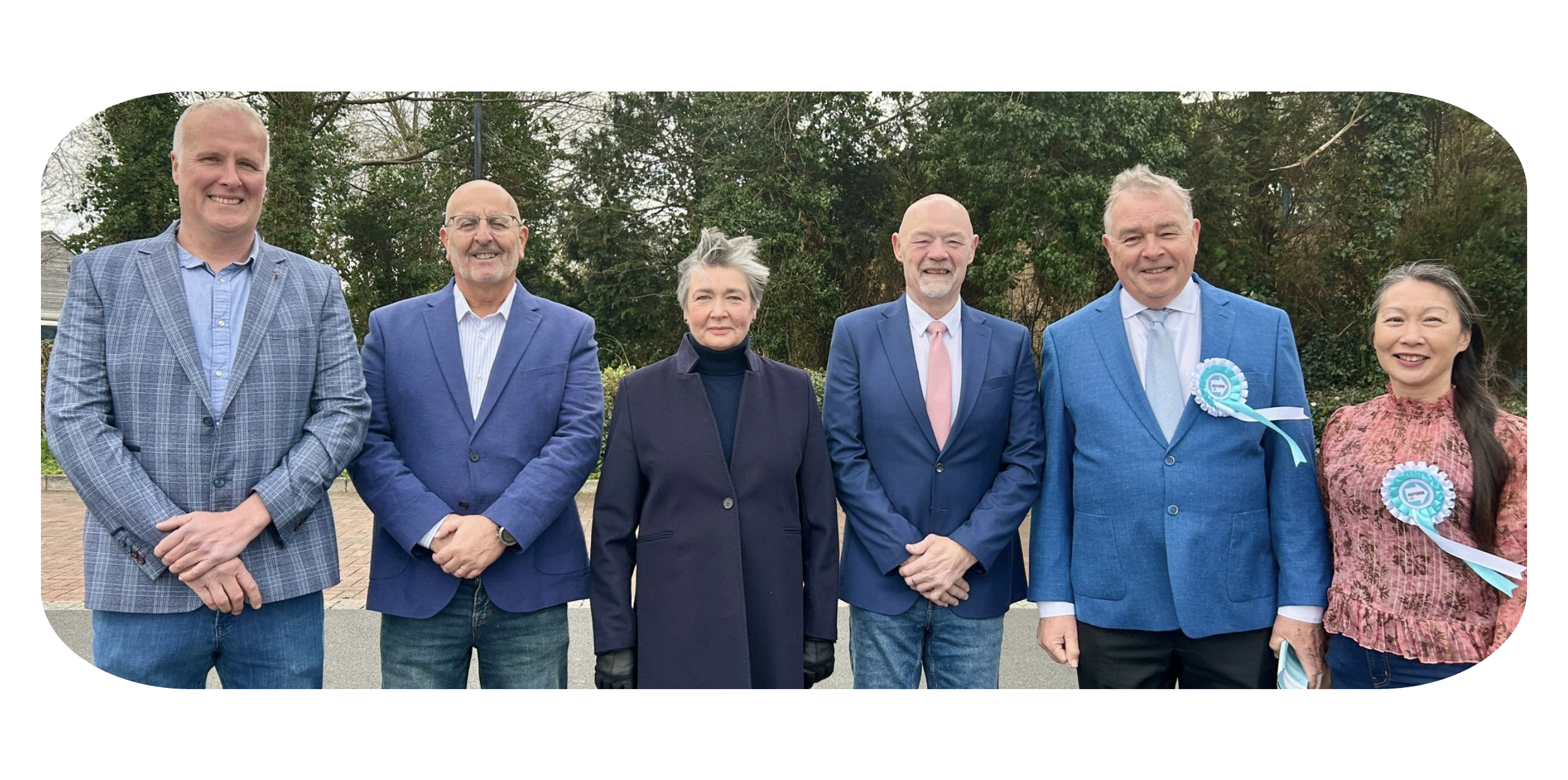 Gareth Beer (far left)
A business owner and Kidwelly Town Councillor, Beer has become one of Reform’s most recognisable figures in West Wales. He came within around 1,500 votes of winning Llanelli in the 2024 General Election, signalling a major shift in voting patterns in what had long been a Labour stronghold. His campaign focuses heavily on NHS waiting times, small business support and anti establishment messaging, which has resonated in parts of the constituency.
Carmelo Colasanto (left)
Standing as part of Reform’s wider list, Colasanto represents the party’s attempt to broaden its appeal beyond a single locality. Campaign messaging has focused on economic reform and public service delivery, aligning with the party’s national platform.
Sarah Edwards (centre left)
Edwards’ candidacy reflects Reform’s effort to diversify its slate and engage with community level issues. Like other candidates, messaging centres on cost of living pressures, local services and dissatisfaction with established parties.
Christopher Brooke (centre right)
Brooke is part of Reform’s push to present a full list under the proportional system. His campaign presence has focused on national themes translated into local concerns, particularly around economic growth and governance.
Alan Cole (right)
Cole’s candidacy adds to the party’s depth in Carmarthenshire, with a campaign emphasis on restoring trust in politics and challenging long standing party control in Wales.
Michelle Beer (far right)
Also standing on the Reform list, Michelle Beer contributes to the party’s broader slate and local visibility, reinforcing Reform’s strategy of running multiple recognisable names rather than relying on a single candidate.
Reform’s wider slate shows a clear attempt to establish a broader presence in Carmarthenshire, though scrutiny around candidate vetting has featured in the wider campaign.
Conservatives and Liberal Democrat Candidates


Richard Williams (left) for the Conservatives is campaigning on economic growth, infrastructure and tax reform.
Justin Griffiths (right) leads the Liberal Democrat effort, focusing on health services, rural communities and political reform, supported by a full party list.
Wales Green Party Candidates


Rob James (left)
A sitting councillor in Llanelli who defected from Labour, giving the Greens a higher local profile than in previous elections.
Other candidates including Nick Pearce (right) and Craig Davies (no image) are campaigning on climate, transport and rural sustainability issues.
Predicted Outcome
With six seats available, Carmarthenshire is expected to return a mixed result reflecting the new proportional system.
Based on current polling trends and local dynamics, a realistic projection is
Plaid Cymru, 2 to 3 seats
Reform UK, 1 to 2 seats
Welsh Labour, 1 to 2 seats
Conservatives, 0 to 1 seat
Greens or Liberal Democrats, 0 to 1 seat
Nationally, Plaid Cymru is projected to emerge as the largest party, potentially approaching 40 seats in the Senedd. Reform UK is expected to make significant gains, while Labour faces the prospect of its weakest performance since devolution.
The most likely outcome is a Plaid Cymru led government, potentially requiring support from smaller parties.
The Bottom Line
The 2026 Senedd election is not just another vote, it is a defining moment for Wales.
A new system, a shifting political balance, and for Carmarthenshire, six seats that could shape the direction of the country.
For voters across Sir Gaerfyrddin, the message is clear
this time, every vote really does count.
Register to vote: gov.uk/registertovote
Electoral Services: 01267 228889
Polling Day: Thursday 7 May 2026