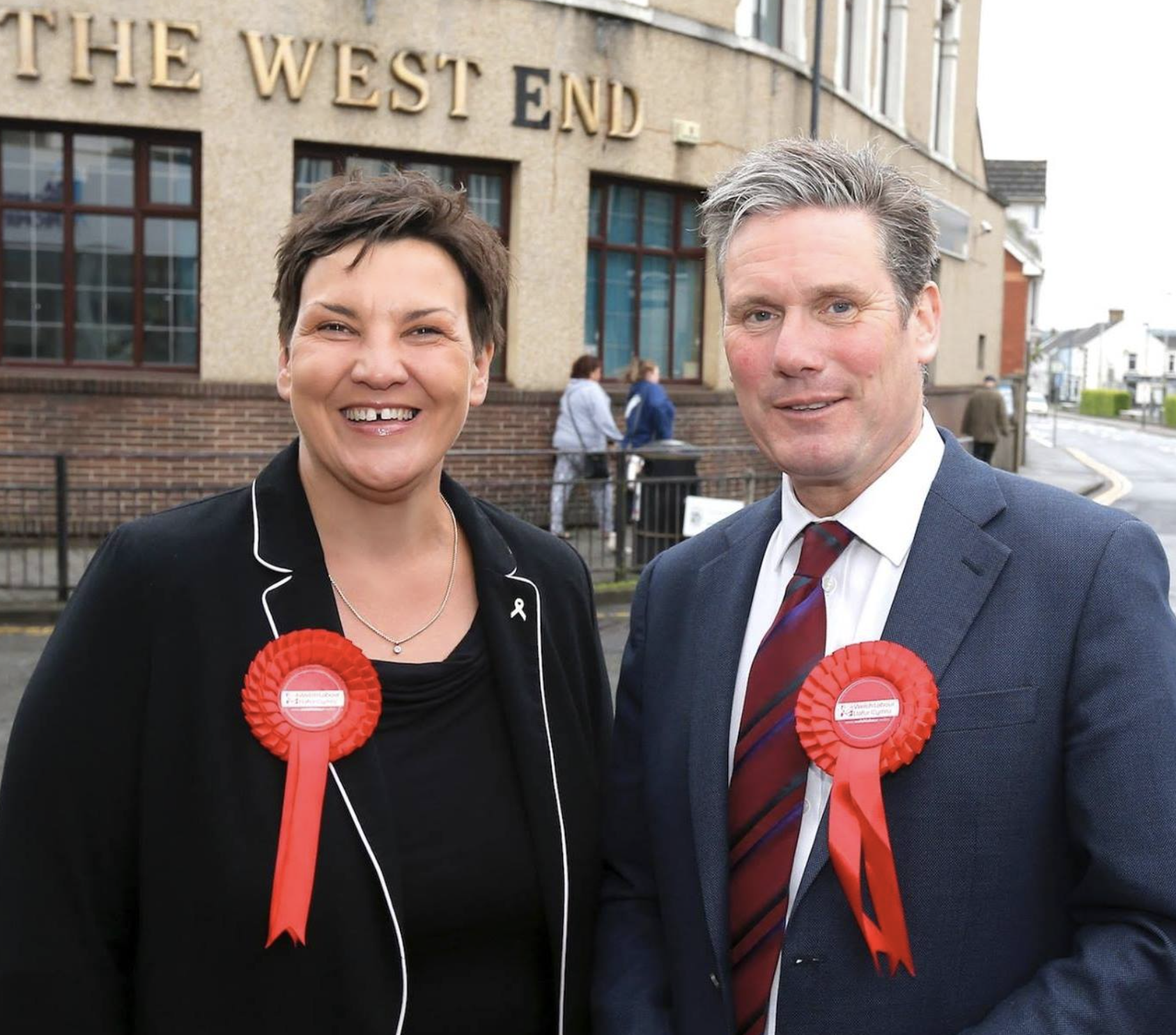
Tonia Antoniazzi with Kier Starmer (Image: Tonia Antoniazzi /Facebook)
[tta_listen_btn] When MPs who campaigned on Keir Starmer’s mandate begin calling for his resignation, Welsh voters are entitled to ask a simple question: if you did not believe in the programme, why did you ask us to vote for it?
Editorial | Carmarthenshire News Online | May 2026
The Gower Signal and What It Really Means
Tonia Antoniazzi, the Labour MP for Gower, has become one of the more prominent Welsh voices calling for a change in leadership at Westminster. In a statement published this week, she was direct about her position.
“Recent election results make clear that the Prime Minister has lost the confidence of the country. I do not believe that Keir can lead that fight. For the sake of my constituents, for the Labour movement, and for the country, it is time for new leadership.”
It is a position that deserves to be taken seriously, because the underlying anxiety is real. Welsh Labour voters are leaving. The Senedd election results have confirmed what the polling had been signalling for months: that the coalition of voters who put Labour into Cardiff Bay for 27 years and delivered Starmer his landslide in 2024 is fracturing, and fracturing quickly.
But there is a problem with Antoniazzi’s diagnosis, and it is one that Welsh voters, particularly those in communities that have lived through the consequences of devolved Labour governance, are well placed to identify. The dismal track record she invokes is not primarily a Westminster story. It is a Cardiff Bay story. And the leadership she helped install at Westminster was elected on a mandate that Welsh Labour MPs spent the better part of two years enthusiastically asking the public to support.
If the ship is sinking, it is worth establishing who has been at the wheel, and for how long.
The Mandate Problem
The 2024 general election gave Keir Starmer one of the largest parliamentary majorities in modern political history. Welsh Labour MPs, Antoniazzi among them, were returned to Westminster on the back of that mandate. They canvassed for it. They made the case for it on doorsteps across Wales. They asked their constituents to trust the programme.
Antoniazzi’s statement this week acknowledges real achievements from that programme, citing the Employment Rights Act, the Crime and Policing Act, and action on the asylum backlog. She credits Starmer with leading the country through difficult international situations, including keeping Britain out of the conflict between the United States and Iran. She describes him as a decent man who has always tried to do the right thing and has led with integrity.
And then, having said all of that, she calls for him to go.
The reasoning offered is that too much of the good work has been lost because the party has not explained its policies clearly or brought people with it. In her words: when people do not understand what we are doing or why, they lose trust, and that trust is hard to rebuild.
This is a striking diagnosis. The implication is that the problem is not the policies themselves but the communication of them. That the public would have accepted the programme if only it had been better explained. It is, in essence, an argument that voters are not wrong to be dissatisfied but are wrong about the reasons for their dissatisfaction.

Welsh voters, who have been told variations of this argument by Cardiff Bay administrations for the better part of three decades, may find it familiar.
In Wales, that question carries particular weight. Because the most visible failures that Welsh Labour voters cite, the NHS waiting lists, the struggling schools, the 20 mph policy that drew over 450,000 signatures in opposition, the sense of communities managed from above rather than governed from within, are not the failures of Westminster. They are the failures of Cardiff Bay. And Cardiff Bay has been Labour territory, without interruption, since the Senedd first sat in 1999.
Twenty-Seven Years and the Deflection Habit
There is a well-worn pattern in Welsh Labour politics, one that voters have become increasingly impatient with, in which the party’s difficulties are attributed to forces outside its control. Westminster cuts. Tory austerity. UK-wide headwinds. The implication, never quite stated directly, is that Welsh Labour would have done better if only conditions had been more favourable.
That argument has worn thin. After more than a quarter of a century in power, the condition of Welsh public services is Welsh Labour’s responsibility. The NHS waiting lists that consistently outpace those in England, the education outcomes that have lagged behind comparable nations, the infrastructure that successive administrations promised to modernise and did not, these are not the consequences of forces beyond Cardiff Bay’s control. They are the accumulated result of 27 years of choices made by a party that has never had to face the discipline of opposition.
Antoniazzi’s call for a change in Westminster leadership, framed as a response to voter dissatisfaction, risks becoming precisely the kind of deflection that Welsh voters have learned to recognise. Changing the leader in London does not fix a hospital corridor in Swansea or a school funding model in Ceredigion. It does not address the democratic frustration of a Welsh electorate that watched its devolved government treat a record-breaking petition against the 20 mph limit as an inconvenience to be managed rather than a mandate to be respected.

Changing the face at the top of the party does not change the record at the bottom of the waiting list.
Wales has witnessed a revolving door of First Ministers at Cardiff Bay: Carwyn Jones, Mark Drakeford, Vaughan Gething and Eluned Morgan are the most pressing examples of a party that has substituted personnel changes for political ones. Lee Waters, the MS for Llanelli, quietly called time on frontline politics altogether, a departure that said more than any press release could.

When Keir Starmer visited Wales in 2021, the images that circulated showed Welsh Labour MS Lee Waters and then First Minister Mark Drakeford at the seaside in Llanelli, eating fish and chips from paper wrappers, a carefully composed portrait of humble, grounded, working class solidarity. The mask did not sit well. The warnings about a rise in the discontent with Labour were already audible, and they were ignored at the party’s own considerable risk.
What has followed the election results is telling. The new mantra across Welsh Labour has been to say anything that discredits or halts Reform’s progress, rather than to reflect honestly on the record or to offer the people of Wales anything resembling an apology for the gap between what was promised and what was delivered. Antoniazzi is one of a new breed of politician who some might reasonably describe as running with the fox and the hounds, positioning herself as a critic of the leadership she helped install while showing no equivalent appetite for accountability closer to home, and holding on to a well-paid seat with considerable determination.
There is also a question of basic fairness that deserves to be stated plainly. Reform’s Senedd members have been in Cardiff Bay for a matter of days. They have not yet had the opportunity to demonstrate what they will do, what questions they will ask, or what kind of political force they will prove to be. Yet both Welsh Labour and Plaid Cymru have declared, in advance and as settled policy, that they will not engage with Reform under any circumstances. Plaid’s position carries its own particular irony for a party that built its recent credibility on the argument that Wales deserves a less tribal, more collaborative politics. The risks and implications of that blanket exclusion, for democratic accountability and for public trust in the Senedd itself, will unfold across the next four years. Welsh voters will be watching.
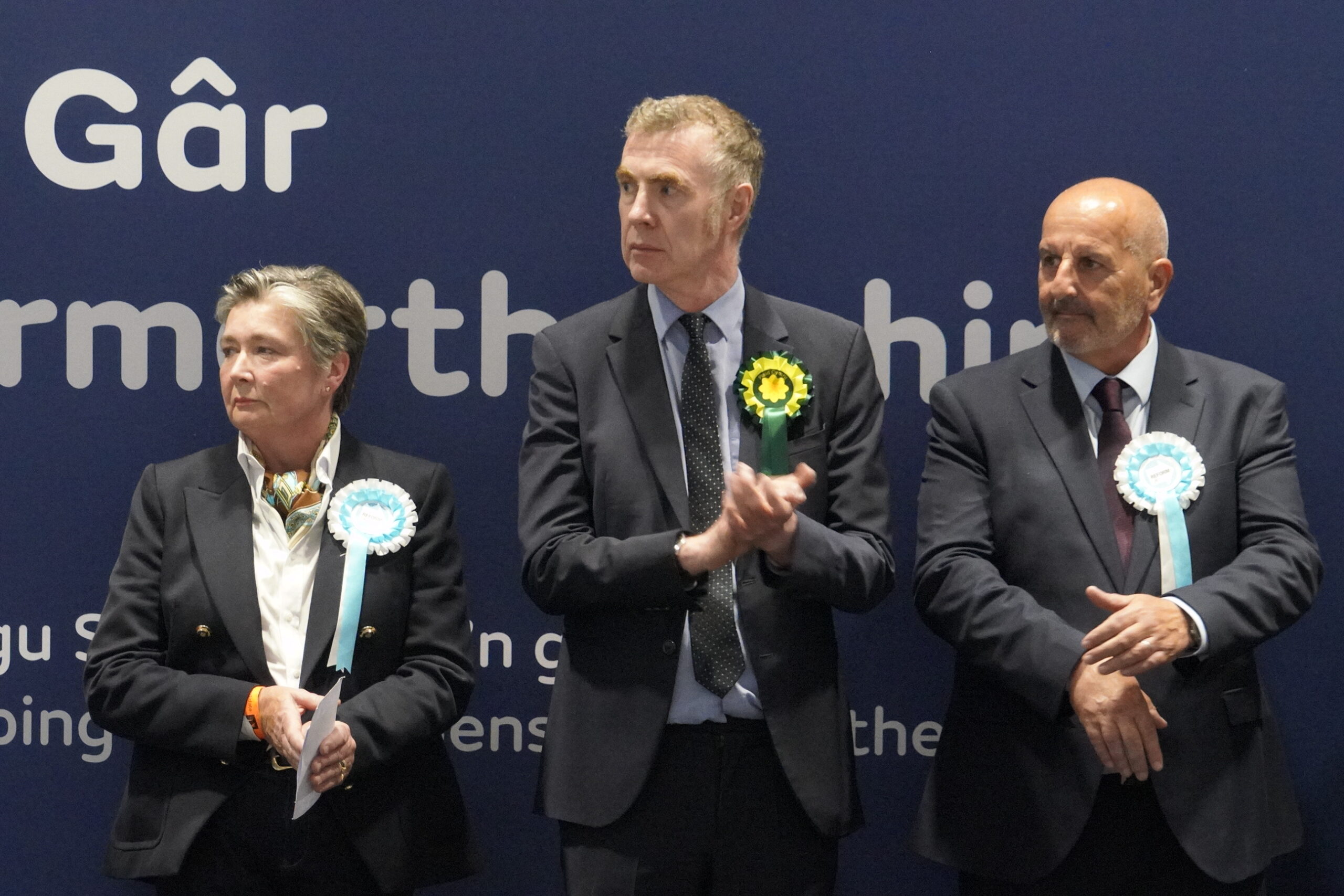
You don’t have many friends in politics, as can be seen within the first couple of days at the Senedd: The leader of Welsh Conservatives accused the Plaid Cymru leader of an act of sycophancy by appointing former Deputy First Minister Huw Irranca-Davies as the Speaker for the Senedd. Perhaps Antoniazzi should take the message from the Welsh voters at the Senedd as a sign of things to come.
What Accountability Would Actually Look Like
If Labour MPs representing Welsh constituencies genuinely wish to respond to the anger they are hearing from voters, there are more direct routes available than a Westminster leadership challenge.
An honest accounting of the NHS in Wales, not a defence of it, not a comparison with worst-case scenarios elsewhere, but a clear-eyed acknowledgement of what 27 years of single-party management has produced and what structural changes are needed, would be a start. Demanding measurable outcomes rather than manifesto language, specific and published targets against which Cardiff Bay can be held to account, would be more meaningful than any change of personnel in London.
On the economy, fighting with the specificity and urgency that Welsh communities require, for industrial protection, for investment in post-industrial areas, for the kind of economic architecture that does not simply administer decline, would address the ground-level frustration that is driving voters toward Reform far more effectively than internal party manoeuvring.
And on the question of democratic legitimacy, respecting the signals that voters send, whether through petitions, through local elections, or through the Senedd results, rather than treating dissent as a communication problem to be managed, is the most basic form of political accountability available.
Reform Is the Symptom, Not the Disease
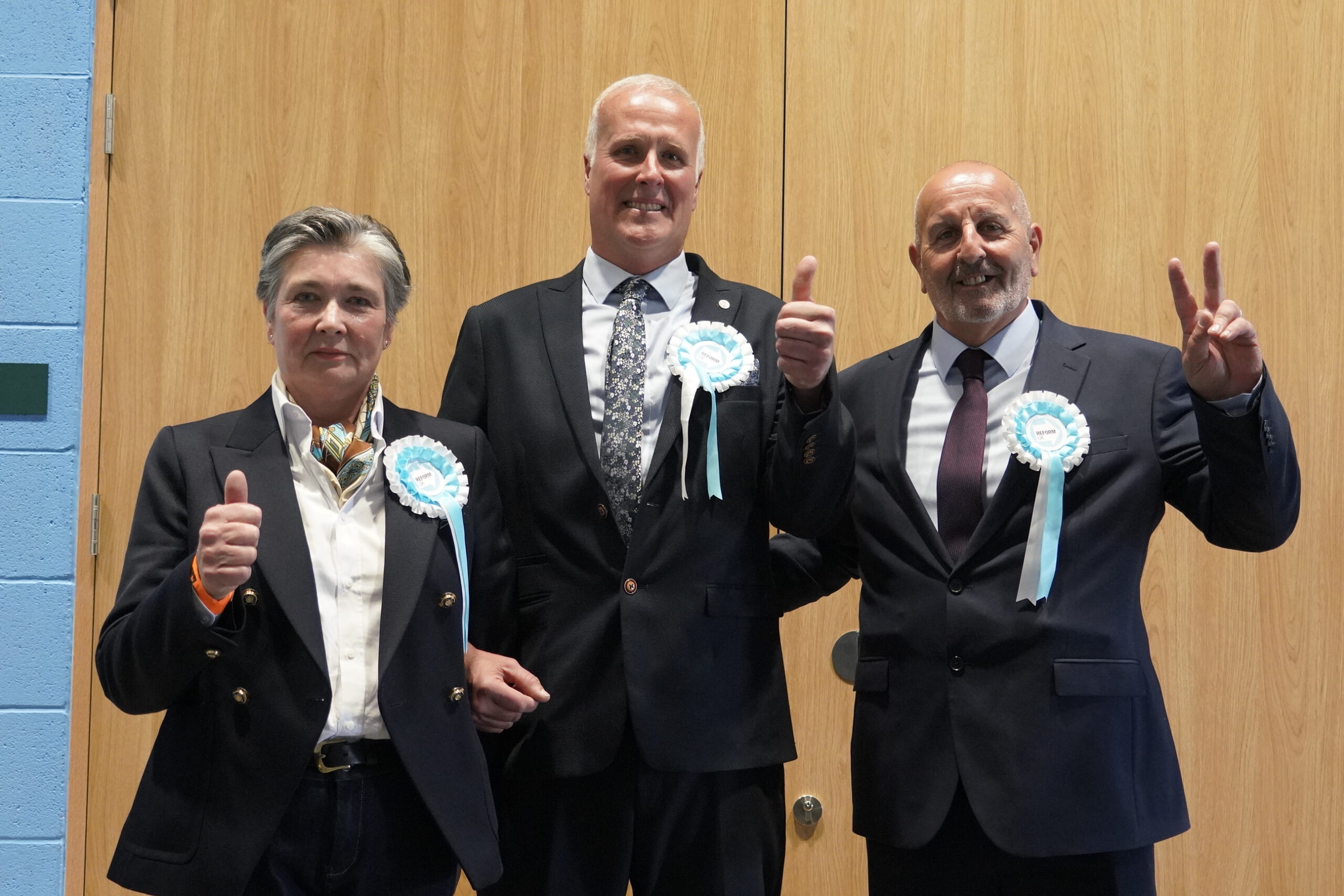
Antoniazzi is clear in her statement about how she views Reform UK: a party that promotes Trump-style populism and exploits discontented people but is really about benefiting its wealthy backers. It is a legitimate critique, and one that the evidence from Reform’s year in local government in England does not contradict.
But the framing matters. Describing Reform as an external threat to be defeated, rather than as a signal to be understood, is precisely the approach that has failed to arrest its growth. Voters who feel exploited and discontented did not arrive at that position because Reform told them to. They arrived there because the parties that previously represented them did not deliver. Reform filled a space that Labour left empty.
A Labour Party that responds to that signal by changing its leader while leaving its devolved record unexamined is not treating the disease. It is changing the label on the bottle.
If Welsh Labour MPs want to demonstrate that they are genuinely listening to the voters they claim to represent, the most credible place to start is with the record closest to those voters’ daily lives. Not the leadership of a Westminster government that has been in office for less than a year, but the governance of a Cardiff Bay administration that has been in office for over a quarter of a century.
That is the accountability conversation Welsh voters are waiting for. It is also, for obvious reasons, the one that Welsh Labour has proved most reluctant to have.
This is an editorial opinion piece representing the view of the Carmarthenshire News Online editorial team. Carmarthenshire News Online is an independent publication and is not affiliated with any political party.
Carmarthenshire News Online, Independent News for Sir Gaerfyrddin | carmarthenshirenewsonline.com