Pic: Tarian
Two men who operated an unlicensed gambling den from an industrial unit in Cardiff have been sentenced following an investigation by Tarian, the Regional Organised Crime Unit (ROCU) for southern Wales.
Between August 2022 and February 2024, Noor Rassam and Panayiotis Karayiannis ran illegal poker games from an upstairs room within a unit on an industrial estate in Splott. The premises had been fitted out with six poker tables, a spinning prize wheel, seating areas, and fridges stocked with drinks and snacks.
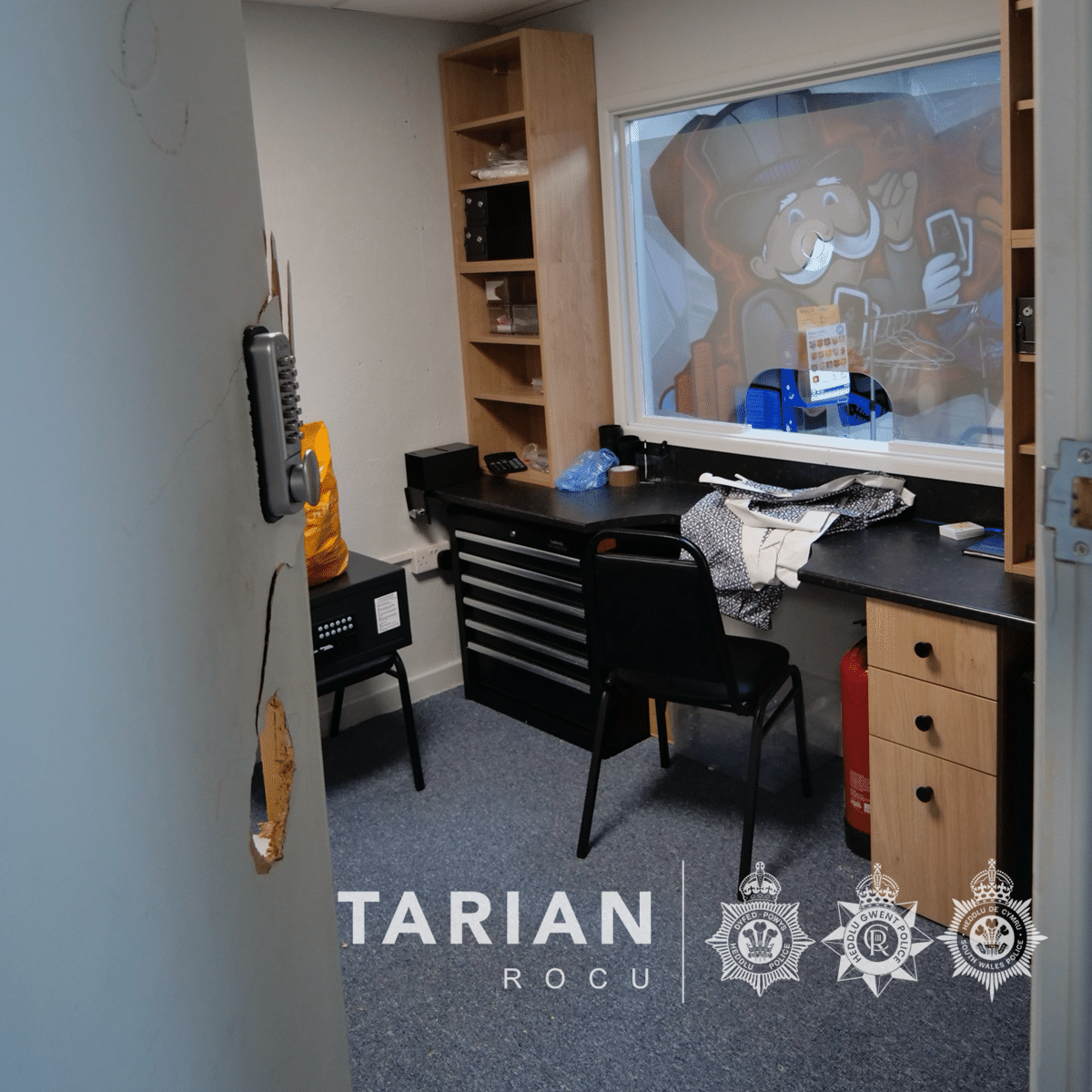
The venue was accessed through a fire exit and monitored by CCTV cameras controlled by the pair. An office within the premises contained gambling paraphernalia, including poker chips, tokens and records detailing money paid and owed. The office also featured a cashier’s window protected by Perspex with a small opening for financial transactions.
The illegal activity came to light after intelligence was received by the Gambling Commission and subsequently passed to Tarian ROCU.
In February 2024, officers from Tarian ROCU, working alongside the Gambling Commission, HMRC and Cardiff Council’s Licensing Department, executed warrants at the industrial unit, as well as residential and business addresses linked to the two men.
Both men were arrested and officers seized cash, documentation, digital devices and other high-value items.
Analysis of the material uncovered extensive evidence of the operation. Mobile phone examinations revealed WhatsApp messages promoting both in-person and online poker games. The online games were hosted through a subscription-based poker application under the account name “Fish Tank Online”, while the in-person events were initially advertised as “Ding Ding Poker ” before later being rebranded as “Fish Tank Poker Cardiff”.
Financial enquiries established that the gambling operation generated significant sums of money. Investigators found that Rassam received approximately £260,000 in third-party payments while the venue was operating, while Karayiannis received around £124,000. Both accounts showed numerous transactions referencing “poker”.
Officers also established that the pair profited from the games by taking a commission from each poker hand, known within the industry as “the rake”, rather than by directly wagering against players.
Both Rassam and Karayiannis changed their pleas to guilty on the first day of trial for the following offences:
- Possessing criminal property, contrary to the Proceeds of Crime Act 2002
- Transferring criminal property, contrary to the Proceeds of Crime Act 2002
They were sentenced on October 02, 2026, at Cardiff Crown Court.
Noor Rassam, 29, from Pentwyn, Cardiff, was sentenced to three years in prison, suspended for three years.
Panayiotis Karayiannis, 30, from Pontprennau, Cardiff, was sentenced to three years in prison, suspended for three years.
A Proceeds of Crime Act hearing has been set for the 9th of April 2027.
Detective Constable Charles Lan, of Tarian ROCU, said:
“These two men operated an illegal gambling business for their own financial gain, generating substantial profits which were never declared for tax purposes and ultimately came at the expense of the wider public.
“Their criminal enterprise provided them with significant personal benefits, funding a lavish lifestyle that included foreign holidays and other high-value spending.
“Throughout the investigation, we uncovered evidence that they actively promoted their poker games to individuals involved in serious criminality and even boasted about the presence of drug dealers and organised crime group members at their events. By providing a venue for these individuals and profiting from their participation, they were helping to facilitate and fund further criminal activity.
“The harm caused by this operation should not be underestimated. Individuals lost significant sums of money through these games, with some becoming indebted to the organisers. Unlike legitimate gambling operators, there were no safeguards in place to identify or support vulnerable people, nor any measures to protect those experiencing gambling addiction.
“This sentence sends a message that unlicensed gambling is not a victimless offence. Those who seek to profit from illegal gambling while ignoring the laws and protections designed to keep people safe can expect to be brought before the courts.
“I would like to thank our partners, particularly the Gambling Commission, whose intelligence first brought this activity to our attention. Their expertise and support throughout the investigation were instrumental in bringing this case to a successful conclusion. I would also like to thank HMRC and Cardiff Council’s Licensing Department for their valued assistance.”
Sue Young, Gambling Commission Executive Director of Operations, said:
“This case emerged after we received information about an illegal gambling den. The message is clear – if you run an illegal casino, there will be a tip off, you will be caught, and there will be significant consequences.
“We will continue to work with partners and take action against those who run illegal gambling operations in Great Britain.”