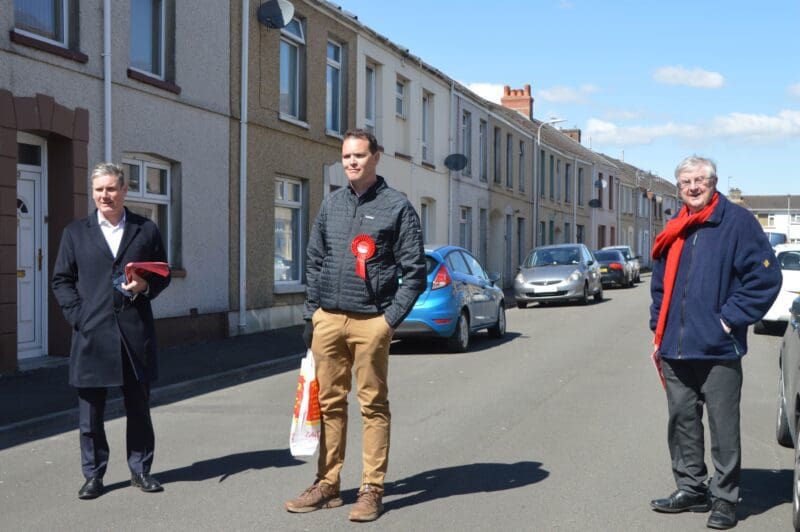
Then First Minister Mark Drakeford enjoys a bag of Fish and Chips in Llanelli with Labour Leader Keir Starmer, 2021. (Image / Lee Waters Facebook)
[tta_listen_btn] Mark Drakeford has blamed Keir Starmer for costing Welsh Labour the Senedd. The facts tell a more complicated and more damning story, one that begins not in Westminster but in Cardiff Bay, and stretches across a generation of missed targets, internal scandal, and policy choices that alienated the very communities Labour claimed to serve.
Editorial Analysis | Carmarthenshire News Online | May 2026
Drakeford Points the Finger: What He Actually Said
In the days following Welsh Labour’s catastrophic performance in the 2026 Senedd election, in which the party fell from government to third place with just nine seats, former First Minister Mark Drakeford published a ten-point analysis for the Fabian Society think-tank in which he identified, in his view, the reasons for the defeat.
Several of his points looked inward. He cited the serial abandonment of the prospectus on which Starmer was elected Labour leader, the removal of the winter fuel allowance, which he described as having become totemic for voters who believed the wrong kind of Labour government had been elected, and the failure of the Starmer administration to advance devolution in a way that allowed Welsh Labour to argue it offered Wales the best of both worlds.
“Welsh Labour went into the 2026 Senedd election with the ground cut from under us. It was simply implausible to argue that a vote for Labour offered the best of both worlds: a powerful Senedd in a successful United Kingdom. Our unique selling point had been taken off the shelf.” – Mark Drakeford
In a Channel 4 interview on the same day, he went further, calling on Starmer to set a timetable for his own departure as Prime Minister, and backing Andy Burnham as his successor.
It is a bold account. What it conspicuously lacks is a reckoning with what happened in Wales itself across the 27 years that Drakeford and his predecessors held power. What follows is that reckoning, based on the public record.
Carwyn Jones: The Carl Sargeant Shadow
Welsh Labour’s devolved era began with Rhodri Morgan, whose period in office was marked by relative stability and a genuine attempt to define a distinctively Welsh approach to public policy, the clear red water, as he described it, between Welsh Labour and New Labour in Westminster.
What followed Morgan’s departure in 2009 was less settled. Carwyn Jones served as First Minister for nine years, a tenure that included real achievements but ended under a cloud from which Welsh Labour never fully recovered.
In November 2017, Jones sacked his cabinet minister Carl Sargeant from the Welsh Government following unspecified allegations about his personal conduct. Sargeant was not told the details of the allegations against him. Four days later, he was found dead, believed to have taken his own life. He was 49.
What followed was deeply damaging. Claims emerged of a bullying culture within the Welsh Government stretching back years. A former minister, Leighton Andrews, publicly alleged a toxic atmosphere within Jones’s administration. The Welsh Assembly was described by Jones himself as facing its darkest days. Jones referred himself to an independent inquiry, which ultimately cleared him of misleading the assembly, but the reputational damage was severe and long-lasting.
Jones announced his intention to stand down in 2018, bringing to an end a nine-year tenure overshadowed by the manner of its conclusion. The circumstances of Carl Sargeant’s death, and the questions surrounding the process by which he was removed from office, remained a source of deep pain and contested account for his family, and a stain on Welsh Labour’s record of governance that no subsequent first minister was able to fully address.
Welsh Labour’s era of uncontested dominance ended not with a policy failure but with a death. The circumstances surrounding it were never fully resolved to the satisfaction of the Sargeant family or of the wider public.
Drakeford in Power: The 20mph Catastrophe and the NHS in Crisis
Mark Drakeford succeeded Jones in December 2018 and served until March 2024. His tenure encompassed the Covid pandemic, which he navigated with a degree of consistency that earned him genuine respect across the political spectrum, and a second term after the 2021 Senedd election in which Welsh Labour, in a deal with Plaid Cymru, delivered several tangible policy achievements including universal free school meals for primary pupils.

But the defining legacy of Drakeford’s later years in office, and the policy that is most cited by Welsh voters in any account of what went wrong, is the blanket 20mph speed limit introduced in September 2023 on all restricted roads in Wales, making it the first country in the UK to make such a change.
The policy attracted a petition that became the most signed in Senedd history, reaching over 462,000 signatures, and subsequently over 450,000 signatories who called for its repeal. Drakeford refused to pause the rollout. He appeared before the Welsh Affairs Committee in October 2023 and dismissed concerns about emergency response times. He described the £32 to £33 million implementation cost as a small cost to pay. His own government’s explanatory papers put the potential economic impact at up to £8.9 billion.

The Welsh Conservatives, in opposing the policy, pointed to a grimmer backdrop: nearly 30,000 Welsh patients facing two-year NHS waits that, they said, existed nowhere else in the UK. That claim was broadly accurate. The NHS waiting list figures under Drakeford’s watch reached successive record highs. In May 2024, there were 611,500 individual patients waiting for over 787,900 treatments, a record. A fifth of the Welsh population was on a waiting list. The Welsh Government itself described the figures as another disappointing set of NHS performance figures.
The Royal College of Surgeons had noted in September 2023 that 19.6 per cent of patient pathways in Wales were over a year old, compared to just five per cent in England. Wales had 3.9 per cent of patients waiting two years, against 0.003 per cent in England. In September 2023, Drakeford’s own government had set a target of no two-year waits by March 2023. That target was missed, comprehensively and on his own watch.
A fifth of the Welsh population on an NHS waiting list. Two-year waits at a rate 1,300 times higher than in England. A record-breaking petition ignored. These are the metrics of Drakeford’s legacy on health, and they belong to Cardiff Bay, not Westminster.
Vaughan Gething: 118 Days and a £200,000 Donation
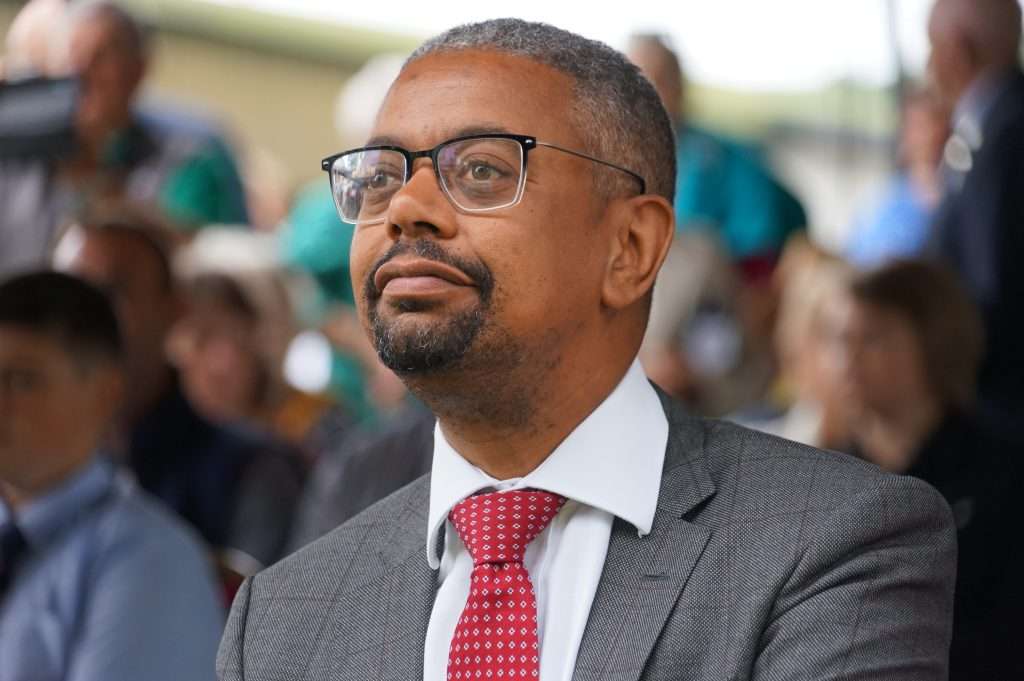
Drakeford announced his departure in December 2023. The subsequent leadership election produced Vaughan Gething, who became, in March 2024, the first black leader of a European nation. It was a moment of genuine historic significance, and it lasted 118 days.
Gething’s downfall arose from a £200,000 donation he had accepted during his leadership campaign from Dauson Environmental Group, a company owned by David John Neal, who had been convicted of environmental offences on two separate occasions, in 2013 and 2017. The donation was legal. The judgment in accepting it was not.
The controversy deepened when it emerged that Dauson had also received a £400,000 loan from the Development Bank of Wales, a Welsh Government-owned institution. Gething insisted there was no conflict of interest and that the bank operated independently of ministers. The explanation satisfied neither Plaid Cymru, which withdrew from its co-operation agreement with the Welsh Government citing the donation as a primary reason, nor significant sections of Welsh Labour itself.
A second controversy followed. Gething sacked his minister for social partnership, Hannah Blythyn, following the leak of a phone message to the media. Blythyn strongly denied leaking anything and described her dismissal as deeply shocking. Four senior cabinet ministers, including Jeremy Miles, then resigned in coordinated fashion, declaring they had lost confidence in Gething’s ability to govern. On 16 July 2024, Gething resigned.
Drakeford, asked about his successor’s downfall, said the fuse was lit the moment Gething accepted the donation. He described him as a much, much better person than he had been portrayed. Keir Starmer had publicly supported Gething until weeks before his departure, then commended him for making the best decision for Wales.
Eluned Morgan: An Inheritance of Rubble
Eluned Morgan became First Minister in August 2024, the fourth person to hold the post in the space of six years, and the fourth to inherit an institution that was visibly weaker than the one her predecessor had taken on. She led Welsh Labour into the 2026 election, and lost her own seat.

Her tenure was too short and too dominated by the circumstances of her inheritance to build a distinctive record. What she could not escape was the cumulative weight of what had come before: the NHS in long-term crisis, the education system producing its worst PISA results since Wales first participated in the programme in 2006, child poverty entrenched across the country at rates higher than in Scotland or Northern Ireland, and a Welsh public that had run out of patience with a party that had administered, rather than transformed, their country for more than a quarter of a century.
The Education Record: Lowest PISA Scores Since 2006
The 2022 PISA results, published in December 2023, confirmed what many in Wales had long suspected about the state of its education system. Wales recorded its lowest ever scores in reading, mathematics and science since first participating in the programme in 2006. The decline in Wales was greater than in most other countries and greater than in any other nation of the United Kingdom.
The Institute for Fiscal Studies, in its analysis published in March 2024, found that the average pupil in Wales performed at the same level as the most disadvantaged children in England. The gap in GCSE results between disadvantaged pupils and their peers was larger in Wales than in England. Wales was the only UK nation to fall below the OECD average in all three subject areas.
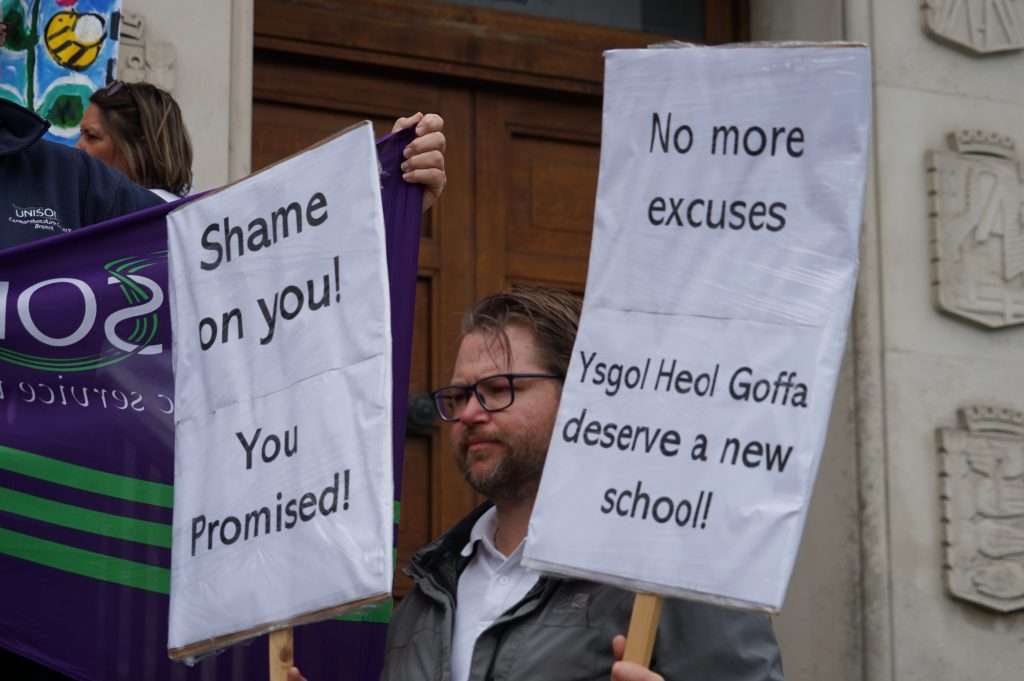
The Welsh Government’s response, from Education Minister Jeremy Miles, acknowledged the disappointment while attributing the decline primarily to the pandemic. That explanation has partial validity: COVID had a severe impact on education outcomes across all countries. What it does not explain is why Wales’s decline was steeper than England’s, Scotland’s, or Northern Ireland’s, or why Wales was consistently below all three UK comparators in every PISA cycle since 2006, before the pandemic began.
A February 2026 report from the think-tank Onward projected that if current trends were maintained, Wales would continue to fall in international education rankings through to 2040. It is not a pandemic story. It is a policy story, and the policy has been Welsh Labour’s for the entire period it has been told.
Child Poverty: 27 Years and No Progress
Perhaps the most damning single line in the entire record of Welsh Labour’s devolved tenure comes from a Senedd Research Service analysis published in 2025: Wales’s poverty rate has changed little over time. Since the start of devolution, children in Wales have been more likely to live in poverty than other age groups.
The most recent figures, covering 2023 to 2025, show 32 per cent of children in Wales living in relative income poverty, a figure that has increased slightly from 30 per cent in the previous period. The comparison with Scotland is stark: Scotland’s child poverty rate stands at 19 per cent, the result of a deliberate policy of income redistribution through the Scottish Child Payment and a commitment to reverse the two-child benefit limit. Wales has no equivalent structural intervention.
The Bevan Foundation has projected that child poverty in Wales will rise to 34.4 per cent by 2029. Scotland is projected to reach 19.8 per cent by the same date. That divergence, between two small nations governed by parties of the left for a generation, is not explained by Brexit or austerity or the cost of living crisis alone. It is explained by choices: what to prioritise, what to fund, what to demand of central government, and what to do with devolved powers when you have them.
Welsh Labour has had those powers since 1999. After 27 years, nearly a third of Welsh children are living in poverty. Wales compares poorly not only to Scotland and Northern Ireland but to many English regions. The Bevan Foundation’s assessment was direct: devolution to Wales has made little difference to child poverty.
After 27 years of Welsh Labour control, nearly one in three children in Wales lives in poverty. Scotland, with similar powers and comparable challenges, has a child poverty rate of 19 per cent. The difference is policy, not circumstance.
The Verdict: Who Built the Rubble Drakeford Now Surveys?
Mark Drakeford’s account of Welsh Labour’s defeat is not wrong in all its particulars. Starmer’s removal of the winter fuel allowance was a policy judgment of notable callousness, and his government’s failure to advance devolution in any meaningful way did remove one of Welsh Labour’s traditional arguments. These are real contributions to Welsh Labour’s difficulties.

But they are not the whole story, and they are not even the main story. The main story is 27 years of a party that held devolved power longer than any governing party in any part of the United Kingdom, accumulated near-total control over Welsh public services, and presided over an NHS in persistent crisis, an education system producing its worst results in the history of devolved testing, child poverty rates unchanged since the Senedd first sat, and a series of internal scandals that eroded public trust with each successive leader.
Carwyn Jones’s government was shadowed by the death of Carl Sargeant and by questions about the culture of his administration that were never fully resolved. Vaughan Gething lasted 118 days before the consequences of his own judgment collapsed his government. Eluned Morgan inherited a party already falling and could not arrest the decline. Mark Drakeford introduced a 20mph speed limit that attracted the largest petition in Senedd history while his NHS hit a record breaking waiting list.
Drakeford is now pointing at Westminster. Welsh voters, in returning the smallest Welsh Labour group in the history of the Senedd, pointed at Cardiff Bay. The evidence suggests they were pointing in the right direction.
The real architects of Welsh Labour’s demise were not in Downing Street. They were in Cardiff Bay. They had 27 years, a devolved mandate, and the levers of government. The record they leave behind speaks for itself.
THE NUMBERS: WELSH LABOUR’S DEVOLVED RECORD AT A GLANCE
NHS waiting list at peak (May 2024): 611,500 individual patients, 787,900 treatment pathways, both records
Two-year NHS waits in Wales vs England (2023): 3.9% of pathways in Wales vs 0.003% in England
20mph petition signatures: Over 462,000, the largest in Senedd history
PISA 2022 results: Lowest ever scores for Wales since 2006, worst decline of any UK nation
Child poverty rate (2023-2025): 32% of children, up from 30% in previous period; Scotland 19%
First Ministers in six years: Four: Drakeford, Gething (118 days), Morgan, then election defeat
Senedd seats 2026: 9 seats, third place, Eluned Morgan lost her own constituency
Gething donation controversy: £200,000 from company owned by twice-convicted environmental offender
Carl Sargeant: Cabinet minister sacked by Carwyn Jones in 2017; died four days later
This editorial analysis is based entirely on publicly available data, official Welsh Government statistics, Senedd research publications, reports from the Institute for Fiscal Studies, the Royal College of Surgeons, the Joseph Rowntree Foundation, the Bevan Foundation, and contemporaneous reporting by BBC Wales, ITV Wales, Nation.Cymru and other verified sources. All statistics cited are linked to their primary source documents. Carmarthenshire News Online is an independent publication not affiliated with any political party.
Carmarthenshire News Online, Independent News for Sir Gaerfyrddin | carmarthenshirenewsonline.com