[tta_listen_btn] Both Tenby RNLI lifeboats were launched on Thursday afternoon after a child fell four metres onto rocks during an organised coasteering session at Church Doors, near Lydstep. A race against the incoming tide and a helicopter flight time from Cornwall made for an urgent operation involving the RNLI, Tenby Coastguard Rescue Team, and the Wales Air Ambulance service.
Both the inshore and all-weather lifeboats at Tenby RNLI were launched shortly before 4pm on Thursday, 28 May 2026, after HM Coastguard received a 999 call reporting that a child had fallen approximately four metres onto rocks while taking part in an organised coasteering session at Church Doors, near Lydstep on the Pembrokeshire coast.
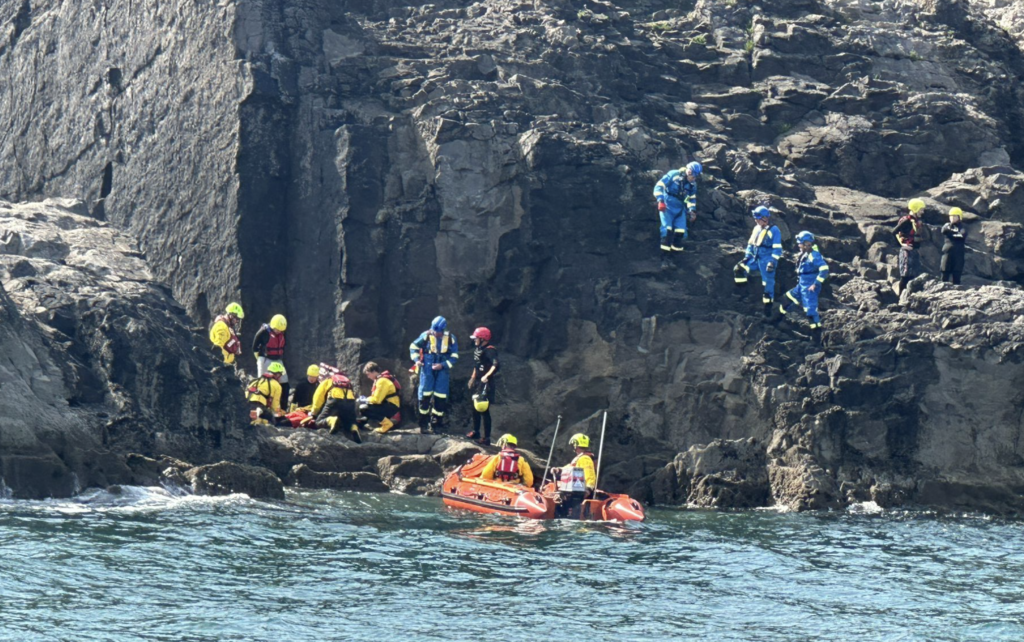
The site lies around 3.8 miles west of Tenby. The volunteer crews made best speed to the location, with the inshore lifeboat going directly into the rocks on arrival to assess the casualty while the all-weather lifeboat stood off in deeper water.
The crew found the child conscious but complaining of back pain. His parents, who had also been taking part in the coasteering session, were with him on the rocks. The tide was coming in rapidly, creating an urgent timetable for the rescue operation.
A Race Against the Tide
A search and rescue helicopter was immediately requested, but the crew quickly assessed that the flight time from the coastguard helicopter base at Newquay in Cornwall meant the casualty would likely be submerged by the incoming tide before the aircraft could reach him. The decision was made to get the child off the rocks without waiting for the helicopter to arrive.
A stretcher and additional crew members were transferred across from the all-weather lifeboat to the rocks, where they were joined by members of Tenby Coastguard Rescue Team. The child was immobilised and placed in the stretcher before being transferred, along with his parents, to the safety of the larger all-weather lifeboat to await the helicopter.
Paramedic Assessment and Transfer to Hospital
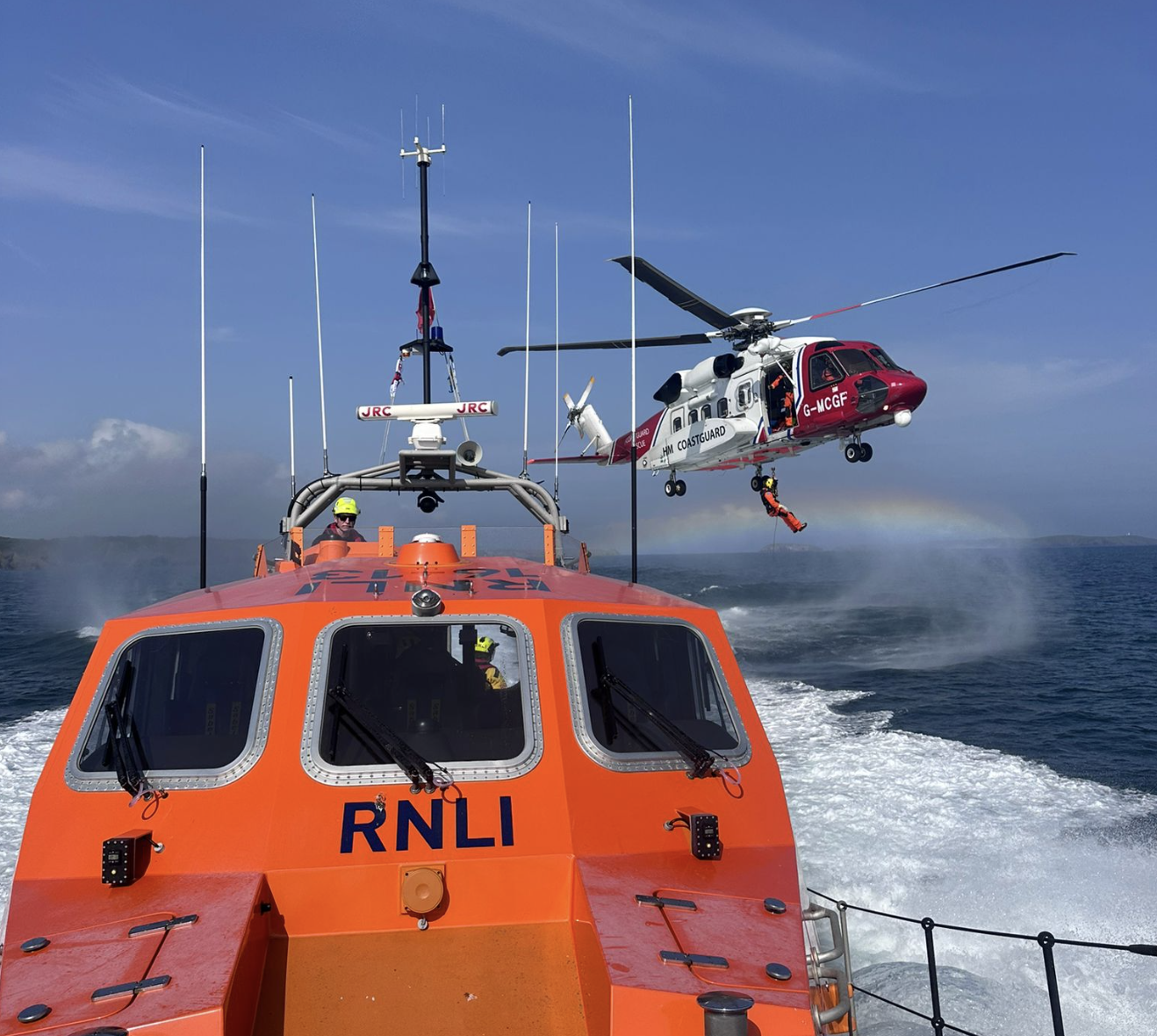
The rescue helicopter arrived overhead shortly afterwards and a paramedic was lowered to the deck of the all-weather lifeboat to assess the child. It was decided that it would be more comfortable for him to remain aboard the lifeboat for the journey to Tenby, with the paramedic accompanying him, rather than being winched up to the aircraft.
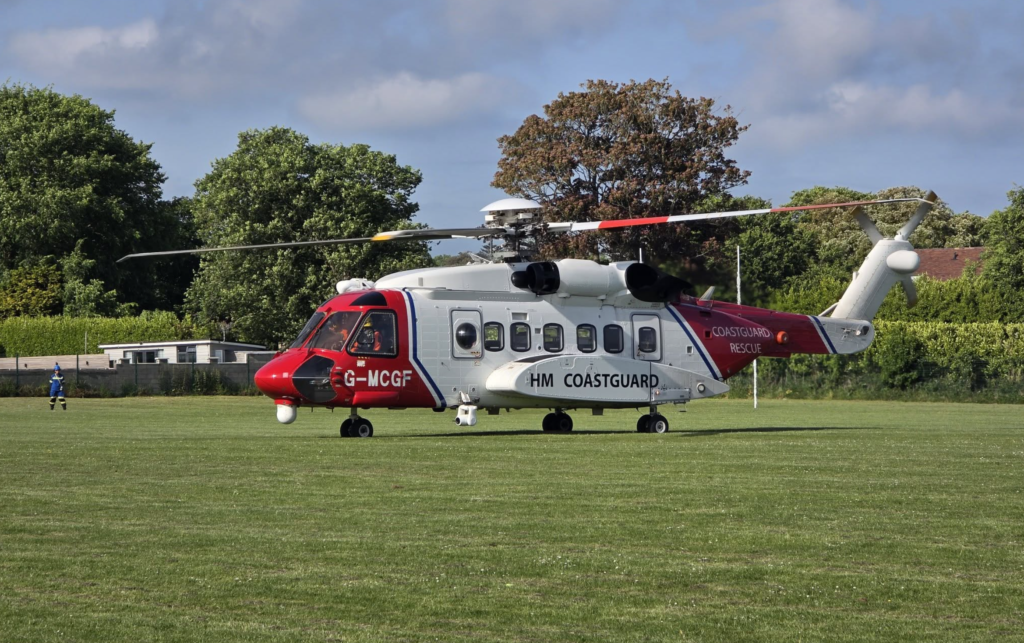
A Welsh Ambulance Services University NHS Trust ambulance had been requested to attend Tenby, and was on scene to meet the lifeboat on its return. The child was handed over to the ambulance crew for transfer to hospital. The coastguard paramedic was then transported to the playing fields at Greenhill School in Tenby, where the helicopter was waiting to fly back to Newquay.
Helmet Credited With Preventing More Serious Injury
A spokesperson for Tenby RNLI praised the safety standards of the coasteering session and highlighted the role proper equipment played in the outcome.
“The child was taking part in a well organised coasteering session and was wearing a wetsuit, buoyancy aid and crucially, a helmet, which likely saved him from more serious injuries. The RNLI recommends that when going coasteering, you always try to use a recognised National Coasteering Charter provider, as these provide all the necessary safety gear and guidance.”
The National Coasteering Charter sets the standards for the safe delivery of coasteering activities in England and Wales, and recognised NCC providers are required to supply participants with appropriate safety equipment and briefings before any session begins.
If you are planning to go coasteering, the RNLI advises using a recognised National Coasteering Charter provider. For more information visit nationalcoasteeringcharter.org.uk.
To report a coastal emergency, call HM Coastguard on 999 and ask for the Coastguard, or use channel 16 on a marine VHF radio.
Carmarthenshire News Online, Independent News for Sir Gaerfyrddin | carmarthenshirenewsonline.com