Photo Credit:Richard Youle
A multi-year project is being drawn up to reduce a £1,600-a-day energy bill at Swansea’s Guildhall and make it more environmentally-friendly.
The building is the council’s most energy-intensive in its portfolio and one of the most challenging for an upgrade because of its grade one-listed status.
Its current heating and lighting bill is estimated at £611,000 per year – or £1,673 per day – according to a council report.
A four-phase decarbonisation plan is being developed including new rooftop solar panels and eventually new heating systems, subject to funding and necessary approvals. The focus early on will be making it more energy efficient through better building management.
Costs aren’t known yet but will be significant and funding will need to be identified before spending commitments are made.
Cllr Andrea Harrington, cabinet member for service transformation,
told a scrutiny meeting the Guildhall was very challenging in terms of retrofitting.
“However, because it’s such an iconic building it’s only right and proper that we try to make it as energy-efficient as we can,” she said.
A lot of roofing work has taken place of late to make it watertight and plastic sheeting in the foyer which was there for months to protect the stonework has been removed. “It’s drying out very nicely,” said Cllr Harrington.
Councillors on the nature and climate change scrutiny panel asked about funding sources and how dependent the project was on them, how much impact the work would have in terms of carbon reduction, and what lessons might be learned that could be applied to other council buildings.
Cllr Harrington said the authority’s building services budget of £3-£4m a year could be eaten up by replacing the pipework in just part of the Guildhall.
Simon Aspland, the council’s property manager for carbon reduction, said consultation with Welsh heritage body Cadw and conservation officers would be critical. Cllr Harrington said she felt it was important Cadw was flexible given the wider need to reduce carbon emissions although she said the Guildhall’s heritage would be respected.
The Guildhall already has some rooftop solar panels but relies on fossil fuel heating. Some of its windows are single-glazed and it leaks heat.
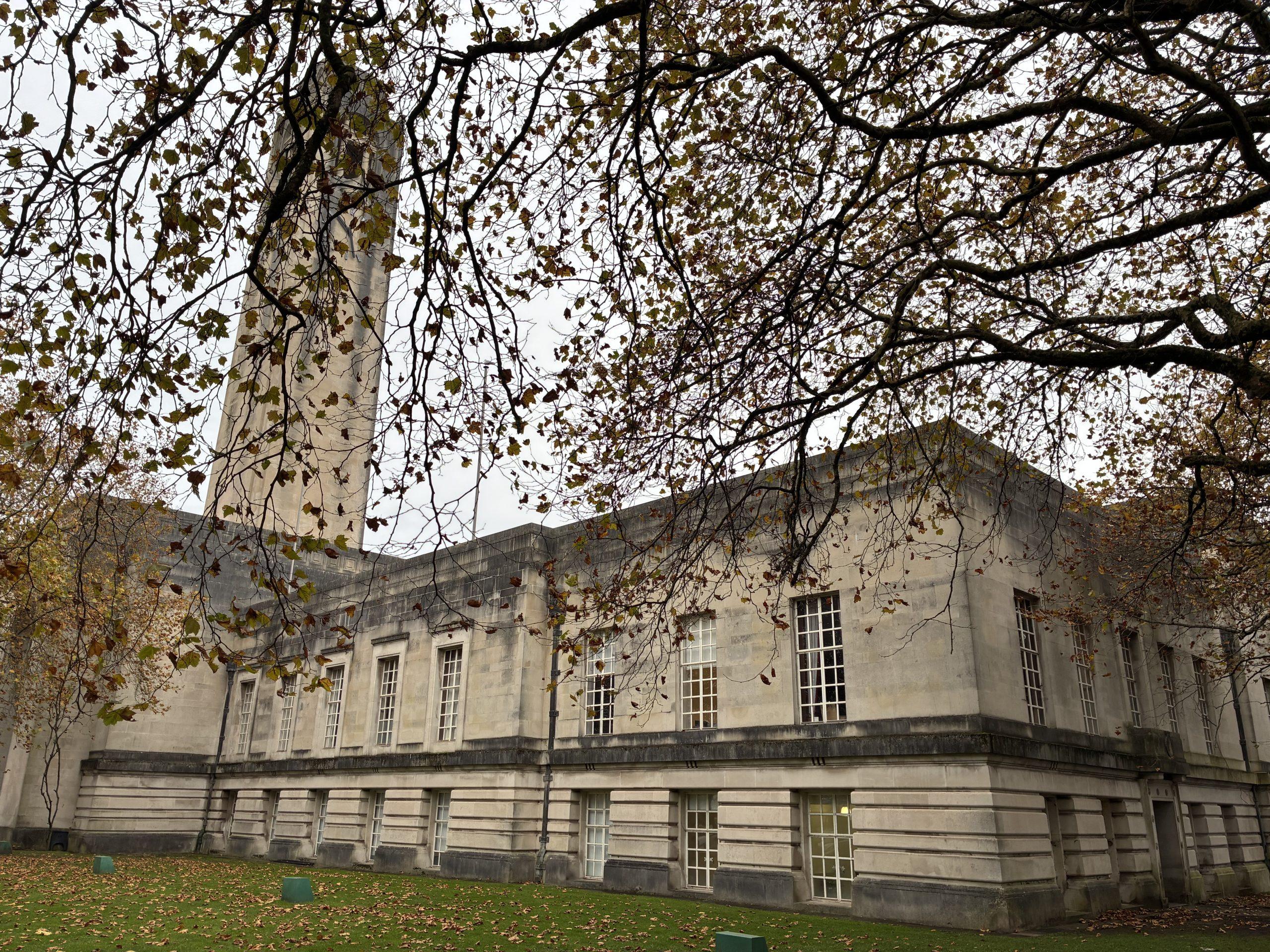
The neoclassical Art Deco-influenced building, with its Portland stone façade and striking clock tower, was completed in 1934. It’s home to the Brangwyn Hall, former county law courts, and hundreds of council staff.
It’s hoped the decarbonisation project will gain insight from a scheme carried out by Cardiff council on a grade one-listed building. The Welsh Government’s energy service is also assisting.
“It’s not going to be an overnight quick fix. It’ll take some years,” said Cllr Harrington.