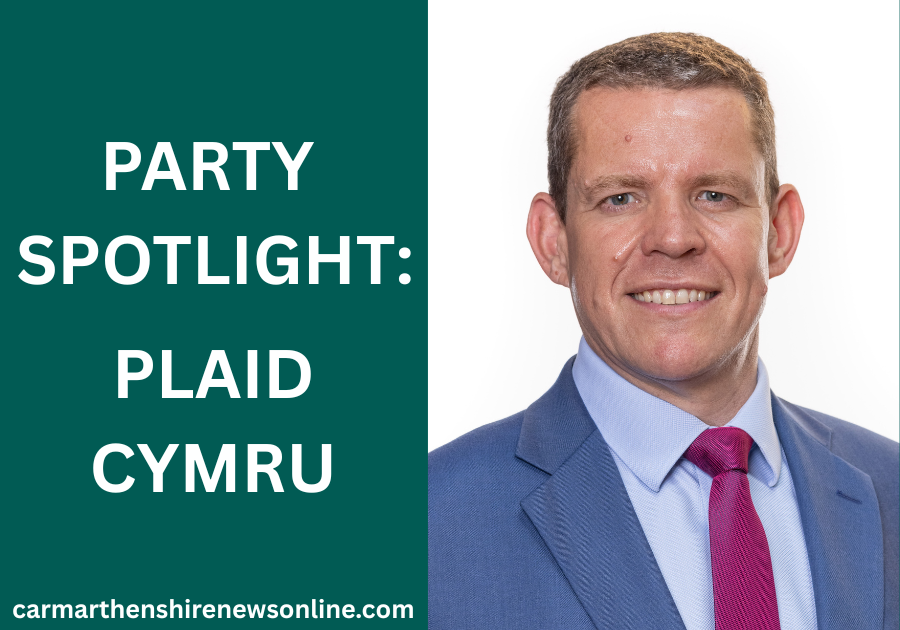
Rhun ap Iorwerth, Official Senedd photograph of Member of the Senedd.
[tta_listen_btn] Plaid Cymru enters the 2026 Senedd election campaign in a position of remarkable strength. Polling neck and neck with Reform UK and ahead of a declining Welsh Labour, the party led by Rhun ap Iorwerth is widely expected to emerge as the largest or joint-largest party in a newly expanded, 96-seat Senedd on 7 May. After nearly a century as a party of opposition and coalition partner, the prospect of forming a government is now a realistic one.
That trajectory makes scrutiny of the party, its record, its recent internal difficulties, and the conduct of some of its candidates, a matter of legitimate public interest. What follows is a neutral account of the principal controversies that have attached themselves to Plaid Cymru over the years, placed in proper historical and political context.
Origins and early ideological controversies
Plaid Cymru was founded in 1925, and for much of its early history it was better understood as a cultural pressure group than an electoral force. Its founding president, Saunders Lewis, a poet, playwright, and Catholic convert, is the most controversial figure in the party’s history, and his legacy has generated academic and political debate for decades.
Lewis expressed admiration during the 1930s for certain right-wing European figures, and some editions of the party newspaper, Y Ddraig Goch, contained antisemitic imagery. These associations have periodically been used by opponents to characterise the early party as fascist-adjacent. The charge has, however, been comprehensively examined in academic scholarship.
The fascism question: what the academic record shows
A 2014 study by academic Richard Wyn Jones concluded that while some Plaid members expressed admiration for certain authoritarian figures before the war, the party as an institution did not advocate fascism, did not employ fascist techniques, and Saunders Lewis’s politics did not meet the criteria for fascism. Lewis is better characterised, Jones argues, as a conservative Catholic nationalist, whose pacifism during the Second World War, grounded in anti-imperialism rather than pro-German sentiment, was the primary source of subsequent accusations.
The fascism charge, Jones argues, originated largely as a tactical attack from Labour and Conservative opponents seeking to delegitimise Welsh nationalism as a political movement, and should be understood in that context. Former Welsh Labour MP Leo Abse, one of the most vocal critics, later acknowledged that the description could not be applied to the prominent Plaid figures who emerged after devolution.
Plaid’s current political position, centre-left, pro-EU, anti-war, and committed to civic nationalism, is unambiguously distant from anything that could be described as fascist. The party has not formally repudiated Saunders Lewis as a founding figure, a position that some critics argue remains an unresolved tension.
Lewis resigned as party president in 1939, citing Wales’s unreadiness to be led by a Roman Catholic. The post-war party was shaped more by Gwynfor Evans, whose vision of a democratic, socially progressive Welsh nationalism largely defined Plaid’s identity for the remainder of the twentieth century.
The Penyberth fire and the limits of constitutional politics
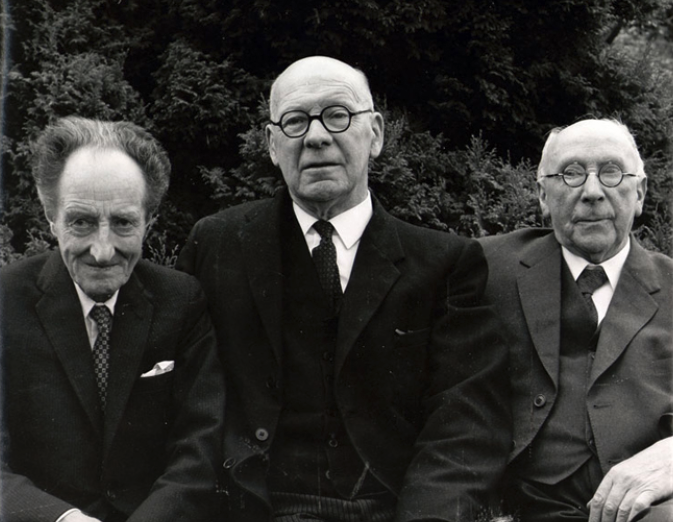
One of the defining episodes of Plaid’s early history came in 1936, when Saunders Lewis, alongside two other party figures, set fire to building materials at an RAF bombing school under construction at Penyberth on the Llŷn Peninsula.
Saunders Lewis, D J Williams and Lewis Valentine immediately confessed their actions to the police. The case was referred to the Old Bailey in London and the three were found guilty and sentenced to nine months imprisonment in Wormwood Scrubs.
The three men then turned themselves in to the police. Tried initially in Wales, the case was controversially moved to the Old Bailey in London after a Welsh jury failed to reach a verdict. All three were convicted and imprisoned for nine months.
The episode became a touchstone of Welsh nationalist politics, an act of civil disobedience against what its architects regarded as the cultural destruction of a Welsh-speaking community. It remains controversial: celebrated by Welsh nationalists as principled direct action, and cited by critics as evidence of a willingness within the movement to endorse extra-legal means. Plaid has since been explicitly and consistently a constitutional party, and the Penyberth episode is historically remote from the party’s contemporary practice.
‘Barngate’: the Emlyn Dole planning controversy
A more localised but politically revealing controversy attached itself to Emlyn Dole, who served as leader of Carmarthenshire County Council under Plaid Cymru. The episode, which acquired the informal label “barngate” in local political commentary, centred on a barn near Pontyberem, the home of Dole and his wife, the singer Gwenda Owen.
Emlyn Dole, pictured in Llanelli, 2022
The sequence of events began in 2012, when Owen applied for planning permission to convert a double barn at the property into two holiday flats and a business unit. Permission was granted. Part of one barn was then demolished, without authorisation, and a new structure was built in its place. A 2014 investigation triggered by the unauthorised demolition led to a retrospective planning application being submitted to rebuild the demolished portion. Carmarthenshire’s own planning officers recommended the committee reject the retrospective application.
The planning committee, however, voted by nine votes to eight to approve the reconstruction, overruling its professional officers. Several of the councillors who voted in favour were Plaid Cymru members. Critics pointed to the appearance of preferential treatment for the council leader, noting that the planning officers who had investigated the breach were effectively overruled by a committee on which his party colleagues held significant influence.
“The committee would be subject to public ridicule.”
— Cllr Terry Davies (Labour, Gorslas), opposing the retrospective approval at the 2015 planning committee meeting
Dole did not sit on the planning committee and did not vote on the application. Supporters argued that the planning committee’s decision was a legitimate exercise of democratic discretion over officers’ advice, and that the rebuilt structure, using original stone for cladding, was a sustainable development that would benefit rural tourism. Critics countered that flouting planning law and then having a retrospective application approved by colleagues in the same party set a damaging precedent. One Labour member at the meeting warned the decision would lead to “a big increase in the numbers of buildings going up without any permission.”
Dole subsequently lost his council seat. The episode has remained a reference point in discussions of Carmarthenshire planning governance and was documented extensively by local political bloggers and the West Wales News Review.
The Prosiect Pawb report and Adam Price’s resignation
The most significant institutional crisis in Plaid Cymru’s recent history came in May 2023, when an independent report commissioned by the party itself delivered a damning verdict on its internal culture.
The Prosiect Pawb report, written by former Senedd Member Nerys Evans, found a culture of harassment, bullying and misogyny within Plaid Cymru. It concluded that the party had “failed to implement a zero-tolerance approach to sexual harassment” and that women had been “especially let down.” The report described the atmosphere as toxic and said staff and members were afraid to speak out.
Adam Price, who had led the party since 2018, initially refused to resign after the report’s publication on 3 May, accepting all 82 of its recommendations and apologising on behalf of the party. He described what had happened as “times whereby unacceptable behaviour has been allowed to take place or go unchallenged.” Within a week, however, he had lost the confidence of the Senedd group. Following a protracted meeting of the party’s National Executive Committee, he announced his resignation on 10 May 2023, saying he felt “morally bound” to do so.
Former leader Leanne Wood later confirmed that issues, particularly around sexual harassment, had existed during her own leadership between 2012 and 2018, but said she did not believe there was a toxic culture among staff during that period. The revelations raised uncomfortable questions about how long the problems had been tolerated at senior level.
Aftermath and current leadership
Rhun ap Iorwerth, official portrait – wikicommons
Rhun ap Iorwerth was elected unopposed as leader in June 2023, following an interim period under Llyr Gruffydd. Ap Iorwerth had finished second to Price in the 2018 leadership contest and was seen as a more consensual figure. Under his leadership, Plaid has adopted a markedly different tone, and has sought to put distance between itself and the events of the Price era. The party’s polling position has improved significantly since his election, and he is currently the favourite to become First Minister. Whether the cultural changes recommended by Prosiect Pawb have been fully implemented remains an open question.
The co-operation agreement with Labour and its breakdown
From December 2021, Plaid Cymru operated under a formal co-operation agreement with the Welsh Labour government, a supply-and-confidence arrangement that gave Plaid influence over a programme of government without formal coalition membership. The agreement delivered policies including free school meals for all primary pupils and expanded childcare provision.
The arrangement became increasingly strained after Vaughan Gething succeeded Mark Drakeford as First Minister and Welsh Labour leader in March 2024. The subsequent Welsh government crisis, centred on a £200,000 donation Gething had received from a businessman twice convicted of environmental offences, followed by allegations he had misled a Covid inquiry about deleting text messages, put pressure on Plaid’s position. In May 2024, ap Iorwerth announced Plaid was withdrawing from the co-operation agreement six months before its planned end date, citing “a significant lack of judgement” by Gething and describing the situation as a “revolving door of chaos.” Plaid subsequently voted in favour of a no-confidence motion in Gething, which he narrowly survived before eventually resigning in July 2024.
Critics argued that Plaid had been too slow to withdraw from an arrangement that had become politically toxic, and that its association with the Labour Welsh government had tarnished its anti-establishment credentials. The party’s counter-argument was that it had used the co-operation agreement to deliver tangible policy outcomes and had withdrawn decisively when the situation became untenable.
Current campaign: candidate social media controversies
As with Reform UK, the 2026 Senedd campaign has exposed Plaid Cymru to scrutiny over the social media histories of some of its candidates. The controversies emerged partly through material distributed to journalists by Reform, a dynamic that itself drew comment, given Reform’s own simultaneous candidate difficulties.
Elin Hywel, fifth on Plaid’s list for Gwynedd Maldwyn and a serving Gwynedd councillor, was the subject of criticism after archived social media posts surfaced. These included a shared post describing Kemi Badenoch as a “black collaborator,” a post suggesting Wales was the “racist capital of the UK,” a description of Cardiff as the “most unappealing city in the world,” and a post claiming in 2020 that the UK government was “actively attempting to cull its people.” Hywel declined to comment personally. Plaid confirmed she would remain a candidate.
Vivek Thuppil, sixth on the list for Bangor Conwy Môn and a lecturer in psychology at Bangor University, faced separate criticism after Bluesky posts in which he described Israel as “a terrorist state” and said that support for Israel should be “legally proscribed” in the same way as support for proscribed terrorist organisations. In further posts, he described Winston Churchill as “a genocidal racist,” citing the Bengal famine. Plaid confirmed Thuppil would also remain a candidate, describing Reform’s decision to publicise the posts as “desperately deflecting” from its own campaign difficulties.
Neil Roberts, fourth on Plaid’s list for Caerdydd Penarth, resigned after an offensive tweet from 2021 was unearthed using derogatory slang. A further candidate in the Clwyd constituency, Oli Bradley-Hughes, issued a public apology for social media posts using sexist language and referring to illegal drug use, which he said had been made more than fifteen years earlier as a teenager.
“Reform are desperately deflecting from their shambolic campaign, which has seen four candidates drop out in one week.”
— Plaid Cymru spokesperson, responding to criticism of Elin Hywel and Vivek Thuppil, April 2026
A party poised, but not without blemishes
The picture that emerges from a full examination of Plaid Cymru’s record is of a party that has travelled a very long distance from its origins: ideologically, culturally, and electorally. The controversies of the 1930s belong to a different era and a different iteration of the party. The planning episode involving Emlyn Dole, while legitimate to examine, was a local governance matter that resulted in no formal finding against Dole personally. The most serious institutional crisis, the Prosiect Pawb report, was at least partly handled responsibly: the party commissioned the review itself, published it, and ultimately changed its leadership as a consequence.
The 2026 candidate social media controversies are more immediate. Plaid has chosen to retain candidates despite significant public criticism, a decision that reflects both the party’s proportional list system, where lower-placed candidates are unlikely to be elected, and its judgement that the threshold for candidate removal should be high. Whether voters agree with those judgements will partly be determined on 7 May.
What is certain is that a party within reach of governing Wales for the first time in its history is now subject to a level of scrutiny it has not previously experienced. By most reckonings, that scrutiny is proportionate, and overdue.