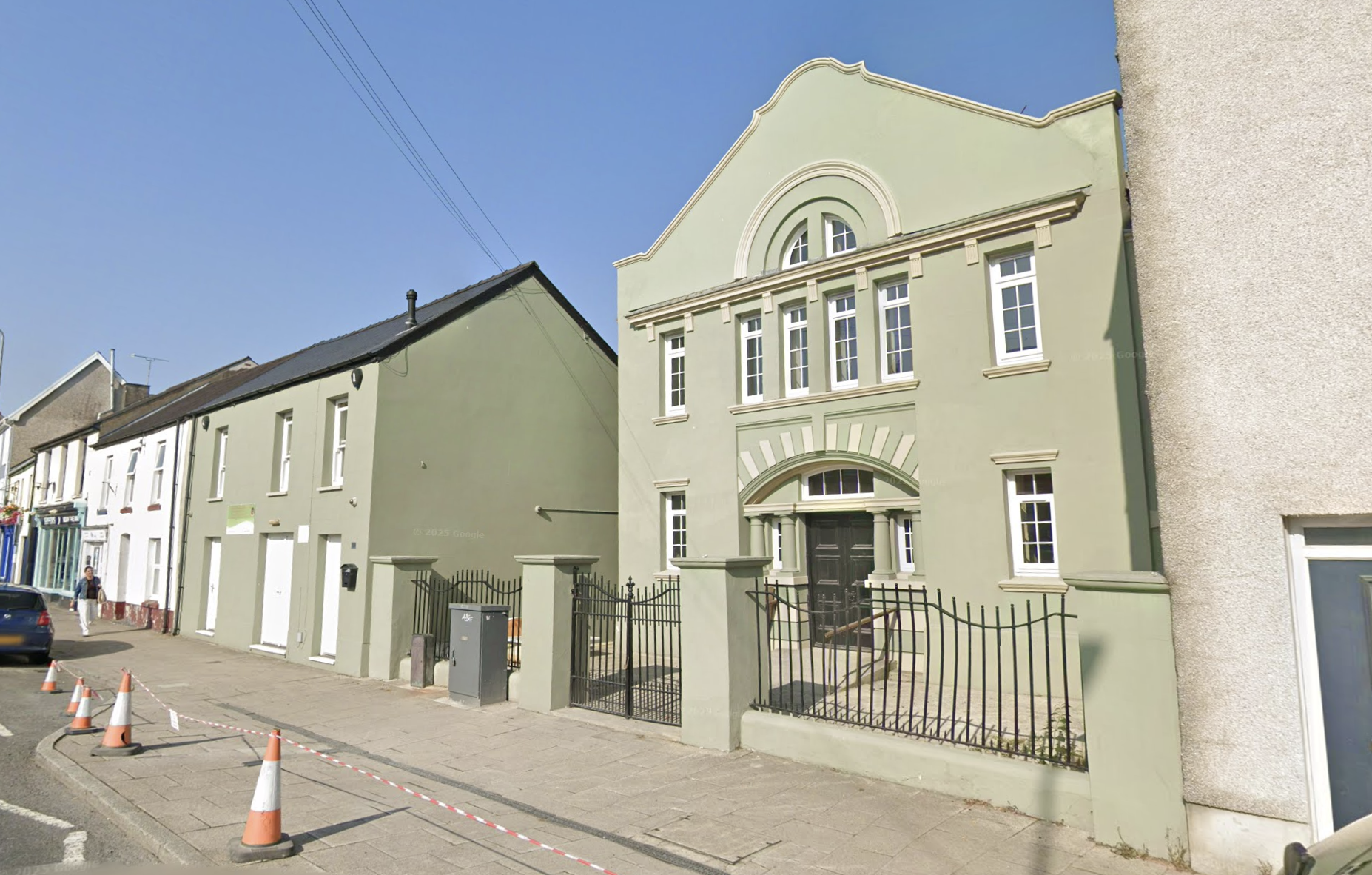
The Mosque of the West Wales Islamic Cultural Association, or WWICA (Image / Google Maps)
[tta_listen_btn] If you have walked along Priory Street in Carmarthen in recent months, you will have passed the bright green facades of the West Wales Islamic Cultural Association, known as WWICA, sitting at number 131 in a building that houses the town’s mosque, its Madrasah, and a community centre that has become a focal point for Muslim families across West Wales.
It is easy to walk past without knowing its full story. And that, in part, is why Carmarthenshire News Online has written this article. Carmarthen is not Cardiff or Newport. It is a market town in rural West Wales with a population of just under 188,000 across the wider county, predominantly Welsh-speaking in its communities, rooted in chapel and church traditions stretching back centuries. The presence of a thriving mosque and Islamic centre in the middle of it is, for many residents, something they know exists but know little about. WWICA wants to change that.
“To create a harmonious environment and promote the enhancement of human values through providing the community around Wales with a focal point for spiritual, social, cultural, educational and training activities.”
Those are WWICA’s own words, taken from their mission statement. They are not the words of an organisation turning inward. They are the words of an organisation that has consistently sought to be part of the wider life of Carmarthen, and whose record over 27 years bears that out.
How It Began: Three Families and a Vision
WWICA was founded in 1999 by three professional families working at Glangwili Hospital in Carmarthen. The founding members were doctors and their families who had come to West Wales to work in the NHS and found themselves without the religious and community infrastructure that Muslim families depend upon, somewhere to pray, somewhere to educate their children in their faith, somewhere to gather and celebrate their holidays and traditions.
What they built, over the years that followed, is remarkable by any measure. Beginning with borrowed and rented spaces for Friday prayers and religious school, the association grew steadily, gaining its registered charity status in 2007, securing a property on Priory Street in the town centre, which was designated and adapted for use as a Masjid and Madrasah, opening in June 2014.
An open day held in April 2015 brought together politicians, senior officers from Dyfed-Powys Police and Mid and West Wales Fire Service, religious representatives from other faiths, head teachers, executives from Carmarthenshire County Council and Hywel Dda University Health Board. It was, WWICA noted at the time, a testimony to their vision of keeping the Muslim community integrated and an asset to the wider West Wales community. Those who attended described a warm, open and genuinely welcoming occasion.
What WWICA Does: A Full Picture
The services WWICA provides to its members and to the wider community are extensive and cover every stage of life.
For daily worship, the Masjid is open to Muslim residents across West Wales for the five daily prayers, Friday Jumu’a prayers, Taraweeh prayers during Ramadan, and Janaiza, the Islamic funeral prayer. For families, the Madrasah runs a Sunday school providing Quranic teaching and Islamic education for children and adults, offering a continuity of faith and culture for families who might otherwise have no access to structured religious education in their language and tradition.
WWICA also manages funeral services for the Muslim community, a responsibility that goes beyond logistics. When WWICA was established, there was no dedicated Muslim burial section at Carmarthen Cemetery. The association negotiated directly with Carmarthen Town Council for one to be created. It was. That single achievement, quiet and practical, made it possible for Muslim residents of Carmarthenshire to be buried near their families and their communities, in accordance with their beliefs. It is the kind of contribution to civic life that rarely makes headlines but matters enormously to the people it affects.
Open Doors: School Visits and Interfaith Engagement
One of the most visible aspects of WWICA’s community engagement is its schools programme. The mosque is heavily booked throughout the year for organised visits and guided tours from local primary and secondary schools, for whom Islam forms part of the National Religious Curriculum. Students from across Carmarthenshire have visited Priory Street for multimedia presentations about Islamic faith, guided tours of the mosque building, question and answer sessions with faith guides, and the opportunity to observe prayer.
The programme is not limited to schoolchildren. WWICA also welcomes adult groups including social workers, university students and lecturers, religious education teachers, health workers, and members of the general public who wish to learn more about their Muslim neighbours and the faith they practise. The centre has an exhibition space with materials covering a range of aspects of Islamic history, culture and belief.
This openness is deliberate and consistent. In a period in which Muslim communities across Britain have sometimes felt under scrutiny or suspicion, WWICA has maintained an active open-door policy, regularly inviting Carmarthen in. The visits are free. Literature is provided. Questions are encouraged.
“The previous generation has done most of the hard work so that the coming generations can focus on education, providing guidance to others and becoming a benefit to society.”
That phrase, which appears on WWICA’s own website under the heading Passing the Baton, captures something important about the character of the organisation. It was built by a first generation who sacrificed and organised and fundraised. It is now being sustained and developed by a second generation with deeper roots in Carmarthen, more firmly integrated into the town’s schools, workplaces and civic structures.
Carmarthenshire’s Growing Diversity: The Numbers
Carmarthenshire is not a county most people would associate with significant cultural diversity, and by the standards of Cardiff or Newport, it is not. But the 2021 Census tells a more nuanced story than the stereotype of a uniformly homogeneous rural Wales.
The county’s population stood at 187,900 in 2021, up from 183,800 in 2011. Carmarthenshire is among only seven local authority areas in Wales recording a Muslim population above 1,000 residents, with around 600 members of that community living in Carmarthen. That places the county alongside Gwynedd, Wrexham, Neath Port Talbot, the Vale of Glamorgan and Rhondda Cynon Taf as areas outside the main cities with a meaningful and well established, respectable Muslim community.
For WWICA, those numbers represent families. Doctors at Glangwili who need somewhere to pray between shifts. Students at the University of Wales Trinity Saint David who need a place to observe Ramadan. Children and young adults growing up in Carmarthen who deserve, like any other child in the town, a connection to their heritage and their faith.
The Broader Impact: NHS and University
WWICA itself has documented one of the less visible but genuinely significant impacts of having a functioning mosque in Carmarthen. Since the centre was established, Hywel Dda University Health Board and the University of Wales Trinity Saint David have both seen a steady increase in Muslim doctors and academics accepting and remaining in positions in the town. In the past, candidates would turn down posts in West Wales precisely because there was nowhere to practise their faith, nowhere for their children to receive religious education, nowhere to bury a family member with dignity. WWICA changed that calculation.
It is a quietly important point. Rural health boards across Wales and England struggle to recruit and retain specialist medical staff. WWICA’s existence has made Carmarthen a viable home for Muslim healthcare professionals in a way it simply was not before 1999. The beneficiaries of that are not only the Muslim community but every patient in West Wales who has been treated by a consultant or doctor who chose to stay.
Saving Bethania: A Chapel Restored to Life
The story of WWICA’s expansion into a second Priory Street building is as much a story about Carmarthen’s architectural heritage as it is about the growth of a community. Bethania Calvinistic Methodist Chapel stands on Priory Street as one of the most distinctive buildings in the town centre, its shaped gable and Art Nouveau appearance giving it an almost cinematic quality that sets it apart from the more restrained chapels of the surrounding streets. It could, as more than one observer has noted, almost be a picture house.
The chapel was erected in 1911 to designs by John Howard Morgan of Carmarthen, replacing an earlier chapel on the same site dating from 1860. Wikipedia’s entry on Carmarthen records that Bethania closed shortly after celebrating its centenary, and for a number of years the building fell into a state of disrepair and neglect, its distinctive facade deteriorating while the question of what would become of it went unanswered.
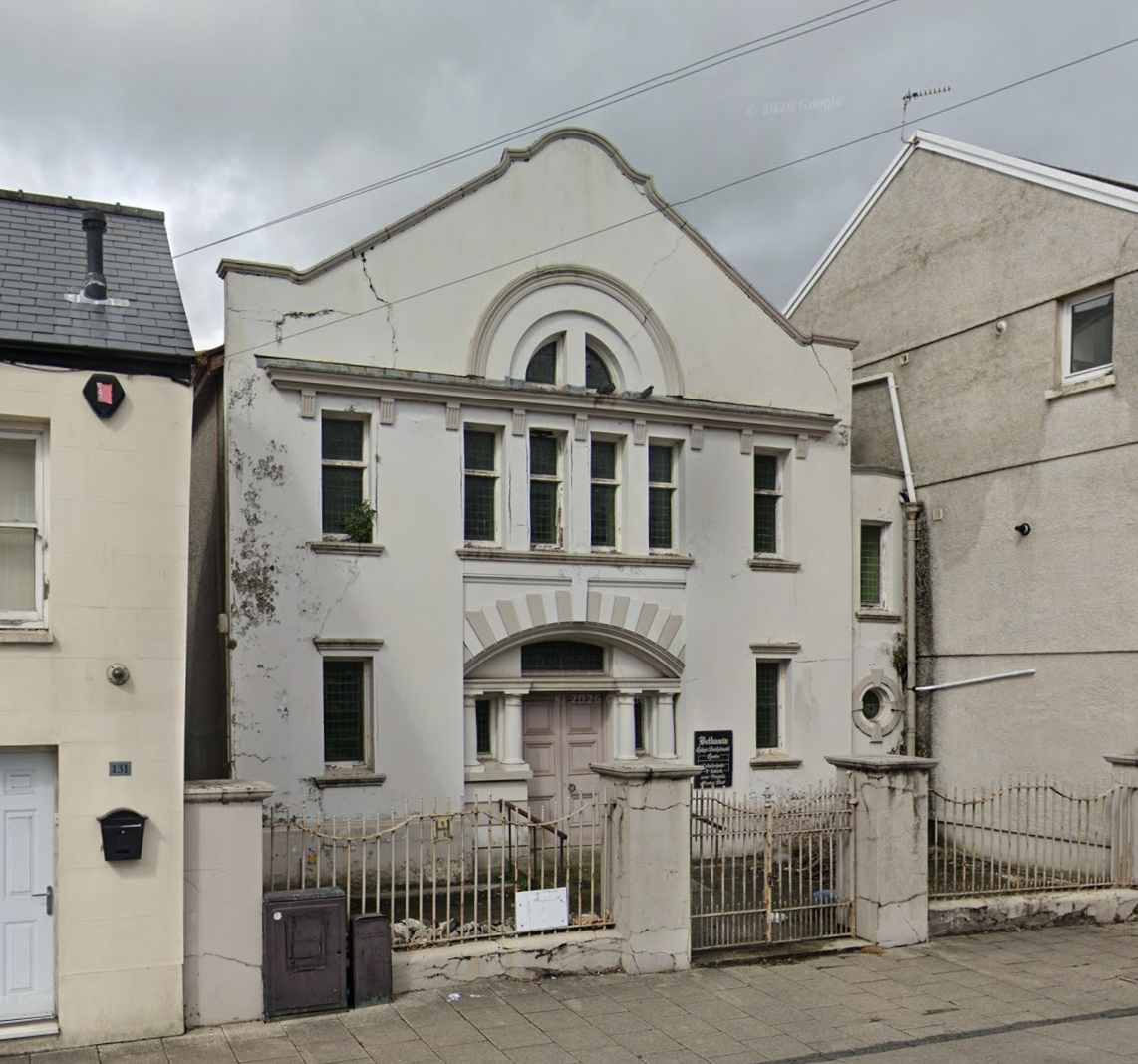
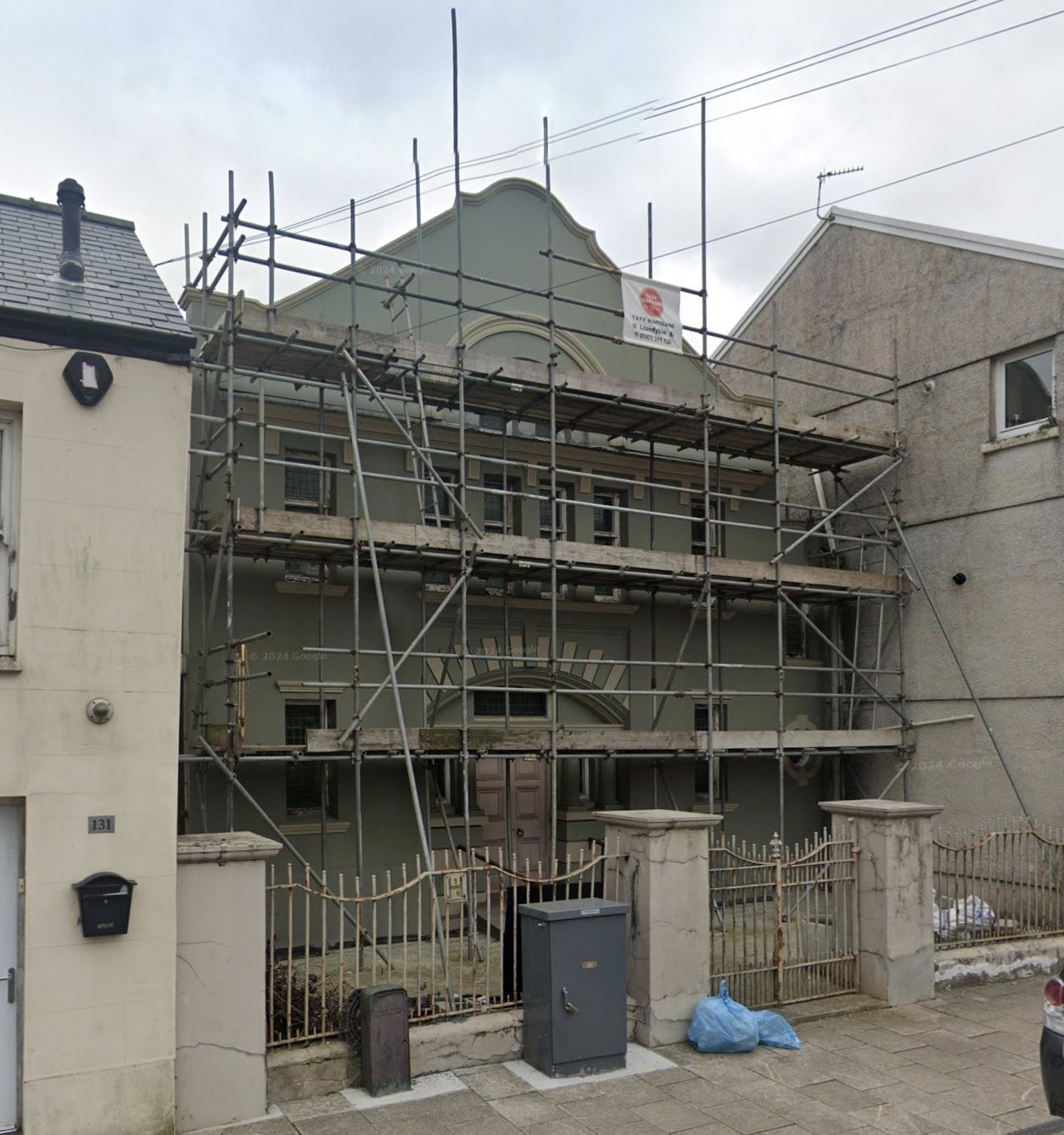
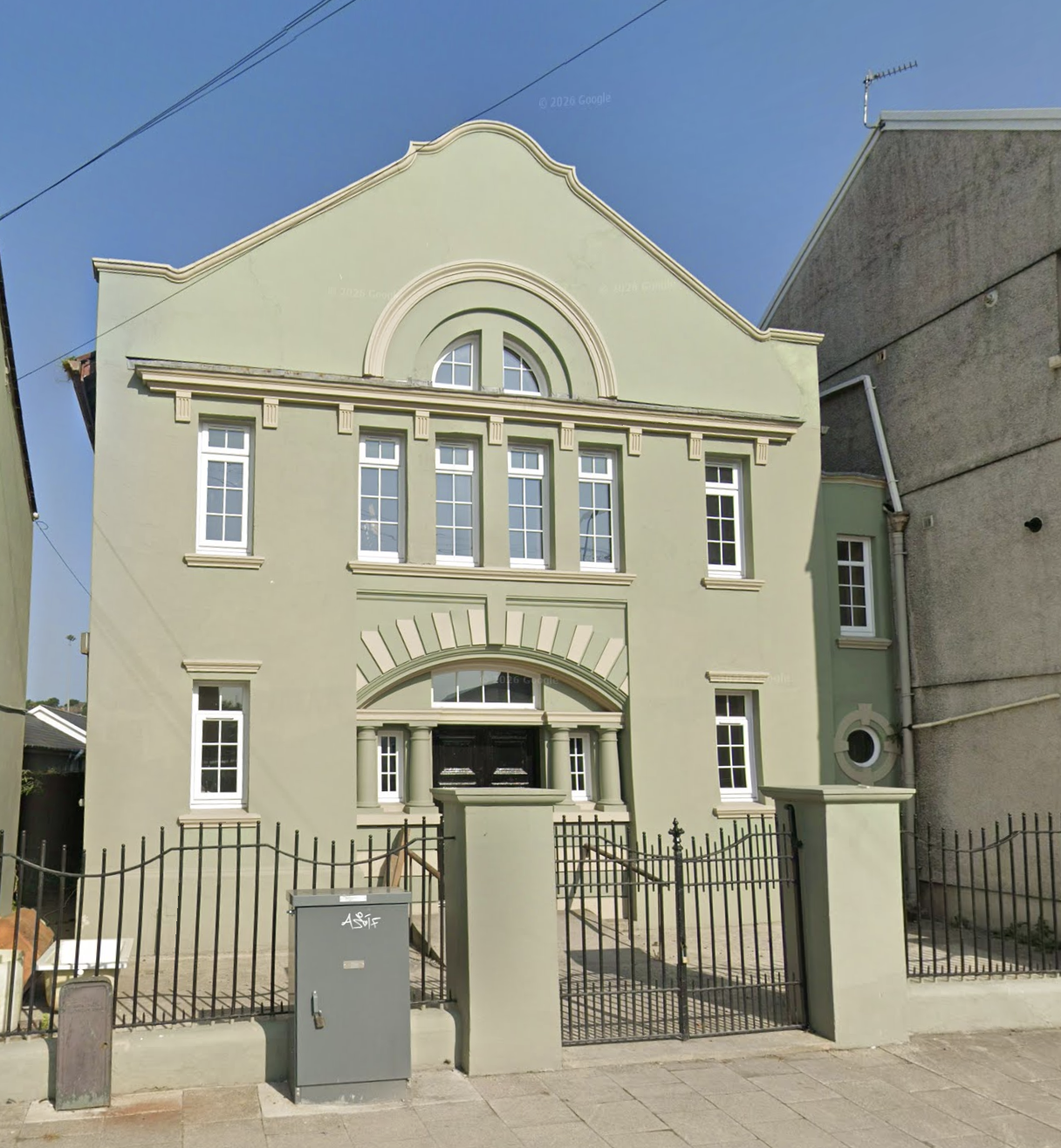
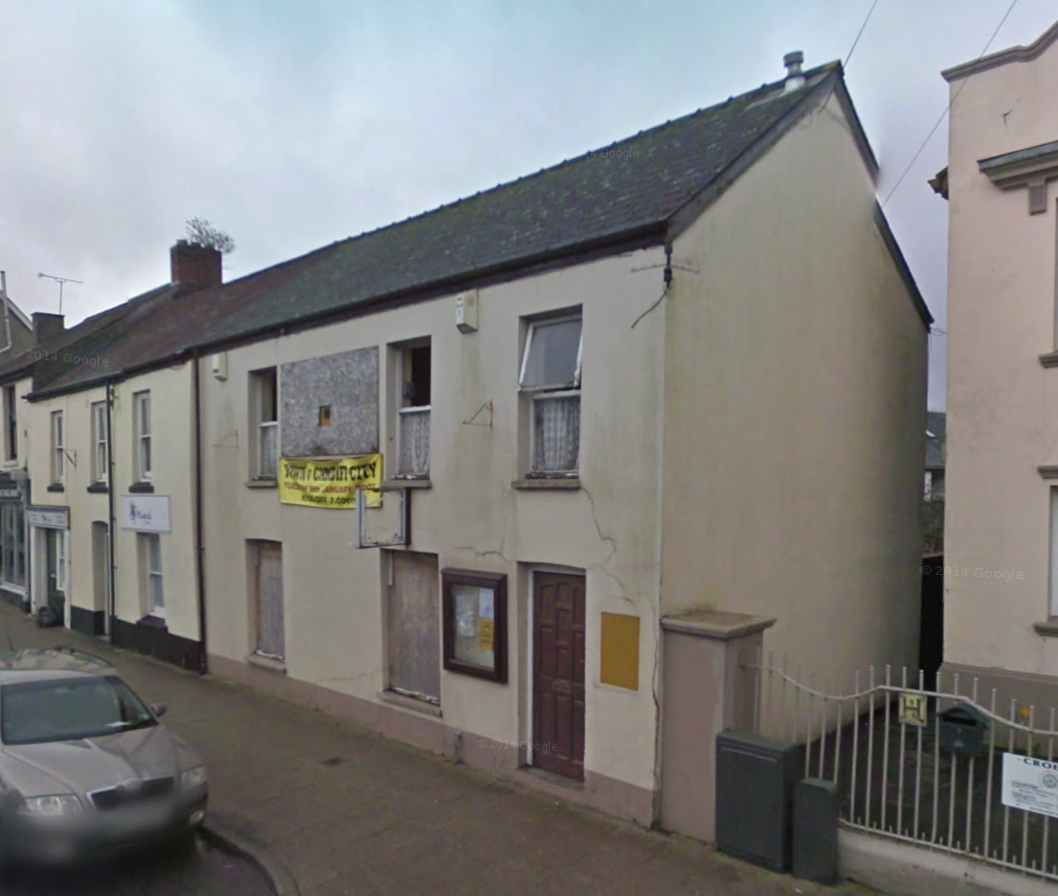
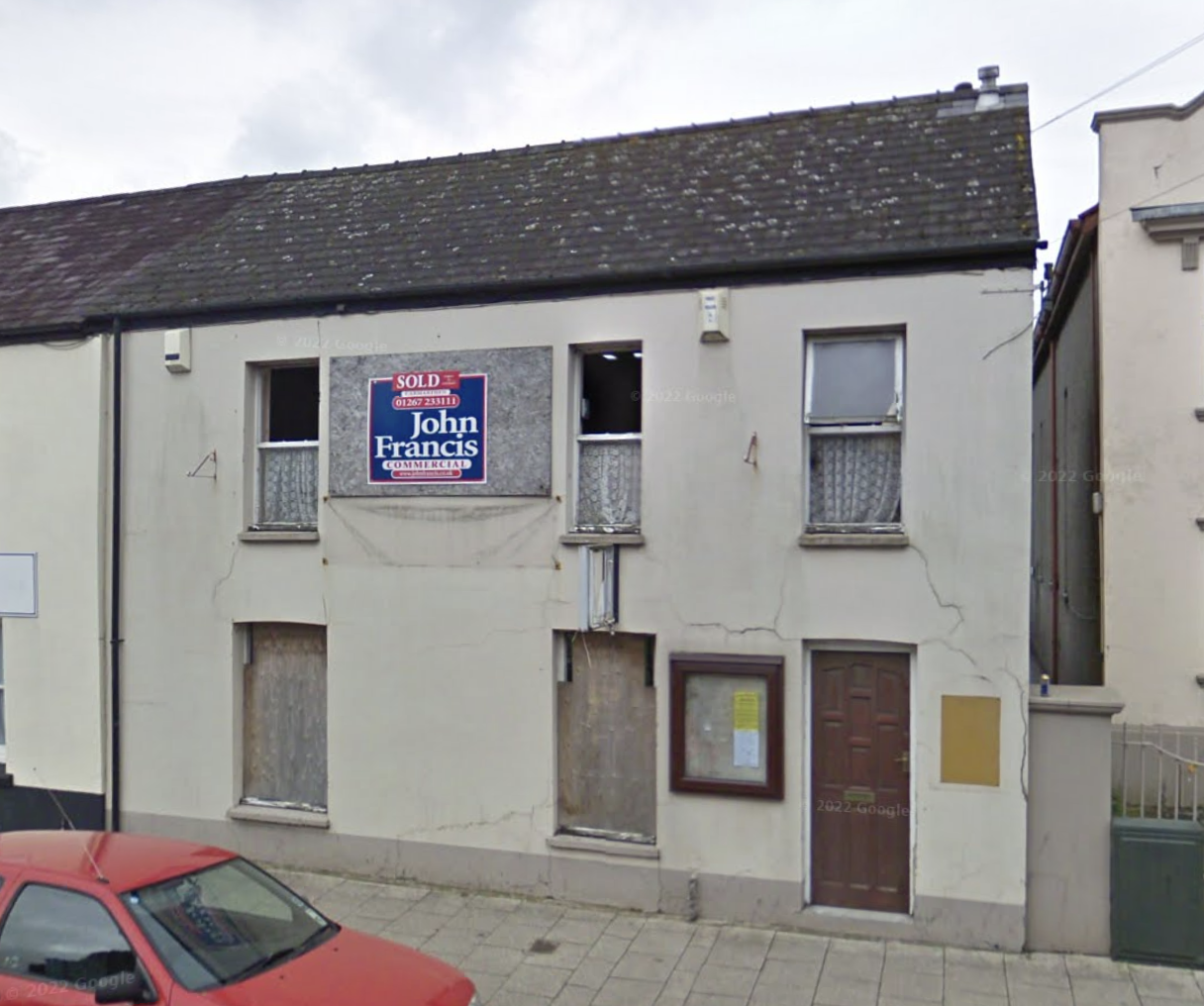
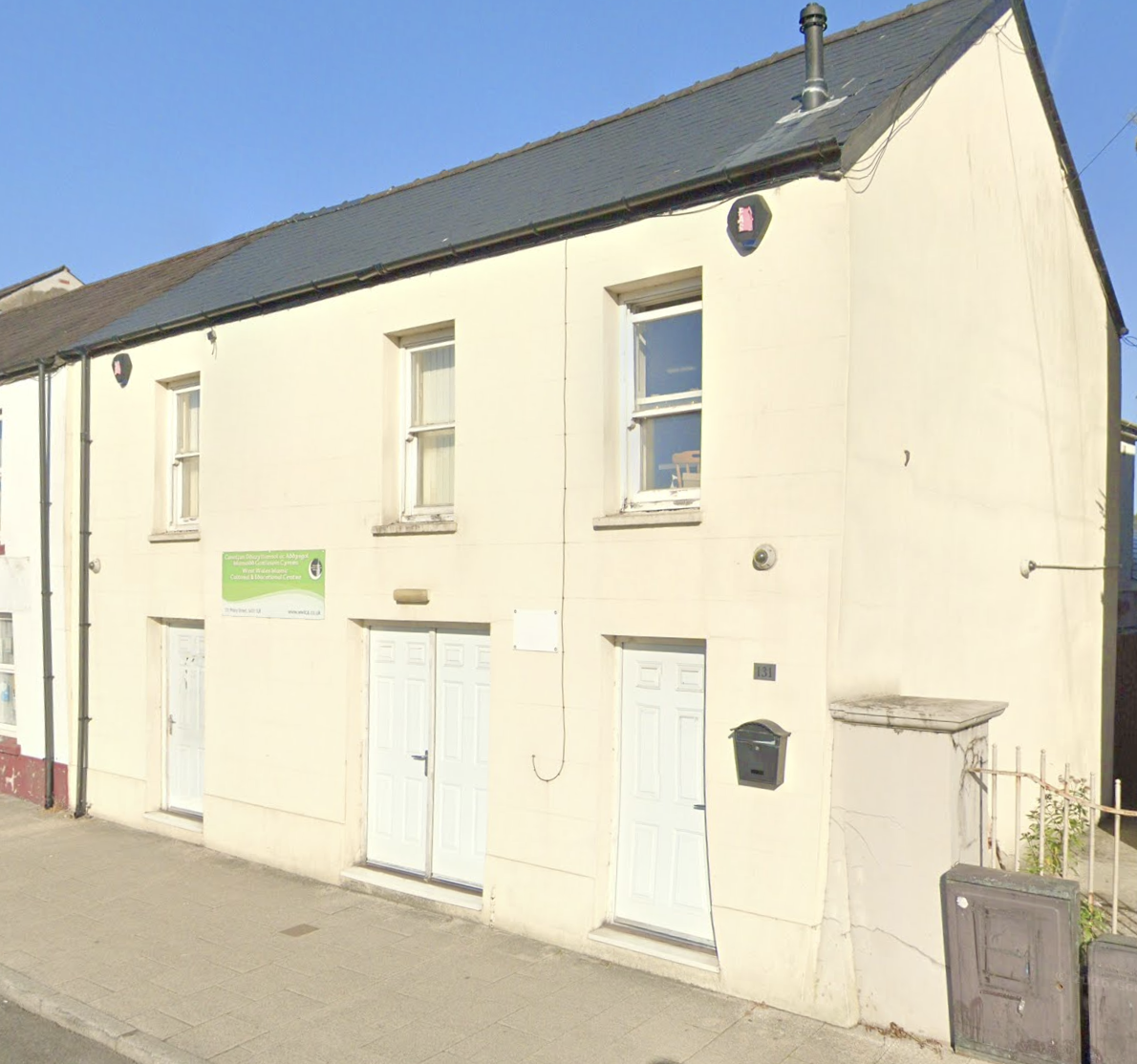
In 2022, WWICA took possession of the property and began restoration work. The task they inherited was considerable. Years of neglect had taken a significant toll on the building, and the work required to lift it from that condition has been substantial. WWICA has been working steadily to restore the chapel, preserving and repairing a piece of Carmarthen’s architectural and cultural heritage that, without their intervention, faced an uncertain future.
A Welsh Calvinistic Methodist chapel, built in 1911 and silent for years, is being brought back to life on Priory Street. The hands doing the work belong to Carmarthen’s Muslim community.
The symbolism of that is not lost on those who know both buildings. A few doors apart on the same street, a mosque and a chapel, one a century-old act of Welsh Nonconformist faith, the other the expression of a younger community’s determination to put down roots in the town, are being woven together into a single story of restoration and renewal. In a town as old as Carmarthen, with a religious and architectural heritage as rich and layered as any in Wales, that is a story worth telling.
Visiting WWICA
WWICA welcomes visits from schools, community groups, faith organisations and members of the public. Visits are booked in advance and typically take place between 11am and 3pm on Mondays through to Thursdays. Friday and other special visits can be arranged on request.
Visitors are asked to observe modest dress, with arms and legs covered. Female visitors may cover their heads if they wish to show respect to worshippers, though this is not required. The centre provides free literature and, for primary school children, prepared worksheets about the mosque and Islamic faith.
Part of the Town, Part of the Future
Carmarthen is an ancient town. It has absorbed waves of change across more than two thousand years, Roman, Norman, Tudor, industrial, post-industrial, and it has remained, through all of it, distinctly itself. The West Wales Islamic Cultural Association is the latest chapter in that long story of a town that has always been more than its stereotype suggests.
The families who founded WWICA in 1999 came to Carmarthen to work in its hospital, to raise their children in its schools, and to build lives in its streets. A quarter of a century later, their children are doing the same. The mosque on Priory Street is not an import or an imposition. It is as much a part of the fabric of this town as the chapels beside it, and the restoration of Bethania is perhaps the most vivid expression of that: a Muslim community choosing to spend its time, its money and its energy saving a piece of Welsh Nonconformist heritage that no one else stepped forward to rescue.
In the years ahead, as Carmarthenshire continues to grow and diversify, the presence of WWICA will only become more visible and more woven into the life of the town. The children attending the Madrasah on Sunday mornings are also attending the schools, playing on the pitches, and walking the same streets as every other young person in Carmarthen. They are not visitors to this community. They are this community.