[tta_listen_btn] Welsh Labour has governed Wales without interruption since the first National Assembly election in 1999. For a generation of Welsh voters, Labour and the Welsh Government have been effectively synonymous a political fact of life as durable as the landscape itself. That era is now, by the evidence of almost every available metric, approaching its end.
Three weeks before polling day on 7 May, Labour sits in third place in multiple polls, its worst position in Wales since devolution began. Its First Minister is on course to lose her own seat. Its most recent predecessor in that role resigned in scandal after less than four months in office. And the party is dragging into the campaign the weight of a Westminster government that is deeply unpopular with Welsh voters, a double-exposure of Labour failure that has proved politically lethal.
This article examines the full arc of Welsh Labour’s difficulties: the specific controversies of its recent leadership, the accumulated policy grievances, and the seismic implications, both for Wales and for Keir Starmer’s position in Downing Street, if what polling suggests comes to pass on 7 May.
The Vaughan Gething crisis: a government undone in 118 days

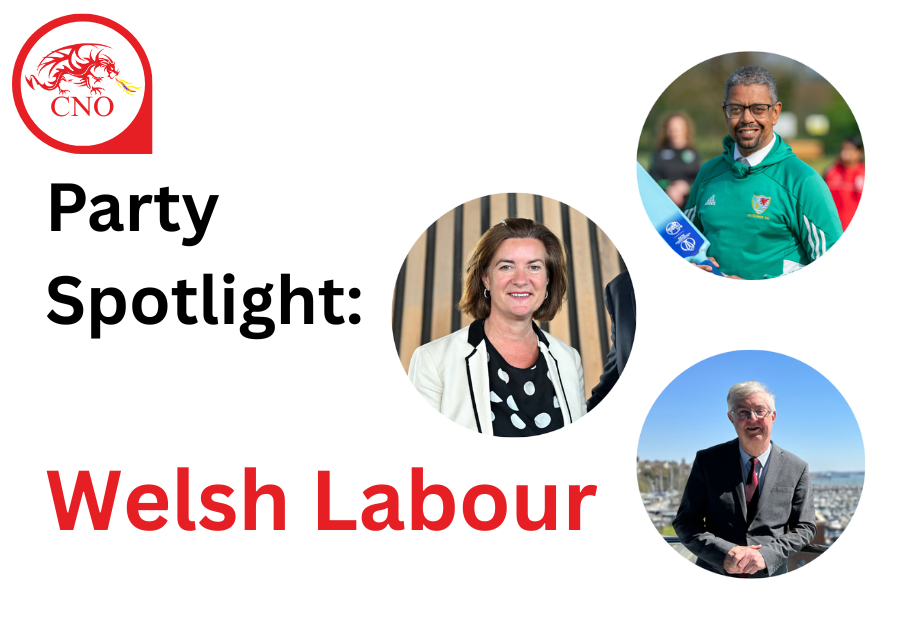
The most acute recent scandal in Welsh Labour’s history centred on Vaughan Gething, who became First Minister in March 2024, celebrated at the time as the first Black leader of any government in Europe. The celebration was short-lived. Within weeks, revelations about his leadership campaign financing had begun a slow political demolition that ended with his resignation after just 118 days in office.
The crisis originated during Gething’s leadership campaign, when he accepted donations totalling £200,000 from Dauson Environmental Group Ltd, a figure four times larger than the £45,000 spending cap the Labour Party had set for the contest. Dauson’s director, David John Neal, had been twice convicted of environmental offences, including illegally dumping waste on a site of natural interest. The company was also repaying a loan to the Development Bank for Wales, a body wholly owned by the Welsh Government Gething was seeking to lead.
Gething refused to return the money and denied any conflicts of interest. But within his own party, the reaction was stark. Labour MS Lee Waters, who had overseen the government’s controversial 20mph speed limit policy, said the amount had “really shocked” him and described it as “unjustifiable and wrong.” The then-Prime Minister Rishi Sunak backed calls for an independent investigation.
Further revelations compounded the damage. During the Covid inquiry, Gething had stated he had not deliberately deleted messages from his phone. Nation.Cymru subsequently obtained messages in which Gething told colleagues: “I’m deleting the messages in this group. They can be captured in an FOI and I think we are all in the right place on the choice being made.” He denied perjury allegations raised in the Senedd. He then dismissed minister Hannah Blythyn, alleging she had leaked the messages; Blythyn denied it. Plaid Cymru withdrew from the co-operation agreement in May 2024, citing Gething’s “significant lack of judgement.” A no-confidence vote on 5 June 2024, which Gething narrowly survived only because two Labour MSs were absent through illness, sealed his fate. He resigned on 16 July 2024, after four cabinet ministers had already quit.
“The revolving door of chaos. This could be the third Labour first minister in seven months.”
— Rhun ap Iorwerth, Plaid Cymru leader, after Gething’s no-confidence defeat, June 2024
A further layer: the PPE and property donation questions
Scrutiny of Gething’s finances did not stop at the Dauson donation. It emerged that he had also received a £1,000 donation from a company awarded a £1.8 million PPE contract during the pandemic, at which time Gething was serving as Health Minister. Separately, Signature Living, which had previously donated £10,000 to Gething, was the subject of a £140 million property fraud investigation, having acquired Cardiff’s Coal Exchange building for £1 after public funds had been spent on its refurbishment. Gething was not accused of any wrongdoing in relation to either matter, but the accumulation of financial associations deepened the sense of a leader whose judgement on donor relationships was seriously flawed.
Mark Drakeford’s legacy: achievements clouded by policy controversies

Gething’s predecessor, Mark Drakeford, served as First Minister from 2018 to 2024 and is widely regarded as the most substantial Labour leader Wales has had in the devolved era. Under his leadership, the Welsh Government maintained free prescriptions, introduced a default 20mph speed limit in built-up areas, launched a basic income pilot scheme, and, through the co-operation agreement with Plaid, delivered free school meals for all primary pupils. Drakeford’s left-of-centre social democratic style gave Welsh Labour a distinctly different character from the Blairite and Starmerian currents that dominated the party in Westminster.
But his record contains genuine policy controversies that became electoral liabilities. The introduction of the default 20mph speed limit in September 2023 provoked one of the largest public petitions in Welsh history, attracting more than 460,000 signatures calling for its reversal, in a country of three million people. Critics argued the blanket application of the limit, rather than a targeted approach to specific roads, was poorly designed and caused daily frustration to drivers and businesses. The Welsh Conservatives used the policy as a central attack line, and polling suggested it was unpopular across party lines.
The Sustainable Farming Scheme, proposed changes to farming subsidies that would have required 10% of farmland to be dedicated to trees and a further 10% to other habitats, triggered a sustained farmer revolt. Tractors gathered outside the Senedd and on Welsh roads in protest, and the scheme was eventually substantially revised, though not before the controversy had damaged Welsh Labour’s rural support. Drakeford also oversaw a period of NHS decline in Wales that left the service with the longest waiting lists relative to population of any nation in the UK.
The NHS: the most damaging long-term charge
The state of NHS Wales is arguably the gravest substantive charge against Labour’s 27-year stewardship of Cardiff Bay. Health is a devolved matter, entirely within the Welsh Government’s control, and the record is difficult to defend.
By autumn 2024, over 760,000 patient pathways were waiting for hospital treatment in Wales, a figure representing roughly one in four of the entire Welsh population. Nearly 100,000 individuals were waiting more than a year for treatment. Cancer pathway performance was far below target: just 60.2% of patients began treatment within 62 days of suspicion, against an 80% target set by the Welsh Government itself. Multiple waiting time targets have been missed, moved, and missed again. The opposition parties, not without some justification, accused the government of “moving the goalposts and still managing to miss them.”
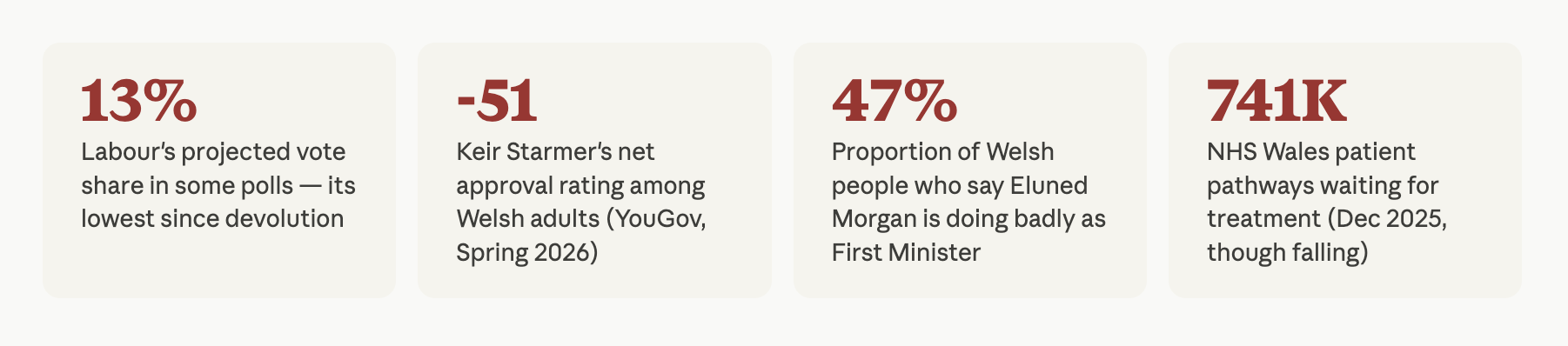
The Welsh Government points to more recent progress: by December 2025, the overall waiting list had fallen to just under 741,000, its lowest since March 2023 and the seventh consecutive month of decline. November saw the largest single monthly reduction ever recorded, with the list falling by 23,400. Two-year waits, which peaked at 68,000, fell to around 5,300 by December 2025. The government describes this as evidence that its £120 million investment in additional appointments is working. Critics note that even on the improved trajectory, the system remains under severe strain, and that the improvement has come too late to change the political mood.
Funding complexity: the Barnett dispute
Welsh Labour consistently argues that Wales is underfunded by Westminster through the Barnett formula, and that NHS difficulties in Wales are substantially a consequence of inadequate block grant settlements rather than mismanagement. This argument has genuine merit — the IFS has acknowledged Wales faces structural fiscal challenges. But opponents counter that 27 years of government provides more than enough time to adapt the system, set realistic targets, and manage within available resources. The funding dispute has not been resolved to the satisfaction of Welsh voters, and the NHS has become one of the party’s most damaging vulnerabilities.
Eluned Morgan: an unpopular leader at an impossible moment

Eluned Morgan succeeded Gething as First Minister in August 2024, becoming Wales’s first female leader of the Welsh Government. She inherited a poisoned chalice: a party diminished by its predecessor’s scandals, a government with a minority position in the Senedd, an NHS under pressure, and a Westminster Labour government whose unpopularity was already beginning to contaminate Welsh Labour’s brand.
The polling numbers around her leadership are strikingly weak. YouGov’s spring 2026 snapshot found 47% of Welsh adults believe she is doing badly as First Minister, against just 23% who believe she is doing well, and after nearly two years in office, 31% of Welsh adults still profess no firm opinion of her. The most high-profile polling projection of the campaign, the March 2026 YouGov MRP for ITV Wales, found Morgan on course to lose her own seat in Ceredigion Penfro. Even if that specific projection proves wrong, the symbolism is devastating: a sitting First Minister potentially unelected by her own constituency on polling day.
Morgan has been caught in a recurring bind: simultaneously the head of the Welsh Government and a member of a UK Labour Party whose Westminster decisions are deeply unpopular in Wales. The removal of the winter fuel allowance from all but the poorest pensioners, the two-child benefit cap retained by Starmer’s government, and welfare reform measures have all generated anger in Wales, a country with higher-than-average levels of poverty, disability benefit receipt, and fuel poverty. Morgan has at times been publicly critical of Westminster decisions, telling Labour MPs they needed to “do more to stand up for Wales,” and vowing she “will not stay silent” when UK Government decisions harm Welsh communities. But the political cost of association has been paid regardless.
Westminster’s shadow: the Starmer effect
Perhaps the single most damaging factor in Welsh Labour’s 2026 campaign is one largely outside its control. YouGov’s spring 2026 snapshot found that 70% of Welsh adults, including 52% of people who voted Labour in the 2024 general election, believe Keir Starmer is doing a bad job as Prime Minister. His net approval rating in Wales stood at -51 in April 2026, an improvement on the -59 recorded in January but still catastrophically negative.
More than 64% of Welsh adults gave the UK Government a negative performance rating. The 2026 Senedd election has been described by multiple commentators as the most consequential since devolution began in 1999, and Reform has explicitly sought to frame it as a referendum on Starmer’s leadership. Nigel Farage, launching his party’s Welsh manifesto in Newport, called it exactly that.
The specific decisions by Westminster Labour that have most damaged the party in Wales include: the reduction of winter fuel payments to pensioners, which hit harder in Wales where pensioner poverty rates are higher; the two-child benefit cap, retained despite pre-election expectations that it would be scrapped; welfare reform measures targeting disability and incapacity benefits; and the failure to match the Crown Estate devolution given to Scotland. Labour MPs from Wales were whipped to vote against Crown Estate devolution for Wales, a decision described by commentators as an act of institutional contempt toward Welsh devolution by the party that created it.
“From the moment Keir Starmer’s government assumed office it seemed to take perverse pleasure in making the Labour Senedd cohort look like fools.”
— Nation.Cymru opinion, April 2026
The dynamic is compounded by the structural difficulties of Labour’s position within devolution. Welsh Labour and UK Labour are the same party, there is no formal separation of the kind that exists between Scottish Labour and the SNP, or even between Welsh Labour and its parliamentary counterpart. When the UK Government makes unpopular decisions, Welsh Labour cannot credibly distance itself from them without being seen to undermine its own party. The result is a political vice: too identified with Westminster to escape its unpopularity, but too institutionally loyal to attack it effectively.
The Mandelson affair: Labour’s most corrosive scandal
If Starmer’s domestic policy decisions damaged Welsh Labour politically, the Peter Mandelson affair damaged it morally, and by association, in the most visceral way possible.
The scandal had its origins in successive releases of the Jeffrey Epstein files by the US Department of Justice. Mandelson, one of the architects of New Labour and a figure central to Labour’s political identity since the 1990s, had been appointed by Starmer as British Ambassador to the United States in late 2024. The appointment was controversial from the start. Documents subsequently released show that Starmer was warned of reputational risks during the process due to Mandelson’s known association with Epstein. His national security vetting had been formally failed, then overruled by the Foreign Office within 48 hours, a rare use of ministerial override. These concerns were dismissed.
As successive releases of the Epstein files revealed the depth of the relationship, Mandelson’s position became untenable. Emails in the files suggested he had shared sensitive UK government information with Epstein while serving as Business Secretary under Gordon Brown in 2009, including early notice of a €500 billion EU bank bailout and details of the government’s position on bankers’ bonuses. Separate documents showed that Epstein had made at least three payments of $25,000 to Mandelson in 2003 and 2004. Mandelson had written to Epstein calling him his “best pal” and had reportedly visited Epstein’s house while Epstein was in jail in 2009.
Starmer dismissed Mandelson from the ambassadorship in September 2025, describing his responses to official questions as unsatisfactory and the emails as reprehensible. In February 2026, following further document releases, Mandelson resigned from the Labour Party and from the House of Lords. On 23 February 2026, he was arrested on suspicion of misconduct in public office and released on bail pending further investigation. Starmer’s chief of staff, Morgan McSweeney, who had been a strong advocate for Mandelson’s appointment despite security concerns, resigned on 8 February 2026, acknowledging the decision had been wrong.
At Prime Minister’s Questions, Starmer said he felt “let down” and characterised Mandelson’s alleged actions as a betrayal of the country, Parliament, and the Labour Party. He announced plans for legislation to strip Mandelson of his peerage and referred the matter to police. In Wales, First Minister Eluned Morgan commissioned her own review of all Welsh Government communications with Mandelson in his UK Government roles, following a formal request from Plaid Cymru leader Rhun ap Iorwerth, bringing the scandal directly through the doors of Cardiff Bay.
Why the Mandelson scandal cut differently in Wales
For Welsh Labour, the affair arrived at the worst possible moment, three months before a Senedd election in which the party was already fighting for survival. It was not simply the content of the scandal, grave as that was, but what it represented: a Labour establishment at Westminster prepared to appoint a figure of deeply questionable associations to one of the most prestigious diplomatic roles in the country, apparently against advice and over the objections of the security services, because of the personal closeness between Mandelson and Starmer’s inner circle.
The episode confirmed every charge that Labour’s opponents had been making about the party’s relationship with power, integrity, and accountability. Eluned Morgan’s own review, ordered at Plaid Cymru’s prompting, underscored how far the damage had spread beyond Westminster. For Welsh voters already losing faith in both their devolved government and its parent party, the Mandelson affair was one scandal too many.
The catastrophic mathematics of losing power
The consequences of Welsh Labour losing control of the Senedd would extend well beyond Cardiff Bay. Politically, they would reverberate directly back to Westminster.
Wales has been Labour’s most loyal heartland in UK electoral politics for a century. The Welsh valleys returned Labour MPs in elections that decimated the party everywhere else. Even in the catastrophic 2019 general election, when Boris Johnson won an 80-seat majority, Wales delivered Labour its best relative performance of any region or nation in Britain. If that heartland now rejects Labour at devolved level, delivering power either to Plaid Cymru or, more dramatically, to Reform, it would represent a verdict on both Starmer’s government and Labour’s long-term grip on working-class Wales that no amount of spin could neutralise.
Analysis from multiple commentators draws the conclusion starkly. If Labour is heavily punished in Wales, Starmer’s position as party leader becomes materially weaker. Labour MPs were already, according to multiple reports, eyeing the Senedd result as a potential catalyst for a leadership challenge. A catastrophic result, third place, the First Minister losing her seat, seats lost across the valleys, would provide exactly the ammunition that restive backbenchers need.
Conversely, a result that is bad but not catastrophic, Labour clinging to second place, Morgan holding her seat, a modest final vote share of 15-17%, might be presented as stabilisation. Every fraction of a percentage point above the floor of polling projections matters, because the political narrative after polling day will be constructed as much from the delta between expectation and result as from the result itself.
The Scottish parallel
There is an instructive historical precedent. When Scottish Labour lost the Scottish Parliament election in 2007, ending eight years in government and beginning a period of SNP dominance that has lasted nearly two decades, it sent shockwaves through the UK party that took years to process. The SNP went on to win an outright majority in 2011, hold a referendum on independence in 2014, and reduce Scottish Labour to a shadow of its former self. Scottish Labour has not formed a government since. If Plaid Cymru replicates that trajectory in Wales, not a foregone conclusion, but a live possibility, the implications for UK Labour’s long-term viability as a unionist, pan-British party are profound.
Can Labour recover its position before 7 May?
Morgan’s manifesto, launched in Swansea on 30 March, committed to a freeze on the Welsh rates of income tax, pressing medical need to be seen within 48 hours, extended free school meals to secondary pupils on universal credit, 20,000 new childcare spaces, and 100,000 new homes over ten years. The party is also pointing to its late-term NHS improvements, the record monthly waiting list reduction in November, and the trajectory of improving ambulance handover delays. There are crumbs of hope in the most recent YouGov data, which shows Starmer’s approval slightly improving and Labour’s vote share edging up from its nadir.
But the structural problems are deep. Twenty-seven years in government accumulates grievances as well as achievements. The Gething crisis permanently damaged Welsh Labour’s claim to ethical governance. The NHS record is hard to reframe in a three-week campaign. And the Westminster overhang will not dissipate before polling day.
What Welsh Labour needs most is something it cannot manufacture: time. What it has instead is three weeks, a weakened leader, and the knowledge that the most dramatic Senedd election in the institution’s history is already under way.